China Pouring Money... Shanghai's Fiscal Injection of 56 Trillion Won Effect
Tax Cuts, Subsidy Support, Export Tax Refunds Make Increase in Chinese Government Debt Inevitable
University Entrance Exams Likely to Be a Turning Point for COVID-19... Record High of 11.93 Million Test Takers
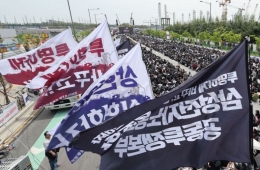
[Asia Economy Beijing=Special Correspondent Jo Young-shin] Shanghai, China, which had been locked down for more than two months due to the resurgence of COVID-19, is launching economic stimulus measures. The capital, Beijing, also indicated plans to ease quarantine measures by allowing some commercial activities as COVID-19 infections decrease.
![[Image source=Yonhap News]](http://www.asiae.co.kr/news/img_view.htm?img=2022053011044585813_1653876285.jpg)
On the 30th, according to Chinese media including the Communist Party's official newspaper People's Daily, Shanghai announced the ‘Shanghai Action Plan to Accelerate Economic Recovery and Revitalization,’ which includes 50 support measures.
Shanghai will first guarantee business activities starting from the 1st of next month. This comes 66 days after the lockdown began on March 28. Trade-related support measures such as export tax rebates and reductions or exemptions of demurrage fees for shipping companies were also introduced.
The focus of this plan is domestic consumption. Shanghai lifted the restrictions on issuing automobile license plates that have been in place since 1994. A total of 40,000 additional license plates will be allocated this year. General consumers purchasing electric vehicles will receive a subsidy of 10,000 yuan. Additionally, lifestyle-oriented support measures include a 10% discount on water, electricity, and gas bills for three months, exemption from household waste disposal fees for three months, and reductions in property taxes. Employment subsidies of up to 3 million yuan (approximately 550 million KRW, per individual company) were also proposed.
Sun Kaiyan, a researcher at the Shanghai Academy of Social Sciences, explained, "It is meaningful that the government presented specific figures so that not only companies but all Shanghai citizens can feel the policy’s commitment," adding that the power of the policy will be tangibly felt by both businesses and individuals.
Xinhua News Agency explained that Shanghai’s support measures will reduce the annual burden on market participants by 300 billion yuan (56 trillion KRW). This, conversely, means that an increase in Shanghai’s debt and a worsening of the Chinese government’s fiscal situation are inevitable going forward.
Beijing, which has been under partial lockdown for a month, also indicated intentions to ease controls. Beijing party authorities stated that from the 27th to 3 p.m. on the 29th, there were no community infections (infections outside lockdown and controlled areas), and new infections decreased for seven consecutive days, leading to the lifting of work-from-home restrictions in some areas such as Shunyi District. Some commercial activities, including movie theaters and gyms, were also allowed.
Hot Picks Today
 "Buy on Black Monday"... Japan's Nomura Forecasts 590,000 for Samsung, 4 Million for SK hynix
- "Plunged During the War, Now Surging Again"... The Real Reason Behind the 6% One-Day Silver Market Rally [Weekend Money]
- "Cuba Secures 300 Military Drones...Considering Attacks on U.S. Bases Including Guantanamo"
- Experts Are Already Watching Closely..."Target Stock Price 970,000 Won" Now Only the Uptrend Remains [Weekend Money]
- "That? It's Already Stashed" Nightlife Scene Crosses the Line [ChwiYak Nation] ③
Meanwhile, China’s Ministry of Education plans to conduct the nationwide university entrance exam, the ‘Gaokao (高考),’ as scheduled over two days from the 7th to the 8th of next month. The number of examinees is a record high of 11.93 million. Given that approximately 12 million people will gather simultaneously at over 7,000 locations and more than 400,000 exam sites nationwide, there are forecasts that this year’s Gaokao will be a turning point for the resurgence of COVID-19.
© The Asia Business Daily(www.asiae.co.kr). All rights reserved.