Why Did the KT-1 Trainer Aircraft Collide? ... Due to 'Sudden Course Change Without Notification'
![On the 1st, an Air Force training aircraft KT-1 crashed on the aerial route near Jeongdong-myeon, Sacheon-si, Gyeongnam, resulting in the deaths of four personnel. [Image source=Yonhap News]](http://www.asiae.co.kr/news/img_view.htm?img=2022040117083413249_1648800514.jpg)
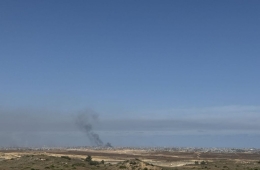
On the 1st, an Air Force training aircraft KT-1 crashed on the aerial route near Jeongdong-myeon, Sacheon-si, Gyeongnam, resulting in the deaths of four personnel. [Image source=Yonhap News]
View original image[Asia Economy Yeongnam Reporting Headquarters Reporter Lee Seryeong] It has been revealed that the cause of the mid-air collision accident involving KT-1 training aircraft, which claimed the lives of four personnel at Boramae on the 1st, was due to 'human error.'
The Air Force stated that the mid-air collision accident involving training aircraft at the Air Force 3rd Training Flight Group in Sacheon, Gyeongnam, occurred because the change in the flight path of the training aircraft was not communicated.
According to the military authorities' investigation, two of the three training aircraft took off first, and the remaining one took off 35 seconds later.
The first aircraft to take off, Aircraft A, was piloted by an instructor, while Captains Cha Jaeyoung and Jeong Jonghyeok were paired with instructors Lee Janghee and Jeon Yongan, respectively, and were at the controls of Aircrafts B and C.
The Air Force explained that the instructor piloting Aircraft A suddenly changed the flight path to avoid clouds but did not notify the controllers or others.
Immediately after the path change, Aircraft A made a steep dive to avoid a collision when it encountered Aircraft C, which was flying under instrument flight rules, but Aircraft B, following behind, could not avoid Aircraft C appearing ahead and collided, resulting in the deaths of all involved.
Instrument flight refers to flying based on instruments installed inside the aircraft, unlike visual flight where the pilot directly identifies terrain and landmarks by sight.
A military official stated, “The pilot did not follow flight procedures and neglected forward airspace surveillance,” adding, “The controller’s failure to actively provide control advice was also one of the causes.”
The military concluded that there were no defects in the aircraft involved in the accident or malfunctions in the ejection seats, and plans to summon the training aircraft pilots, control tower personnel, and commanders to hold a disciplinary committee to determine the level of punishment.
Hot Picks Today
 "Samsung Electronics Employee with 100 Million Won Salary Receiving 600 Million Won Bonus... Estimated Tax Revealed"
- At President Lee's Call to "Give Enough to Shock," Whistleblower Rewards Become a Real Lottery
- Lived as Family for Over 30 Years... Daughter-in-Law Cast Aside After Husband's Death
- "Is This Car Waterproof?" US Man in His 70s Makes Dramatic Escape After Driving Cybertruck Into Lake, Trusting Its Features
- Appearing in a Leather Jacket, Jensen Huang Hastily Eats $6 Noodles on the Street... Shop Instantly Becomes a Hotspot
After the accident, education on mid-air collision prevention measures and similar accident prevention was conducted for all controllers and pilots, and procedures for military aircraft takeoff and landing were improved to prevent dangerously close flying. Flight operations of the KT-1 training aircraft are scheduled to resume from May 2.
© The Asia Business Daily(www.asiae.co.kr). All rights reserved.