"Labor-Management Relations Must Be Reformed to Overcome Corporate Global Competition"

[Asia Economy Reporter Choi Dae-yeol] Lee Dong-geun, Executive Vice Chairman of the Korea Employers Federation, said on the 28th, "It is difficult to respond to new changes with a rigid labor market and backward labor-management relations," adding, "The most important task is labor-management relations reform."
At the 1st Labor-Management Relations Advancement Committee held by the Federation at the Press Center on the same day, executives from 20 major companies including Samsung, Hyundai Motor, and LG participated. This consultative body, which meets once every two months, was established to provide various policy suggestions related to labor-management relations.
Vice Chairman Lee said, "We are still adhering to the outdated labor law enacted in 1953," adding, "This causes labor market rigidity and an imbalance of power between labor and management, deepening adversarial labor-management relations and acting as an obstacle to corporate competitiveness and job creation for future generations."
To reform labor-management relations, Vice Chairman Lee emphasized that the government and political circles should refrain from politicizing labor-management relations. He stressed the need to prioritize labor-management autonomy while strictly enforcing laws against illegal actions and to advance labor-management legal systems in line with global standards.
At the meeting, Park Ji-soon, Dean of the Graduate School of Labor Studies at Korea University (Professor at the Law School), gave a presentation titled "Tasks of Labor Law for the Advancement of Labor-Management Relations." Dean Park pointed out, "Rigid labor regulations have caused a loss of innovation momentum, hindering the creation of quality jobs in the private sector, and the dual structure of the labor market is intensifying," adding, "It is necessary to enhance labor market flexibility and reform the wage system into a rational structure."
Dean Park also proposed specific measures for advancing labor-management relations. These included expanding the settlement period for the selective working hours system to a maximum of one year, switching to a total volume regulation method for overtime hours, and improving working hours regulations by introducing white-collar exemptions.
Hot Picks Today
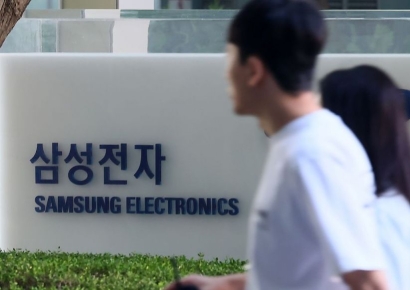 "Samsung Electronics Employee with 100 Million Won Salary Receiving 600 Million Won Bonus... Estimated Tax Revealed"
- At President Lee's Call to "Give Enough to Shock," Whistleblower Rewards Become a Real Lottery
- Lived as Family for Over 30 Years... Daughter-in-Law Cast Aside After Husband's Death
- Gwangju Schools Purchase Starbucks Gift Cards Despite 'Tank Day' Controversy
- Appearing in a Leather Jacket, Jensen Huang Hastily Eats $6 Noodles on the Street... Shop Instantly Becomes a Hotspot
Additionally, regarding ordinary wages, Dean Park suggested that if labor and management agree on wage standards, these should be applied first, and that performance bonuses should be explicitly excluded from average wages. He also conveyed that measures such as increasing the scope of dispatch workers or extending the use period of fixed-term contracts up to four years upon mutual agreement are necessary.
© The Asia Business Daily(www.asiae.co.kr). All rights reserved.







