Woo Sang-ho "Lee-Yoon approval gap reflects unification hopes... will fluctuate if they complete the race"
[Asia Economy Reporters Oh Ju-yeon and Lee Myung-hwan] The Democratic Party of Korea analyzed that the gap in approval ratings between Yoon Seok-yeol, the presidential candidate of the People Power Party, and Lee Jae-myung, the Democratic Party's presidential candidate, which was revealed in the poll released on the 17th, reflects the public's expectation for 'opposition party unification.' However, contrary to public expectations, they predicted that if unification does not materialize, it could be very disadvantageous for candidate Yoon.

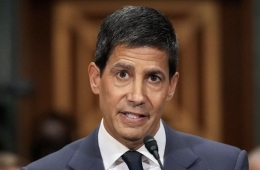
Woo Sang-ho, Chief of the General Election Countermeasures Headquarters of the Democratic Party of Korea, is attending the Headquarters Meeting of the Election Countermeasures Committee held at the Central Party Office in Yeouido, Seoul on the 7th, delivering opening remarks. Photo by Yoon Dong-joo doso7@
View original imageOn the same day, Woo Sang-ho, the General Election Headquarters Chief of the Democratic Party's Election Committee, held a briefing at the central party office in Yeouido in the afternoon and explained, "The gap in this poll widened after Ahn Cheol-soo, the candidate of the People’s Party, raised the issue of unification, making it a focus of attention." He added, "It seems that the lower response from our support base is reflected," and said, "We are watching the flow of how the unification between candidate Yoon and candidate Ahn will be resolved in the future."
Woo said, "The only variable in the last 3 to 4 days was opposition party unification," and added, "While the Democratic Party believes Ahn’s proposal for unification is unlikely, among the public it seems to be seen as a 'coalition,' which has increased the index for regime change." However, regarding the analysis that candidate Yoon’s remarks on 'investigations into deep-rooted evils' united the opposition supporters, he responded, "That is not valid."
In a Q&A session with reporters that followed, Woo stated, "If the (opposition) unification does not happen, it will be very disadvantageous for candidate Yoon," and added, "That is why candidate Yoon keeps making preventive remarks and there are behind-the-scenes contacts on one side."
He said, "The public expects unification to happen, but if (candidate Ahn) completes his run, candidate Yoon’s approval rating will fluctuate, which will be advantageous for us," explaining, "Because it will cause a leak." He further predicted, "If unification drags on until next week, both sides will become frustrated." Regarding the poll showing a 9 percentage point gap between candidates Lee and Yoon, he commented, "It seems to be too exaggerated."
Hot Picks Today
 "Buy on Black Monday"... Japan's Nomura Forecasts 590,000 for Samsung, 4 Million for SK hynix
- "Plunged During the War, Now Surging Again"... The Real Reason Behind the 6% One-Day Silver Market Rally [Weekend Money]
- "We're Now Earning 10 Million Won a Month"... Semiconductor Boom Drives Performance Bonuses at Major Electronic Component Firms
- Supreme Court: U.S. Firms Must Pay Tax in Korea on Technology Sale Proceeds
- Experts Are Already Watching Closely..."Target Stock Price 970,000 Won" Now Only the Uptrend Remains [Weekend Money]
On the same day, in the nationwide index survey (NBS) four-way virtual contest conducted by Embrain Public, K-Stat Research, Korea Research, and Hankook Research from the 14th to the 16th, surveying 1,012 men and women aged 18 and over nationwide, candidate Yoon recorded 40% support, and candidate Lee recorded 31%. The gap between the two candidates is 9 percentage points, which is outside the margin of error (±3.1 percentage points). For detailed information regarding the poll, please refer to the Central Election Poll Deliberation Commission website.
© The Asia Business Daily(www.asiae.co.kr). All rights reserved.