'Semiconductor Super-Gap' Companies to Invest 56 Trillion Won This Year... "Bold Support Needed Including Workforce and Preliminary Feasibility Exemption"
Government, Semiconductor Association, and Companies Hold Meeting to Discuss Investment and Support Measures
Chairman Lee Jeong-bae: "Active and Bold Policies Needed... Various Regulations Blocking Investment Must Be Lifted"

Minister Moon Seung-wook of the Ministry of Trade, Industry and Energy is taking a commemorative photo with semiconductor company representatives at a semiconductor sector business meeting held at Lotte Hotel in Jung-gu, Seoul, on the afternoon of the 16th. Front row from the left: Park Jun-gyu, CEO of ADT Technology; Jeong Chil-hee, CEO of Nepes; Heo Yeom, CEO of Silicon Mitus; Chwa Chang-sik, Vice Chairman of DB HiTek; Minister Moon; Lee Jeong-bae, Chairman of Samsung Jeongja; Lee Seok-hee, President of SK Hynix; Kim Yong-gil, CEO of ASM K. Back row from the left: Jeong Hyun-seok, President of Soulbrain; Lee Chang-han, Vice Chairman of Korea Semiconductor Industry Association; Eom Pyeong-yong, CEO of Eugene Technology; Yeo Moon-won, CEO of Mico Ceramics; Seong Gyu-dong, CEO of EO Technics; Oh Kwang-hoon, CEO of Trinotechnology; Lee Hyun-deok, CEO of Wonik IPS; Lee Jun-hyeok, CEO of Dongjin Semicam.
Photo by Yonhap News
[Asia Economy Reporter Lee Hye-young] As global competition over semiconductor supremacy intensifies, the domestic semiconductor industry is launching a super-gap strategy by investing more than 56 trillion won. The industry emphasized that bold government support, including talent development, tax benefits, and exemption from preliminary feasibility studies, is necessary to secure competitiveness.
On the 16th, the Ministry of Trade, Industry and Energy, the Korea Semiconductor Industry Association, and related industries held a 'Semiconductor Investment Activation Meeting' at Lotte Hotel in Jung-gu, Seoul, to share opinions on this year's semiconductor investment plans and support measures. Attendees included Minister Moon Seung-wook of the Ministry of Trade, Industry and Energy, Samsung Electronics President Lee Jung-bae, SK Hynix President Lee Seok-hee, and representatives from 14 semiconductor materials and parts companies.
At the meeting, the Korea Semiconductor Industry Association announced that based on a survey of investment plans from about 150 member companies, they will invest 56.7 trillion won domestically this year. This represents a 10% increase compared to last year's investment record of 51.6 trillion won.
Specifically, small and medium-sized enterprises (SMEs) in the materials, parts, and equipment (MPE) and back-end process sectors plan to invest about 1.8 trillion won, while SMEs in the system semiconductor sectors such as fabless and power semiconductors will invest about 1.3 trillion won. The remaining 53.6 trillion won will be invested by large corporations and other SMEs in the materials sector. Specific company names and individual investment amounts were not disclosed.
Semiconductor companies attending the meeting requested the government to establish bold support policies for talent development and tax support for facility investments.
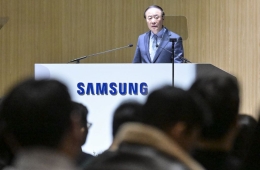
Lee Jung-bae, Chairman of the Korea Semiconductor Industry Association (Samsung Electronics President), said, "To win against global companies, excellent professionals are essential," and requested, "Please provide more active and bold policy support so that high-level semiconductor talent can be nurtured without being constrained by university student and faculty quotas."
He also urged for the supplementation and continuous improvement of the recently passed so-called 'Semiconductor Special Act' by the National Assembly. He said, "I hope the special act prepared by the government and the National Assembly will be implemented in a way that truly benefits the industry," and added, "I ask for close cooperation between the government and industry in preparing subordinate laws under the special act so that support can be smoothly provided in areas such as industrial infrastructure development and various regulatory improvements linked to multiple government ministries, which the semiconductor industry has continuously requested."
He also mentioned the need to ease regulations to the level of major countries that increase semiconductor support. Lee emphasized, "By reviewing overseas cases such as the United States, China, Taiwan, and Japan, it is necessary to provide infrastructure, financial support, and regulatory relief that are not inferior to other countries for companies making large-scale facility investments."
He pointed out that various regulations, including preliminary feasibility studies, could cause the semiconductor super-gap to be missed and demanded more active government support. Lee said, "The semiconductor technology war is a speed race where a half-year gap determines victory or defeat, but if support is provided 2 to 3 years later after going through preliminary feasibility studies, overseas competitors will already be far ahead," and added, "The exemption from preliminary feasibility studies stipulated in the Advanced Strategic Industry Special Act must be implemented effectively and actively."
Minister Moon Seung-wook promised to further expand government-level support and responses for semiconductor investment support and talent development. The government plans to support bold responsive investments in semiconductor-specialized complex infrastructure such as electricity, water, and test beds. In particular, a 'Semiconductor Investment Support Organization' involving related ministries and local governments will be institutionalized to actively resolve various regulations.
Additionally, by the end of this year, the government plans to secure university quotas for about 700 semiconductor-related students and establish specialized semiconductor education programs to nurture 1,200 professionals annually starting this year.
To cultivate master's and doctoral-level talent, which is key to semiconductor technology competition, specialized 'Semiconductor Graduate Schools' will be designated and intensively supported for over 10 years in major fields such as artificial intelligence (AI) semiconductors, power semiconductors, advanced materials and parts, and packaging.
Hot Picks Today
 Cerebras Soars 70% on IPO Debut: Is Nvidia's Reign Ending as a New AI Semiconductor Power Emerges?
- After Surpassing 8,000 Points, Is Profit-Taking Underway?... Why Is the KOSPI Plunging?
- "Multi-Million Won Bonuses, Life Is Sweet"—Even Employee Reactions... SK hynix Overtakes Samsung to Claim No. 1 Spot
- "Gave in to the Momentary Temptation": Japanese Police Official Dismissed After Stealing 100 Million Won Next to Body
- "After Vowing to Become No. 1 Globally, Sudden Policy Brake Puts Companies’ Massive Investments at Risk"
Minister Moon evaluated, "The semiconductor industry is a strong pillar of our economy that achieved record exports and produced the world's number one company even amid the COVID-19-induced economic downturn, and semiconductor companies are the most important economic security assets in the era of global supply chain wars." He urged, "Just as the public and private sectors have worked together to overcome challenges such as the chain supply disruptions of major countries and Japan's semiconductor material export restrictions, the government and industry must continue to join hands and respond with full force to maintain the semiconductor super-gap and strengthen the supply chain."
© The Asia Business Daily(www.asiae.co.kr). All rights reserved.