"Supply Chain Crisis, Let's Respond Quickly" POSCO Inter Forms TF
Jusibo CEO Emphasizes "Importance of Constant Readiness System"

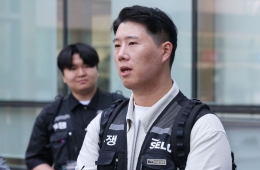
Joo Si-bo, CEO of POSCO International (center), is presiding over a supply chain inspection meeting at the headquarters on the 9th.
[Asia Economy Reporter Choi Dae-yeol] "Building a global supply chain is not only necessary in times of crisis but requires a constantly prepared system to ensure business stability."
Ju Si-bo, CEO of POSCO International, called for an emergency response system in the event of a global supply chain crisis.
According to POSCO International on the 10th, CEO Ju held a global supply chain inspection meeting with major overseas branches at the headquarters the previous day, emphasizing, "We must establish a stable supply chain system in normal times by closely cooperating with the government and leveraging our global network capabilities." With China and Indonesia strengthening resource monopolies, they judged that a supply chain crisis could be triggered at any time and reviewed how to respond in emergency situations.
At the meeting, it was agreed that to reduce supply chain risks, smooth information sharing between the government and trading companies and the establishment of a rapid response system between domestic and overseas organizations are necessary. There was also consensus on the need to strengthen the overseas network and purchasing capabilities of trading companies. Accordingly, the company decided to identify items requiring rapid response in advance and diversify the supply chain so that in the event of a crisis, they can be sourced through a prepared supply chain.
The response system, connecting the Global Business Management Office, the Headquarters Strategy Group, and overseas branches, will be operated as a permanent task force (TF). The Global Business Management Office will oversee the entire process, the Headquarters Strategy Group will select items and target countries, and overseas branches will investigate suppliers by item and establish relationships. Considering regional and national characteristics, they will establish supply chain emergency scenarios and enhance crisis response capabilities through periodic testing focused on items with high uncertainty.
Hot Picks Today
!["Heading for 2 Million Won": The Company the Securities Industry Says Not to Doubt [Weekend Money]](https://cwcontent.asiae.co.kr/asiaresize/93/2025061015355092669_1749537351.jpg) "Heading for 2 Million Won": The Company the Securities Industry Says Not to Doubt [Weekend Money]
"Heading for 2 Million Won": The Company the Securities Industry Says Not to Doubt [Weekend Money]
- "Anyone Who Visited the Room Salon, Come Forward"… Gangnam Police Station Launches Full Staff Investigation After New Scandal
- 31 Degrees in May... Earliest-Ever Heat-Related Fatality Reported
- "Drink Three Cups of Coffee and Stay Up All Night Before the Test"... Manual of Insurance Planner Who Collected 1 Billion Won in Payouts
- Did Samsung and SK hynix Rise Too Much?... Foreign Assets Grow Despite Selling [Weekend Money]
They selected 19 products, including urea solution and ammonia, which have high import dependence from China, to diversify supply sources and reduce risks while discussing ways to improve cost competitiveness. Among crisis response items such as manganese, ferrosilicon, and toluene, six items will have their supply chains diversified by production countries while inspecting the supply network.
© The Asia Business Daily(www.asiae.co.kr). All rights reserved.