Gang Do-tae "Presidential Candidate Pledge Positions Are Inappropriate... Health Insurance Contribution System Reform in Second Half of Year" (Comprehensive)

[Asia Economy Reporter Seo So-jeong] As presidential candidates Lee Jae-myung and Yoon Seok-yeol continue to announce pledges related to health insurance coverage, Kang Do-tae, President of the National Health Insurance Service (NHIS), stated that "it is not appropriate to comment on the pledges." Regarding this year's NHIS's key agenda of the second phase reform of the health insurance premium assessment system, the plan is to reduce the proportion of property and automobile insurance premiums to enhance fairness among subscribers, strengthen the criteria for income assessment beyond monthly salary and dependent eligibility, and improve public acceptance, aiming for implementation in the second half of this year.
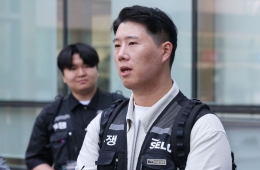
At a New Year's press briefing held on the 18th at the NHIS Seoul Gangwon Regional Headquarters in Yeongdeungpo-gu, Seoul, Kang was asked about his stance on the presidential candidates' health insurance pledges. He responded, "Many pledges related to health insurance are coming out, but it is not appropriate for me to comment."
Earlier, on the 14th, Lee Jae-myung, the Democratic Party presidential candidate, officially announced a pledge to expand health insurance coverage for hair loss treatment drugs. He also pledged to actively promote the expansion of health insurance coverage for rare and intractable diseases with high treatment costs. Yoon Seok-yeol, the People Power Party presidential candidate, announced the day before that continuous glucose monitors would be supported by health insurance for patients with gestational diabetes and adult diabetes. As presidential candidates continue to announce health insurance-related pledges, debates over the appropriateness of health insurance coverage have also emerged.
Kang said, "The application and operation of health insurance should be discussed comprehensively, reflecting social research and other factors," and added, "There is a demand for health insurance and its importance," avoiding a direct answer. He further requested understanding, saying, "Since each candidate has presented various opinions, it is neither appropriate nor easy to comment on all of them."
◆ Expansion of Basic Deduction for Property Tax Base to Ease Health Insurance Premium Burden = The second phase reform of the health insurance premium assessment system, a key agenda for NHIS this year, is being closely discussed with the government to be implemented within the second half of this year. The government and NHIS decided to reform the premium assessment system to focus on income after fairness issues were raised regarding health insurance premium assessments. Following the first phase implemented in 2018, the second phase reform is being prepared this year. The goal of the second phase reform is to promote fairness through expanding the basic deduction for property tax base, reducing automobile insurance premiums, strengthening income and property criteria for dependents, and tightening income criteria beyond wages for workplace subscribers.
Kang said, "Considering recent real estate price increases and the realization of official property prices, we plan to expand the basic deduction for property tax base to alleviate the burden of property insurance premiums," adding, "We are also reviewing measures to reduce premiums for newly burdened local insurance subscribers who lost dependent status due to the increase in minimum premiums and strengthened dependent recognition criteria."
According to NHIS, simulation results from 2018, when the first phase reform was implemented, estimate that the second phase reform will reduce premium revenue by about 1.4 trillion won. However, NHIS added, "Since property and income scales have changed compared to four years ago, specific financial figures will be available once details are finalized."
Regarding the current law that does not allow health insurance premium rates to be raised above 8%, Kang mentioned, "Legal amendments should be discussed comprehensively considering expenditure efficiency, government support, and future premium revenue."
Regarding strengthening health insurance coverage, Kang said, "We will prioritize areas with high medical cost burdens and strong coverage needs. The health insurance coverage rate reached an all-time high of 65.3% in 2020, but since coverage levels are still insufficient, we will expand the scope of medical coverage and benefit levels." However, Kang emphasized, "The rapid increase in non-covered services, which is the biggest problem, offsets the effect of coverage enhancement, so we plan to focus on managing non-covered services."
Hot Picks Today
!["Heading for 2 Million Won": The Company the Securities Industry Says Not to Doubt [Weekend Money]](https://cwcontent.asiae.co.kr/asiaresize/93/2025061015355092669_1749537351.jpg) "Heading for 2 Million Won": The Company the Securities Industry Says Not to Doubt [Weekend Money]
"Heading for 2 Million Won": The Company the Securities Industry Says Not to Doubt [Weekend Money]
- "Anyone Who Visited the Room Salon, Come Forward"… Gangnam Police Station Launches Full Staff Investigation After New Scandal
- "Can't Even Turn On a Fan? How Will They Endure the Heat?"... Massive Blackout Hits the Philippines Amid Scorching Heat
- "Drink Three Cups of Coffee and Stay Up All Night Before the Test"... Manual of Insurance Planner Who Collected 1 Billion Won in Payouts
- Did Samsung and SK hynix Rise Too Much?... Foreign Assets Grow Despite Selling [Weekend Money]
The direct employment of NHIS customer center (call center) employees, who went on strike last year, is expected to be completed by the first half of next year. Kang said, "Specific discussions need to be held through the tripartite consultative body, but currently there are differences between the customer center and the labor union," adding, "If consultations proceed well, we will discuss organization, work, and personnel in detail and plan to proceed through consulting."
© The Asia Business Daily(www.asiae.co.kr). All rights reserved.