Supreme Court: "Expanding Jurisdiction of Single Judges in First Instance Equivalent to Adding 65 Trial Panels"

[Asia Economy Reporter Kim Hyung-min] The Supreme Court's current plan to expand the jurisdiction of single-judge civil trials in the first instance is expected to have the effect of increasing the number of trial panels by about 60 and making it easier to handle long-term cases.
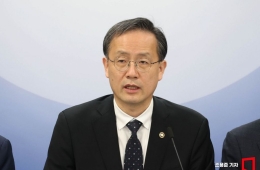
Song Oh-seop, Chief Judicial Support Officer at the Court Administration Office, stated at the public hearing on the "Expansion of Single-Judge Jurisdiction in First Instance Civil Cases" held at the Supreme Court on the 10th, "Practically, expanding the single-judge jurisdiction in the first instance is the most effective and appropriate means to guarantee the quality and promptness of trials."
In December last year, the Supreme Court announced a draft amendment to the rules to increase the jurisdictional scope handled by single-judge panels in first-instance civil trials to cases with claims up to 500 million won. This will take effect from March 1.
According to the Supreme Court, the proportion of long-term unresolved cases that have been pending without a court decision is increasing every year. This amendment was proposed as a way to resolve this issue.
Among the civil first-instance collegiate panels (three judges) nationwide, the proportion of cases exceeding the 'long-term unresolved' standard of 2 years and 6 months increased more than sixfold from 0.91% in 2010 to 5.68% in the first half of last year. The average time for case filing and processing also increased from 228.8 days in 2010 to 353.7 days in the first half of last year. The unresolved rate for single-judge first-instance cases shows a similar situation.
The Supreme Court believes that the delay in first-instance case processing is due to the number of trial panels not keeping up with the increasing number of lawsuits. They aim to expand the scope of cases that can be judged by a single judge to effectively increase the number of trial panels.
Officer Song predicted, "If this change in subject-matter jurisdiction (which determines the division of trial authority between single judges and collegiate panels based on the importance of first-instance cases) is implemented in March and the reduction of collegiate panels and expansion of single-judge panels are fully carried out, the capacity to handle unresolved collegiate panel cases will be secured first next year."
Hot Picks Today
 No Bacteria Detected in Arisu After 24 Hours of Repeated Drinking from a Tumbler
- "South Korea Shows Similar Trend to Developed Nations"...Obesity Analysis of 232 Million People Worldwide [Reading Science]
- High-Net-Worth Investors Increase Stock Holdings: "Samsung and SK hynix Are Basic, Now Searching for the Next Opportunity" [Investment Strategies of the Wealthy] ⑧
- "You Don't Need to Go to the Gym": The Best Exercises for Lowering Hypertension
- "My Wife Is Missing"... Woman in Her 50s Still Unaccounted for Nearly a Month After Climbing Bukhansan Mountain
He further forecasted that once the amendment is implemented, collegiate panel cases will decrease by 38.2% compared to now, and the number of trial panels will increase by 65.4.
© The Asia Business Daily(www.asiae.co.kr). All rights reserved.