LX Inter "1,100 tons of Chinese urea to arrive at Busan Port tomorrow... Equivalent to 3.1 million tons of AdBlue"
The Urea Fertilizer Plant Invested in 2013: The Key to Rapid Urea Supply

LX International will import 1,100 tons of Chinese-made urea secured through a urea fertilizer plant invested in China on the 11th via Busan Port. When the domestic urea solution crisis occurred, LX International actively utilized the Chinese Bodasdi urea fertilizer plant (photo), in which it holds a 29% stake. Photo by LX International
View original image[Asia Economy Reporter Ki-min Lee] LX International announced on the 10th that it will bring 1,100 tons of Chinese-made urea secured from a urea fertilizer plant invested in China into South Korea.
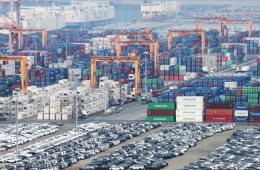
This quantity is the first batch of 10,000 tons of Chinese urea that LX International urgently secured last November amid the worsening shortage of urea solution, which recently obtained export approval from the Chinese government and will arrive at Busan Port on the 11th of this month. The 1,100 tons of urea can produce 3.1 million liters of urea solution and will be entirely supplied to manufacturers of automotive urea solution.
Among the remaining 8,900 tons, the second batch of 4,200 tons, which is awaiting export approval from the Chinese government, will be brought into the country in February, and procedures are underway to import the remaining 4,700 tons into South Korea as soon as possible.
Earlier, China began effectively restricting exports by significantly strengthening export commodity inspections on some items, including urea, in October last year, citing the stabilization of domestic supply. As a result, the domestic urea market, which heavily depends on China, experienced a shortage of automotive urea solution.
In response, LX International activated its global network, including overseas subsidiaries and branches, to secure 3,300 tons of Southeast Asian urea solution and 10,000 tons of Chinese urea to stabilize domestic supply.
LX International was able to urgently secure 10,000 tons of Chinese urea because it holds an investment asset in a urea fertilizer plant in China. In 2013, LX International acquired a 29% stake in the Bodasdi urea fertilizer plant in Neimenggu from the Chinese Bowien Group, becoming the first Korean company to enter the Chinese coal chemical industry.
This plant produces 1 million tons of urea annually, and LX International holds the sales rights for urea produced here in South Korea and Southeast Asia. An LX International official said, "It is positive that we can stably secure and supply Chinese urea through urea production assets directly invested by the company."
Hot Picks Today
 No Bacteria Detected in Arisu After 24 Hours of Repeated Drinking from a Tumbler
- "Available Only in Korea": Pokémon Card Prices Surge 2,532% Due to Rarity, Becoming Investment Assets
- Despite Surprising $23 Billion Earnings, Cisco to Lay Off 4,000 Employees for Expanded AI Investment
- Euisun Chung: "We Must Navigate Labor Relations Wisely... It's an Opportunity to Lead Globally" (Comprehensive)
- "Egg Prices Are Strange" Proven True... Collusive Margin Hike of 46% Without Basis Leads to 594 Million Won Fine
Meanwhile, in December last year, LX International signed a business agreement for supply chain diversification with the Korea Urea Alliance, composed of 41 domestic urea-related companies, and urea solution demand companies. Based on the joint demand of the Korea Urea Alliance, they plan to conclude group purchase contracts with overseas suppliers and, in the event of an urgent urea supply crisis in the future, will mobilize all available networks for a prompt response.
© The Asia Business Daily(www.asiae.co.kr). All rights reserved.