Exchange Rate Attempting to Stabilize Around 1,200 Won... Concerns Over Inflation Stimulation Also Raised

On the 6th, KOSPI opened at 2,927.50, down 26.47 points (0.90%) from the previous trading day. Dealers are working in the dealing room at the Hana Bank headquarters in Jung-gu, Seoul. On the same day, the won-dollar exchange rate started trading at 1,200.9 won, up 4.0 won from the previous trading day. Photo by Jinhyung Kang aymsdream@
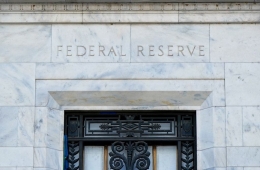
View original image[Asia Economy Reporter Jang Sehee] The Korean won to US dollar exchange rate has settled in the 1200 won range following the US Federal Reserve's (Fed) indication of early tightening. There are concerns that the sharply rising exchange rate will stimulate import prices.
On the 7th, in the Seoul foreign exchange market, the won-dollar exchange rate opened at 1204.2 won, up 3.2 won from the previous day, and is fluctuating slightly around 1202 won. This is the first time since July 17, 2020 (1205 won) that the opening exchange rate has exceeded 1204 won.
There are also concerns that the soaring exchange rate could lead to higher import prices, solidifying high inflation. When the value of the won falls, raw materials and other goods must be purchased at higher prices. Since import prices are reflected in consumer prices with a time lag, concerns about inflation are growing.
Professor Lee In-ho of Seoul National University’s Department of Economics stated, "If the exchange rate rises and the won’s value falls, it will ultimately act as upward pressure on import prices." He added, "Concerns about inflation due to rising import prices are expected to continue." Professor Lee also said, "To break the vicious cycle between the sharp rise in the exchange rate and foreign capital outflows, the Bank of Korea will respond by raising interest rates."
Hot Picks Today
!["South Korea Shows Similar Trend to Developed Nations"...Obesity Analysis of 232 Million People Worldwide [Reading Science]](https://cwcontent.asiae.co.kr/asiaresize/93/2021101517002868714_1634284829.jpg) "South Korea Shows Similar Trend to Developed Nations"...Obesity Analysis of 232 Million People Worldwide [Reading Science]
"South Korea Shows Similar Trend to Developed Nations"...Obesity Analysis of 232 Million People Worldwide [Reading Science]
- South Korea Overtakes Japan in a Decade: "This Time for Real"... Record-High Q1 Current Account Surplus Driven by Semiconductor Boom
- High-Net-Worth Investors Increase Stock Holdings: "Samsung and SK hynix Are Basic, Now Searching for the Next Opportunity" [Investment Strategies of the Wealthy] ⑧
- "You Don't Need to Go to the Gym": The Best Exercises for Lowering Hypertension
- "My Wife Is Missing"... Woman in Her 50s Still Unaccounted for Nearly a Month After Climbing Bukhansan Mountain
As the Fed’s early tightening becomes more visible, the dollar’s strength is expected to continue. Oh Chang-seop, a researcher at Hyundai Motor Securities, said, "Government intervention may have some effect in mitigating exchange rate volatility," but added, "Given that the Fed has even hinted at reducing its asset size, the dollar’s strength is likely to persist."
© The Asia Business Daily(www.asiae.co.kr). All rights reserved.