'Life-sustaining Treatment' Once More? ... Growing Calls for Additional Extension of Loan Repayment Moratorium
'Orderly Termination' Principle Amid 'Inevitable Extension' Trend
Impact of Strengthened COVID-19 Measures and 'Presidential Election Climate' Variables

Members of the Korea Federation of Self-Employed Affected by COVID-19 held a "Rally to Condemn the Government and Ruling Party and Urge Substantial Compensation for COVID-19 Damages" in front of the National Assembly in Yeouido, Seoul, on the 8th of last month, calling for substantial compensation for losses and the complete lifting of gathering restrictions. Photo by Kim Hyun-min kimhyun81@
View original imageSupport for loan maturity extensions and interest payment deferrals for small business owners and small and medium-sized enterprises affected by COVID-19 is scheduled to end at the end of March. However, voices predicting additional extensions are rising both inside and outside the financial sector. The government’s position is that a ‘orderly normalization’ is necessary, as repeated extensions have already increased the overall burden on the financial sector. Nevertheless, with the spread of the Omicron variant tightening quarantine measures again and the presidential election season coinciding, the prevailing view is that it will not be easy to end support as planned.
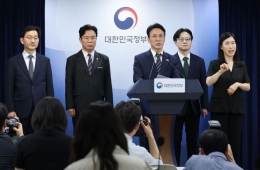
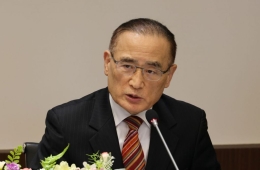
According to the government and financial authorities on the 6th, the financial authorities are reviewing practical measures to end the support, which began in April 2020, while minimizing the shock to affected small business owners. On the 4th, Deputy Prime Minister and Minister of Economy and Finance Hong Nam-ki said, "Temporary financial support due to COVID-19 requires orderly normalization." One method the government is considering for an ‘orderly termination’ is allowing borrowers to repay loans in installments over up to five years to avoid excessive repayment burdens.
Despite the government’s principles, frontline financial institutions frequently express the view that ‘additional extension is inevitable.’ A representative from a commercial bank said, "The current COVID-19 situation looks like a return to when the need for support such as loan maturity extensions was strongly highlighted," adding, "While managing the overall soundness of the financial sector and the burden on financial companies is certainly an issue, it may be difficult to push for termination based solely on this logic." Another commercial bank official said, "I understand that major banks are already reviewing various options based on the assumption of an additional extension," and predicted, "Unless the situation dramatically reverses in the remaining three months until termination, public opinion for an additional extension may intensify."
Regarding Financial Supervisory Service Governor Jeong Eun-bo’s statement the previous day that "the prolongation of COVID-19 and the increase in businesses facing closure risks have been observed," and his mention of the need to strengthen support for small business owners, there is an interpretation that "the financial authorities have not completely ruled out the possibility of an additional extension."
The fact that Lee Jae-myung, the Democratic Party presidential candidate, and Yoon Seok-youl, the People Power Party presidential candidate, are competing to propose large-scale support measures for self-employed individuals, including tens of trillions of won in loss compensation, also strengthens the view anticipating additional extensions. A financial sector official predicted, "The next president will be elected in early March, so it will be difficult to push through the planned end of support at the end of the same month."
There are also consistent voices arguing that since loan maturity extensions are essentially just ‘life support,’ it is right to end support as scheduled for the sake of both the financial sector and the small business industry. They argue that since a significant portion of loans receiving extended support is likely to be classified as non-performing loans in the future, it is necessary to boldly end support and achieve more practical effects through other measures.
Hot Picks Today
 "Now Our Salaries Are 10 Million Won a Month" Record High... Semiconductor Boom Drives Performance Bonuses at Major Electronic Component Firms
- Experts Already Watching Closely..."Target Price Set at 970,000 Won" Only Upward Momentum Remains [Weekend Money]
- "Heading for 2 Million Won": The Company the Securities Industry Says Not to Doubt [Weekend Money]
- "Only DS Was Considered": 4,000 Members Resign from Samsung's Largest Union in a Month... Majority Status 'at Risk'
- "Chanel Open Run? I Get a Free Pass"... The World of the Top 0.1% That Money Alone Can't Enter [Luxury World]
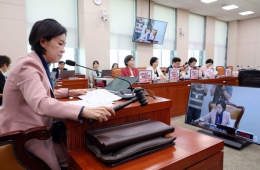
According to data recently analyzed by Democratic Party lawmaker Yoon Kwan-seok of the National Assembly’s Political Affairs Committee, obtained from the Financial Services Commission, a total of 1.06 million cases (including overlapping and multiple supports) of loan maturity extensions and other support were provided from April 2020, when the support began, until October last year. Support for maturity extensions of lump-sum repayment loans was the largest at 247.4 trillion won. Support for principal repayment deferrals on installment loans amounted to 13.6 trillion won, and interest payment deferral support was 230.1 billion won.
© The Asia Business Daily(www.asiae.co.kr). All rights reserved.