[New Year Special Interview] Former Deputy Prime Minister Jin Nyeom: "Good Intentions Alone Cannot Make Policies Succeed"
Evaluation of the Moon Jae-in Administration's 5-Year Term
"I don't really remember doing well... Regrettable rigidity and lack of public discourse"

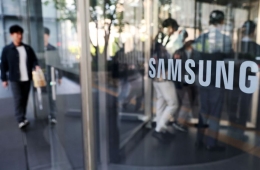
Former Deputy Prime Minister Jin Nyeom is having a New Year's interview with Asia Economy. Photo by Kim Hyun-min kimhyun81@
View original image[Asia Economy Reporter Joo Sang-don] "Although the Moon Jae-in administration made many efforts initially, it is very regrettable that the results did not show properly. Income-led growth, the 52-hour workweek, minimum wage increases, and zero irregular workers all had good intentions but poor outcomes. The lesson learned is that good intentions alone cannot make good policies."
Former Deputy Prime Minister and Minister of Finance and Economy Jin Nyeom strongly criticized various policies of the Moon Jae-in administration as it concluded its five-year term. He said, "I don't really remember much that was done well," and questioned, "Over the past five years, has growth potential been expanded? Has corporate vitality been revived? They say it is a labor-respecting society, but has the life of workers actually improved?"
Former Minister Jin also pointed out the rigidity of the Moon administration's policies. He said, "When the 52-hour workweek was introduced, I advised former Vice Chairman of the Job Committee Lee Mok-hee and others that many people would struggle to adapt if implemented as is, so it was necessary to differentiate by industry or extend the flexible working hours period, but this was not accepted." He added, "Regarding the minimum wage, it would be understandable to raise it by the inflation rate and income growth rate, but when raising it beyond that, at least differentiation by industry should have been made, but it did not work." Even if the direction was to raise the minimum wage, flexibility such as differentiation by industry should have been applied.
He also expressed regret that experts' opinions were not sufficiently reflected in the policy-making process. He said, "The most important thing in policy-making is a cold-headed understanding of reality, practical responses beyond ideology, and necessary countermeasures," and criticized, "Amateurs who did not understand the content but only had good intentions caused many side effects and no visible achievements."
Regarding national core issues such as nuclear phase-out and carbon neutrality, former Minister Jin said the public discourse process should be strengthened. He pointed out, "The main direction of policy decisions in this era is to find the most reasonable and best solution, but saying things like ‘No carbon neutrality without nuclear power? Then you’re out’ leads to no progress." He emphasized, "Sharing the problem itself is a great education for the nation and society."
Hot Picks Today
 No Bacteria Detected in Arisu After 24 Hours of Repeated Drinking from a Tumbler
- "Available Only in Korea": Pokémon Card Prices Surge 2,532% Due to Rarity, Becoming Investment Assets
- Staring at Stock Charts Causes 'Hwabyeong'... "What Have I Even Been Doing?" FOMO Spreads Amid Soaring KOSPI
- President Lee: "Agriculture Is a Core Strategic Industry Ensuring Food Sovereignty... Major Transformation of Rural Areas Needed"
- "Egg Prices Are Strange" Proven True... Collusive Margin Hike of 46% Without Basis Leads to 594 Million Won Fine
Former Minister Jin suggested institutionalizing a so-called ‘National Forum’ on major national policies, saying the absence of public discourse ultimately reduces policy momentum. Through a permanent National Forum, the national agenda would be presented to the public for discussion, and national policies would be evaluated and implemented accordingly. He said, "Policies are not made just because the president or one person says ‘let’s do it.’ The more important the issue, the more the public’s consent, understanding, and discussion on whether they can implement it are necessary for effective future policies."
© The Asia Business Daily(www.asiae.co.kr). All rights reserved.