Rep. Yoon Jae-gap Ignores Ministry of Agriculture's Safety Standards for Highly Toxic Pesticides
Toxic Pesticide MB: Strict Standards for Private Sector... Ministry of Agriculture Uses 2.3 Times Over Limit
Alternative Developed 10 Years Ago with 3.6 Billion Won, but Usage Remains Minimal

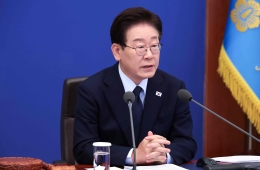
Yoon Jae-gap, Member of the National Assembly (Democratic Party, Haenam·Wando·Jindo) ⓒ Asia Economy
View original image[Haenam=Asia Economy Honam Reporting Headquarters Reporter Kim Hyun] According to data submitted by the Ministry of Agriculture, Food and Rural Affairs (MAFRA) to National Assembly member Yoon Jae-gap (Democratic Party, Haenam·Wando·Jindo) of the Agriculture, Forestry, Livestock, Food, and Maritime Affairs Committee, MAFRA itself has been found to disregard the safety usage standards for highly toxic pesticides and use them at levels exceeding the maximum by up to 2.3 times.
In South Korea, when importing agricultural products and timber from overseas, methyl bromide (MB) is commonly used as a disinfectant during quarantine processes to prevent the introduction of foreign pests and diseases.
MB has been designated as an ozone-depleting substance under the Montreal Protocol and is globally regulated due to its risks, such as causing central nervous system disorders when inhaled during handling.
Accordingly, MAFRA has established pesticide safety standards for MB and manages and supervises the amount of MB used by agricultural importers. However, unlike the strict regulations imposed on the private sector, MAFRA has applied a double standard by using an internal processing standard different from the legal limit (32g/㎥), exceeding it by up to 2.3 times (73g/㎥).
This is because MAFRA applied a separate internal handling standard different from the usage standards under the Pesticide Control Act. As a result, it was revealed that in 319 cases, accounting for 40% of all quarantines, the safety usage standards under the Pesticide Control Act were exceeded.
Meanwhile, since 2010, MAFRA has established a comprehensive plan for plant quarantine technology development and invested 3.6 billion KRW to successfully develop and commercialize alternative chemicals such as ‘ethyl formate,’ ‘phosphine,’ and ‘EDN.’
However, MAFRA only uses these developed alternatives in the quarantine process for some fruit types, while still insisting on using MB for timber quarantine, which accounts for 72% of total MB usage.
National Assembly member Yoon Jae-gap pointed out, “It is a serious problem that the government itself is violating safety usage standards for MB, which is harmful to both the environment and human health,” and added, “Since the development of alternative chemicals has been completed, urgent institutional improvements in quarantine are needed.”
Hot Picks Today
 "Samsung and Hynix Were Once for the Underachievers"... Hyundai Motor Employee's Lament
- After Topping 8,000 Instead of Hitting 10,000... KOSPI Plunges—When Will It Rebound?
- "They Said It's Impossible to Get—Already Selling for Triple the Price: Crowds Worldwide Line Up for $600 Luxury Watch"
- SK hynix Tops “Best Large Companies to Work For” Ranking Based on Employee Review Data
- "That? It's Already Stashed" Nightlife Scene Crosses the Line [ChwiYak Nation] ③
Haenam=Asia Economy Honam Reporting Headquarters Reporter Kim Hyun kh0424@asiae.co.kr
© The Asia Business Daily(www.asiae.co.kr). All rights reserved.