POSCO to Build Secondary Battery Recycling Plant
Groundbreaking Ceremony for Secondary Battery Recycling Plant at Yeolchonsandan, Jeonnam
Waste Battery - Crushed Powder (Black Powder) - Raw Material Extraction Process
120 Billion KRW Investment to Build Plant... Annual Production of Black Powder 12,000 Tons

[Asia Economy Reporter Hwang Yoon-joo] POSCO Group is officially entering the recycling business that extracts essential raw materials such as nickel and lithium for secondary batteries (electric vehicle batteries). The strategy is to strengthen its position as a battery material supplier by establishing a battery material supply chain that connects raw materials (lithium) - battery materials (cathode and anode materials) - recycling.
POSCO Group announced on the 30th that its joint venture with China’s Huayou Cobalt, ‘POSCO HY Clean Metal,’ has begun construction of a secondary battery recycling plant in the Yulchon Industrial Complex in Jeollanam-do.
The plant constructed by POSCO HY Clean Metal will be built on a 60,000㎡ site within the Yulchon Industrial Complex in Jeollanam-do with an investment of 120 billion KRW, aiming for completion in the second half of 2022. It will extract nickel, lithium, cobalt, and other materials from 12,000 tons per year of black powder (shredded powder from lithium-ion battery scrap).
In March this year, POSCO established the ‘PLSC corporation’ in Poland to process scrap from European secondary battery plants into black powder. In May, POSCO formed a joint venture with China’s Huayou Cobalt at a 65:35 ratio to handle the process of extracting nickel, lithium, and other materials from black powder, establishing POSCO HY Clean Metal. With the joint venture starting construction of the recycling plant in the Yulchon Industrial Complex, the business of extracting materials from scrap batteries is expected to accelerate.
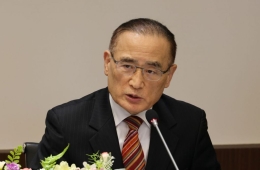
Jung Chang-hwa, head of POSCO’s New Growth Division, said, “POSCO HY Clean Metal, established as a joint venture with China’s Huayou Cobalt, will become a future growth engine for POSCO Group through its eco-friendly secondary battery recycling business that extracts essential raw materials such as nickel and lithium from scrap batteries.”
Meanwhile, POSCO Group, which possesses competitive advantages across the secondary battery material value chain?from supplying core raw materials such as lithium, nickel, and graphite to producing cathode and anode materials?plans to supply 220,000 tons of lithium and 100,000 tons of nickel by 2030. By establishing a production system of 400,000 tons of cathode materials and 260,000 tons of anode materials by 2030, the group aims to achieve annual sales of 23 trillion KRW in the secondary battery materials sector.
Hot Picks Today
 "Now Our Salaries Are 10 Million Won a Month" Record High... Semiconductor Boom Drives Performance Bonuses at Major Electronic Component Firms
- Living the Homebody Dream? "I Was Shocked by My Spending" How to Cut Costs to 5,000 Won for Essentials [The Principles of Benefits]
- Is It Really Like an Illness? "I Can't Wait to Go Again"—Over 1 Million Visited in Q1, Now 'Busanbyeong' Takes Hold [K-Holic]
- "Heading for 2 Million Won": The Company the Securities Industry Says Not to Doubt [Weekend Money]
- Experts Already Watching Closely..."Target Price Set at 970,000 Won" Only Upward Momentum Remains [Weekend Money]
© The Asia Business Daily(www.asiae.co.kr). All rights reserved.