Gwangju Metropolitan Office of Education Holds Briefing Session to Address COVID-19 Educational Gap

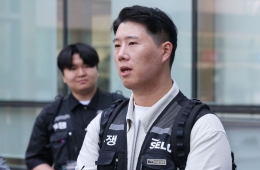
Gwangju Metropolitan Office of Education held a regional parent network meeting (representatives of parent association presidents from elementary, middle, and high schools within Gwangju) and a policy briefing on the 9th to address educational disparities caused by COVID-19. Photo by Gwangju Metropolitan Office of Education.
View original image[Asia Economy Honam Reporting Headquarters Reporter Cho Hyung-joo] The Gwangju Metropolitan Office of Education held a regional parent network meeting (representatives of parent associations from elementary, middle, and high schools within Gwangju) and a policy briefing session on the 9th to address educational disparities caused by COVID-19.
According to the Office of Education on the 10th, the policy briefing session was conducted with explanations of the project purpose and a Q&A session by supervisors in charge of elementary and secondary education affairs.
Through the policy briefing, the Office of Education introduced programs conducted by school level to bridge educational gaps. For elementary schools, the student-tailored supplementary curriculum program "2021 Haksub Doumdakki" will be implemented, while middle and high schools will lead efforts to prevent and resolve learning loss through the Bitgoeul Together "Value" education recovery program.
The main details include that internal and external teachers can provide guidance to students recommended by teachers or those who wish to participate. The program covers subjects deemed necessary by the school principal, considering Korean, Mathematics, English, Social Studies, Science, as well as career and student development levels.
Regarding the operation method, care will be taken to ensure that the daily study load for students is not excessive, and the program will be operated according to the school’s circumstances, such as after school or during vacations. It will be conducted in a student-tailored manner, including one-on-one, small groups (around 5 students), and medium groups (around 10 students). Face-to-face classes are the principle, but real-time online classes are possible if unavoidable.
In response, representatives of the regional parent network stated opinions such as, "A culture of consultation with parents should be established for smooth project implementation, and through active promotion and explanation of the project, we hope that all students who wish to participate can receive support."
Hot Picks Today
!["Heading for 2 Million Won": The Company the Securities Industry Says Not to Doubt [Weekend Money]](https://cwcontent.asiae.co.kr/asiaresize/93/2025050713592847164_1746593968.jpg) "Heading for 2 Million Won": The Company the Securities Industry Says Not to Doubt [Weekend Money]
"Heading for 2 Million Won": The Company the Securities Industry Says Not to Doubt [Weekend Money]
- School Sports Days Shrinking Due to Noise Complaints: National Police Agency Directs Officers to Refrain from Dispatch
- "Drink Three Cups of Coffee and Stay Up All Night Before the Test"... Manual of Insurance Planner Who Collected 1 Billion Won in Payouts
- "Anyone Who Visited the Room Salon, Come Forward"… Gangnam Police Station Launches Full Staff Investigation After New Scandal
- "Envious of Korean Daily Life"...Foreign Tourists Line Up in Central Myeongdong from Early Morning [Reportage]
© The Asia Business Daily(www.asiae.co.kr). All rights reserved.