Seongdong-gu Gentrification (Dungi Naemollim) Prevention Ordinance Approved as 'Local Commercial Act' by Cabinet Meeting
‘Act on Coexistence and Revitalization of Local Commercial Districts’ Approved at Cabinet Meeting on 20th... Passed National Assembly Plenary Session on 29th Last Month... Jung Won-oh, Seongdong-gu Mayor, “We Will Make Greater Efforts to Protect and Revitalize Local Commercial Districts So Small Business Owners Won't Have to Worry About Being Forced Out”

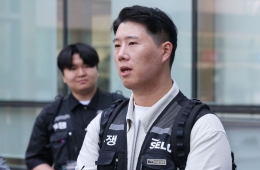
Jung Won-oh, Mayor of Seongdong-gu, attending the 2017 Seongsu-dong Expanded Area Win-Win Agreement Ceremony (right)
View original image[Asia Economy Reporter Jong-il Park] Seongdong-gu (Mayor Jeong Won-oh) has seen its ordinance enacted once again as a law.
On the 20th, the 'Act on Coexistence and Revitalization of Local Commercial Districts' (hereinafter referred to as the Local Commercial District Act), which passed the National Assembly plenary session on the 29th of last month, was approved at the Cabinet meeting.
This Local Commercial District Act was primarily proposed by Hong Ik-pyo (Seoul Jung-gu Seongdong-gu Gap, 3-term), a member of the Democratic Party of Korea, based on the ordinance and policies enacted by Seongdong-gu in 2015.
It was initially proposed at the opening of the 20th National Assembly in 2016 but was discarded due to the expiration of the term. However, after five years of effort, it finally passed the plenary session in the 21st National Assembly.
This case has also attracted attention as an example where a local member of the National Assembly and a district head joined forces to jointly respond to sensitive social issues and successfully legislated.
The Local Commercial District Act was enacted to prevent gentrification, where original residents and commercial tenants are forced to relocate due to rising rents, and to revitalize commercial districts that have been stagnated due to COVID-19, thereby protecting the livelihoods of small business owners.
Since the enactment of the ordinance to prevent gentrification in 2015, Seongdong-gu has promoted the signing of coexistence agreements involving landlords, tenants, and Seongdong-gu Office, focusing on Seongsu-dong Seoul Forest-gil, Bangsongdae-gil, and Sangwon-gil, where concerns about rising commercial rents were high.
To this end, more than 60 Seongdong-gu officials at grade 6 or higher actively engaged in administrative efforts by directly meeting and persuading local building owners, resulting in about 70% of building owners in the area participating in the coexistence agreement.
Subsequently, based on the ordinance, the district designated Seoul Forest-gil, Bangsongdae-gil, and Sangwon-gil as sustainable zones. Within these zones, a 'Mutual Cooperation Residents' Council' was established to pre-screen businesses likely to induce gentrification, and if deemed highly risky, 'entry restrictions' could be imposed.
In return, building owners who cooperated with the district's policies such as coexistence agreements were recognized for their contributions to the community and granted floor area ratio incentives when expanding or reconstructing buildings.
These flexible policy inducements dispelled controversies over property rights and provided an opportunity for public-private cooperation to achieve the dual goals of 'protection' and 'revitalization' of local commercial districts.
The district's ordinance and policies were fully reflected in the Local Commercial District Act. The act mandates the signing of coexistence agreements containing provisions such as rent stabilization, adjustment of lease terms, and guarantees for recovering key money in areas where rapid rent increases are feared or occurring, and based on this, allows the designation of local coexistence zones and autonomous commercial zones.
These two zones concretize the district's sustainable development zones with the dual goals of protecting and revitalizing local commercial districts. The local coexistence zone, which pre-screens the entry of businesses that may cause gentrification through a local coexistence council, focuses on protecting local commercial districts, while the autonomous commercial zone, which supports lease contract agreement facilitation, education, management support, and commercial district specialization projects through autonomous commercial associations and professional commercial building managers, emphasizes commercial district revitalization.
Additionally, in these two zones, support policies such as tax or charge reductions stipulated by local government ordinances, loan support for commercial building reconstruction and major repairs, and special provisions for Onnuri gift certificate affiliated stores can be implemented.
Kim Kyung-sun, Director of the Sustainable Development Division of Seongdong-gu Smart Inclusive City Bureau, who is currently in charge of gentrification prevention policies, stated, "The enactment of the Local Commercial District Act marks another turning point for Seongdong-gu's gentrification prevention policies," but also noted, "It is regrettable that the designation requirements for local coexistence zones and autonomous commercial zones are too stringent, and it is necessary to supplement or improve the system through enforcement ordinances to allow flexible operation."
Jeong Won-oh, the district mayor who served as the chairman of the 'Gentrification Prevention Local Government Council' from 2016 to April this year and led efforts to amend the Commercial Building Lease Protection Act and enforcement ordinances as well as enact the Local Commercial District Act, expressed his intention to devote even greater efforts to urban regeneration without gentrification and revitalization of the local economy following the passage of this law.
Mayor Jeong said, "With the enactment of the Local Commercial District Act following the amendments to the Commercial Building Lease Protection Act and enforcement ordinances, an environment has been created where small business owners can operate without fear of being driven out," and emphasized, "As difficulties for self-employed and small business owners are increasing due to COVID-19, we will strive even harder to protect and revitalize local commercial districts."
Seongdong-gu has created a second case where an ordinance first enacted by a local government was legislated by the National Assembly through the enactment of the Local Commercial District Act. The first law based on a Seongdong-gu ordinance was the 'Essential Workers Protection Act,' which passed the National Assembly plenary session in May and was based on the 'Seongdong-gu Ordinance on Protection and Support for Essential Workers,' the first of its kind nationwide enacted by Seongdong-gu in 2020.
Hot Picks Today
!["Heading for 2 Million Won": The Company the Securities Industry Says Not to Doubt [Weekend Money]](https://cwcontent.asiae.co.kr/asiaresize/93/2025061015355092669_1749537351.jpg) "Heading for 2 Million Won": The Company the Securities Industry Says Not to Doubt [Weekend Money]
"Heading for 2 Million Won": The Company the Securities Industry Says Not to Doubt [Weekend Money]
- "Anyone Who Visited the Room Salon, Come Forward"… Gangnam Police Station Launches Full Staff Investigation After New Scandal
- "Can't Even Turn On a Fan? How Will They Endure the Heat?"... Massive Blackout Hits the Philippines Amid Scorching Heat
- "Drink Three Cups of Coffee and Stay Up All Night Before the Test"... Manual of Insurance Planner Who Collected 1 Billion Won in Payouts
- Did Samsung and SK hynix Rise Too Much?... Foreign Assets Grow Despite Selling [Weekend Money]
The Local Commercial District Act, known as the 'second law,' which started from a Seongdong-gu ordinance, is attracting attention as a rare case where an ordinance initiated by a basic local government has been developed into a bill and enacted.
© The Asia Business Daily(www.asiae.co.kr). All rights reserved.