[Good Morning Stock Market] Reentry into the COVID-19 Market Phase... Possible Short-Term Sideways Movement and Differentiated Response
![[Image source=Yonhap News]](http://www.asiae.co.kr/news/img_view.htm?img=2021071616143137740_1626419671.jpg)
[Asia Economy Reporter Lee Seon-ae] On the 19th, the domestic stock market is expected to show volatility amid concerns over the spread of the COVID-19 Delta variant.
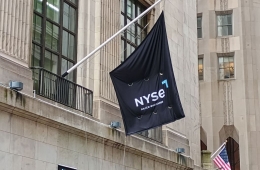
Last week, the New York stock market fell across the board due to inflation concerns. On the 16th (local time) at the New York Stock Exchange (NYSE), the Dow Jones Industrial Average closed at 34,687.85, down 299.17 points (0.86%) from the previous trading day. The Standard & Poor's (S&P) 500 index closed at 4,327.16, down 32.87 points (0.75%), and the tech-heavy Nasdaq index closed at 14,427.24, down 115.90 points (0.80%).
Investor sentiment in the New York stock market was significantly dampened. The consumer sentiment index fell from 85.5 in June to 80.8 in July, marking the lowest level in five months. Additionally, the expected inflation rate for next year, as observed by consumers, reached 4.8%, the highest since August 2008.
Concerns over the spread of the Delta variant also contributed to the market decline. According to data analysis from Johns Hopkins University, the seven-day average daily number of confirmed cases increased by more than 10% compared to a week earlier across all 50 states and Washington D.C. Accordingly, Los Angeles (LA) County, the most populous county in the U.S., reinstated the indoor mask mandate regardless of vaccination status starting from 11:59 PM on the 17th.
◆ Kim Dae-jun, Researcher at Korea Investment & Securities = Just as people get exhausted by the hot weather, the Korean stock market also appears fatigued. The KOSPI has not surpassed 3,300 since the 6th. The COVID-19 Delta variant, spreading domestically and internationally, is acting as a factor weakening the upward momentum of the index. Some argue that even without the Delta variant, it was time for the KOSPI to take a breather. They cite the monthly returns, which had been positive for eight consecutive months. In fact, the KOSPI has been running non-stop from November last year until last month, with a cumulative return of about 45%. With such returns, it is not unusual for the index to show little movement for a while. The KOSPI has experienced a similar upward rally in the past, notably in 2017. The only time since 1990 that the index rose for eight consecutive months on a monthly basis was then. The period of the rise and the moments of brief corrections are very similar to the current situation. Comparing the past trend with the present can be useful for strategy formulation, considering that history may repeat itself.
Even if the domestic economy and corporate earnings remain favorable as in the past, if the index moves sideways due to uncertainties in U.S. monetary policy, strategies should be adjusted accordingly. In this regard, it is necessary to revisit the market trend of 2017. First, in August 2017, when the index reversed downward, the sector with the highest relative returns compared to the market was materials, while the worst-performing sector was communication. Specifically, chemicals maintained an upward trend reflecting expanded product margins and expectations for electric vehicle growth, whereas telecommunications fell sharply due to policy uncertainties such as increased discount rates. As seen above, even in a sideways market, sector performance can be differentiated based on catalysts. Since earnings outlooks underpin the differences in returns, it is important to select sectors and stocks centered on earnings when designing future response strategies. Currently, sectors with upward revisions in earnings forecasts compared to the previous month include energy, materials, industrials, consumer discretionary, and IT?cyclical sectors. In periods where the index is likely to move sideways in the short term, focusing on sectors with increasing earnings as mentioned above can be a favorable strategy to preserve returns.
Moreover, combining this with criteria for strong net buying by foreigners allows identification of stocks currently attracting significant market interest. Regarding this, among KOSPI 200 stocks with a market capitalization of over 2 trillion KRW, the 10 stocks with strong foreign net buying intensity include LS, CS Wind, and others. It is believed that responding to the market with this approach for the time being is necessary.
![[Good Morning Stock Market] Reentry into the COVID-19 Market Phase... Possible Short-Term Sideways Movement and Differentiated Response](http://www.asiae.co.kr/news/img_view.htm?img=2021071908120139139_1626649921.jpg)
◆ Park Sang-hyun, Researcher at Hi Investment & Securities = The key is whether the preference for safe assets related to the Delta variant virus calms down. In the absence of major economic data releases and events, the biggest topic in the global foreign exchange market is the resurgence of COVID-19 caused by the Delta variant virus. In Israel, which has achieved herd immunity, the number of new COVID-19 cases is approaching 1,000, and the number of COVID-19 cases in the U.S. is rising again, suggesting that the preference for safe assets is likely to continue for some time. This sentiment is reflected in the movement of the U.S. 10-year Treasury yield. Despite inflation concerns and expectations for economic recovery, the U.S. 10-year Treasury yield has not escaped a sideways phase.
Hot Picks Today
 Even with High Oil Price Relief Payment, Additional 300,000 Won Per Person to Be Provided... Applications Open from the 18th in This Region
- "Invested 95% in Hynix and Reached 10 Billion Won"... Japanese Investor's Proof Post Goes Viral
- "Why Is the Korean Stock Market Surging?"... Even Italy Is Astonished by the KOSPI Rally
- "You Don't Need to Go to the Gym": The Best Exercises for Lowering Hypertension
- "That Thing Wakes Up Every Night" ... Suspicious Object Covers Rural Village
In the short term, as it is expected to be difficult to calm the resurgence of COVID-19, the variable is whether fear related to the Delta variant virus intensifies. The won-dollar exchange rate is also expected to show volatility due to the spread of COVID-19. This week, whether the effects of social distancing upgrades become visible will act as a variable to gauge whether the won-dollar rate will rise further or stabilize downward. Last week, the won-dollar exchange rate turned downward due to concerns over the rapid rise. The easing of worries about the upgrade to social distancing level 4, better-than-expected stock market performance, and strong signals from the Monetary Policy Committee about rate hikes within the year acted as downward pressure.
© The Asia Business Daily(www.asiae.co.kr). All rights reserved.