Due to the National Support Fund... 2nd Supplementary Budget Review Starts with Difficulties

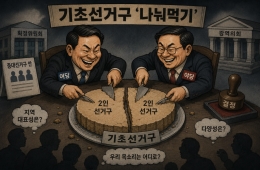
[Sejong=Asia Economy Reporter Son Seon-hee] As the review of the second supplementary budget (supplementary budget) bill intensifies, signs of escalating clashes between the ruling party and the government are emerging. Despite opposition from Deputy Prime Minister and Minister of Economy and Finance Hong Nam-ki, the Democratic Party of Korea is pushing the COVID-19 coexistence national support fund for "all citizens" as the party's official stance, and the government is also taking a firm stand in response.
On the 14th, ahead of the full meeting of the National Assembly's Budget and Accounts Special Committee to review the second supplementary budget bill, the Ministry of Economy and Finance briefly stated, "We will sincerely participate in the review based on the supplementary budget bill agreed upon by the ruling party and the government." This shows extreme restraint in responding to the Democratic Party's decision at a closed supreme council meeting the previous afternoon to overturn the party-government agreement of "selective payment to the bottom 80% income bracket" and expand the national support fund payment target to all citizens. Another official hinted that it would be difficult to proceed according to the party's wishes by saying, "Increases are the exclusive authority of the Ministry of Economy and Finance."
The government's reluctance to the ruling party's plan to provide the national support fund to all citizens is because it exceeds the resources agreed upon by the ruling party and government. If the payment target of the national support fund, set at 250,000 won per person, is expanded, the additional required resources are estimated to be about 2.5 trillion won. Since the supplementary budget bill has already been submitted to the National Assembly after consultations between the ruling party and government, government approval is essential for increasing the supplementary budget scale. However, the government maintains its position that increases are impossible as it has already allocated the maximum budget based on the annual excess tax revenue forecast.
Of course, there is also the option of reducing the budget allocated to other supplementary budget projects to secure funds. The coexistence consumption support fund (credit card cashback) is a representative example. There are criticisms that the cashback policy for "stimulating consumption" is not timely given the severe quarantine situation. The Democratic Party insists that the cashback policy should be withdrawn and the funds used for disaster relief payments. However, the funds allocated for cashback amount to only 1.1 trillion won, which is insufficient to cover all costs. Moreover, the Ministry of Economy and Finance intends to proceed with the cashback policy as originally planned to restore "damaged consumption."
The government also opposes the ruling party's plan to use even the portion allocated for national debt repayment for the supplementary budget instead of increasing the budget. The ruling party and government had agreed to use 2 trillion won of the excess tax revenue for debt repayment. The government argues that failure to implement debt repayment could stimulate the bond market, which is already facing increased uncertainty, and negatively affect external credibility.
Hot Picks Today
 No Bacteria Detected in Arisu After 24 Hours of Repeated Drinking from a Tumbler
- "We Can't Just Let Them Be Damaged Inside"... Samsung Electronics Removes 360,000 Wafers in Preparation for Strike
- Introduction of 'Fair Value' in Mergers... Capital Markets Act Amendment Passes Standing Committee
- Wife in $6.7 Million Debt Took Out $3 Million in Husband's Life Insurance, Poisoned Him... US Court: "She Can Never Be Released"
- "He's Handsome, It's Such a Pity?"... Lawyer Responds to Bizarre 'Appearance Evaluation' of High School Girl Murder Suspect
There are concerns that if this supplementary budget bill is overturned due to political logic ahead of the election, it could lead to issues regarding Deputy Prime Minister Hong's position.
© The Asia Business Daily(www.asiae.co.kr). All rights reserved.