Central Bank 'Easy Money' Era to End Starting This Second Half of the Year
Quantitative Easing Since the Start of COVID-19 Causes Asset Surge and Inflation
"The Justification for Quantitative Easing Is Disappearing"
![[Image source=Reuters Yonhap News]](http://www.asiae.co.kr/news/img_view.htm?img=2021070509581319366_1625446693.jpg)
Advanced countries such as Canada, Australia, and New Zealand also shifting toward tightening
Korea signals interest rate hike within the year... likely the first rate hike in Asia
[Asia Economy, Reporter Kim Eunbyeol] The unprecedented level of money printing by central banks that began after the COVID-19 pandemic, known as the 'Easy money' era, is expected to start coming to an end from the second half of this year. Although uncertainties remain due to the COVID-19 Delta variant, the stock market is booming and the economy is recovering rapidly, raising concerns about inflation. While the prevailing view is still that inflation is temporary, there are growing worries that continued money printing could lead to prolonged inflation. Therefore, from the second half of the year, central banks around the world are expected to begin withdrawing the money they had injected.
Advanced countries also signal unprecedented quantitative easing (QE) halts... Korea to raise rates within the year
On the 4th (local time), Bloomberg reported in an article titled "The End of Easy Money is Beginning" that "central banks are starting to move away from emergency stimulus measures implemented in response to the global recession caused by COVID-19," adding that "the U.S. Federal Reserve (Fed) has begun discussing tapering (reducing asset purchases), and the People's Bank of China is curbing credit growth to reduce debt risks." Brazil, Mexico, Turkey, the Czech Republic, and Russia have already raised interest rates, and other central banks have started explaining ways to reverse the unprecedented money printing.
The Economist of the UK also reported, "When the pandemic began, central banks calmed the panic-stricken markets and purchased bonds to inject money, but now the justification for quantitative easing (QE) has almost disappeared," adding, "Today, markets are booming, and there are opinions that inflation could revive."
In Korea's case, it is expected to be the first Asian country to raise rates. Lee Ju-yeol, Governor of the Bank of Korea, has repeatedly strongly hinted at the possibility of an interest rate hike within the year. In particular, on the 24th of last month, while explaining the inflation target management situation, Governor Lee stated, "It is necessary to orderly normalize monetary policy at a timely point within the year," firmly indicating the intention to raise rates within the year. This decision was made based on the judgment that prolonged ultra-low interest rates have intensified financial instability, such as rapid rises in real estate and stock markets fueled by loans.
Bloomberg forecasted that "although Korea's inflation rate is considered temporary, the Bank of Korea views that failure to address asset bubbles and financial imbalances could rather hinder rapid economic recovery," and expects the Bank of Korea to raise rates by 25 basis points (1bp=0.01 percentage point) in the fourth quarter. However, given the record-high household debt in Korea, aggressive rate hikes are difficult, and one or two additional rate hikes are expected next year.

Advanced central banks shift direction... inflation and economic overheating are key
The Bank of Canada (BOC) has already started tapering. On the 14th, the BOC is expected to release additional messages related to tightening. The BOC was the first among advanced countries to shift toward tightening, having reduced its government bond purchases from 5 billion Canadian dollars last year to about 3 billion Canadian dollars this year. Analysts expect the BOC to reduce bond purchases further to about 2 billion Canadian dollars this month and to about 1 billion Canadian dollars next year, while beginning to consider interest rate hikes.
The Reserve Bank of Australia (RBA) is expected to announce on the 6th whether it will reduce bond purchases, and the Bank of England (BOE) is also expected to consider ending QE once the asset purchase amount (about 895 billion pounds) is reached. The BOE is concerned about inflation as the inflation rate exceeds 2%, but remains cautious about tightening. The Reserve Bank of New Zealand has already announced in May that it will not complete all planned asset purchases. Advanced central banks are thus slowing or restraining money printing through bond purchases.
The reason central banks are gradually shifting direction is that the rapid pace of economic recovery is raising concerns about inflation caused by economic overheating. In particular, severe labor shortages and significant housing price increases in the U.S. have been pointed out as potential inflation drivers. The Bank of Korea stated in its 'Overseas Economic Focus' published on the 4th, "The U.S. core PCE price is expected to show strong upward pressure due to robust consumption growth, maintaining a high rise until early next year." The U.S. inflation forecast based on core PCE is 3.0% according to the Federal Reserve's forecast for this year, and inflation is expected to exceed 2% at 2.1% next year. The Bank of Korea added, "If the high inflation trend lasts longer than expected, there is concern that the recently rising inflation expectations could become entrenched at a high level, acting as a medium- to long-term inflationary pressure."
![[Image source=Yonhap News]](http://www.asiae.co.kr/news/img_view.htm?img=2021070510065319394_1625447214.jpg)
U.S. Fed remains reserved... trauma from 2013 taper tantrum
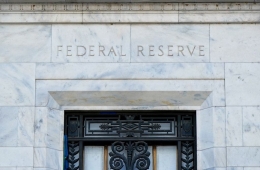
However, the Fed has not yet issued clear messages about tightening. After the Federal Open Market Committee (FOMC) meeting in mid-last month, Fed Chair Jerome Powell said, "We try to be transparent, but at this point, it is difficult to answer," remaining cautious. Although the market expects the Fed to announce tapering plans this summer, Chair Powell remains cautious.
Experts agree that the Fed's cautious stance, unlike other central banks, is influenced by the nightmare of the 2013 taper tantrum. When the Fed signaled tightening then, markets were shocked, causing instability even in emerging economies. Especially if market interest rates surge due to tightening signals, debt burdens could increase, so the Fed believes it must communicate sufficiently with the market before starting tapering.
However, since tapering has been mentioned several times and some FOMC members other than Chair Powell have repeatedly emphasized the need for tightening, many analysts believe there will be no market shock like in 2013 this time. It is also pointed out that interest rates have already risen sufficiently as multiple signals have been sent to the market. The International Monetary Fund (IMF) expects the Fed to begin tapering in the first half of next year. Investment banks (IBs) predict tapering will start in the first quarter of next year, with the Fed's interest rate hikes likely in the second half of 2023.
Hot Picks Today
 "Why Is the Korean Stock Market Surging?"... Even Italy Is Astonished by the KOSPI Rally
- "Invested 95% in Hynix and Reached 10 Billion Won"... Japanese Investor's Proof Post Goes Viral
- Even with High Oil Price Relief Payment, Additional 300,000 Won Per Person to Be Provided... Applications Open from the 18th in This Region
- "South Korea Shows Similar Trend to Developed Nations"...Obesity Analysis of 232 Million People Worldwide [Reading Science]
- "That Thing Wakes Up Every Night" ... Suspicious Object Covers Rural Village
© The Asia Business Daily(www.asiae.co.kr). All rights reserved.