President Moon and Heads of 4 Major Conglomerates First Meeting D-1, Business Community Awaits
[Asia Economy Reporters Kim Hyewon, Choi Daeyeol, Kim Heungsun] The first meeting between President Moon Jae-in and the heads of the four major conglomerates on the occasion of the Korea-US summit is just one day away. The business community is voicing expectations for policy incentives that would reciprocate the approximately 44 trillion won worth of investment 'gift packages' to the US. Attention is also focused on whether President Moon will once again express his stance on the pardon public opinion surrounding Samsung Electronics Vice Chairman Lee Jae-yong, who is currently imprisoned.
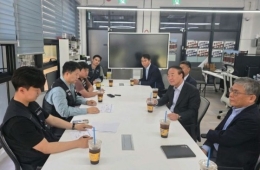
According to the business community on the 1st, President Moon will have a luncheon meeting on the 2nd with SK Group Chairman Chey Tae-won, Hyundai Motor Group Chairman Chung Euisun, and LG Group Chairman Koo Kwang-mo. From Samsung Group, Samsung Electronics Vice Chairman Kim Ki-nam, who accompanied the US visit in place of Vice Chairman Lee, is expected to attend. This is the first time since his inauguration that President Moon has arranged a separate meeting with the heads of the four major conglomerates.
This meeting strongly reflects President Moon's intention to express gratitude, conscious of public opinion that the Korea-US summit was successfully concluded thanks to the announcement of the four major conglomerates' investment plans in the US. Therefore, the business community unanimously sees this as a chance to directly convey to President Moon the core difficulties that could alleviate the anti-corporate sentiment that has deepened under the Moon Jae-in administration and promote corporate activities, albeit somewhat belatedly.
First, there was a prevailing opinion that policy reforms emphasizing 'tax benefits' should be expedited to increase investments not only overseas but also domestically in various facilities, equipment, and research and development (R&D). There are calls to adjust temporary investment tax credits and R&D tax credit rates, as well as to significantly expand their targets and scope. Group A emphasized, "In the rapidly changing environment following the COVID-19 pandemic, effective support measures are needed to expand incentives for investment and R&D so that companies can accelerate securing future growth engines and enhance the competitiveness of the entire industrial ecosystem."

It is also of interest whether the government will respond to repeated appeals from the business community to ease excessive regulations that are far from global standards. According to a recent survey by the Korea Economic Research Institute of the top 500 companies by sales, the major regulations hindering investment were local government permits and review regulations (23.6%), environmental regulations (18%), and employment and labor regulations (18%). Due to these numerous regulations, the domestic investment environment satisfaction score was only 45.5 out of 100.
At this meeting, the business community is expected to urge the government for bold regulatory easing and swift support related to carbon neutrality, a global industrial issue. The industry argues that standardized strategies that can serve as guidelines, along with tax and financial support, are necessary to reduce cost burdens for companies in the process of reducing carbon emissions or using eco-friendly energy. In the private sector, the Korea Chamber of Commerce and Industry, led by Chairman Chey, established the Carbon Neutral Industry Transition Promotion Committee in April in cooperation with the government. Following the recently concluded P4G Seoul Summit, the government clearly stated its commitment to actively support companies in developing eco-friendly technologies by establishing the Presidential 2050 Carbon Neutral Committee, making it highly likely that President Moon will respond positively.
The business community also voiced explicit dissatisfaction aimed at the legislature. There were calls for the re-amendment of corporate regulatory laws, including the three corporate regulation laws and the Serious Accident Punishment Act, which were pushed through from the end of last year to early this year, tightening restrictions on companies. Group B stated, "Various laws based on anti-corporate sentiment are hindering proactive management," adding, "If the government and the National Assembly intend to encourage corporate activities, re-amendment of these laws is absolutely necessary."
Additionally, in the automotive industry, there were specific requests such as extending tax benefits for eco-friendly vehicles and lifting regulations that restrict large corporations from entering the used car market. Chung Manki, President of the Korea Automobile Manufacturers Association, said, "The designation of the used car sales business as a small and medium-sized enterprise suitable industry has been excessively delayed beyond the legal deadline, causing missed opportunities for new industry creation," and added, "Support for hybrid vehicle subsidies should also be extended."
Hot Picks Today
 There Is a Distinct Age When Physical Abilities Decline Rapidly... From What Age Do Strength and Endurance Drop?
- "After Vowing to Become No. 1 Globally, Sudden Policy Brake Puts Companies’ Massive Investments at Risk"
- Kim Eo-jun Faces One-Year Prison Sentence for 'Lee Dong-jae Defamation' Charges
- Cerebras Soars 70% on IPO Debut: Is Nvidia's Reign Ending as a New AI Semiconductor Power Emerges?
- On Teacher's Day, a Student's Gifted Cake Had to Be Cut into 32 Pieces... Why?
Regarding issues, there were many opinions demanding improvements to the minimum wage system, which triggers labor-management conflicts every year. The business community's position is to introduce regional or industry-specific differentials or to change the minimum wage determination cycle from the current one year to three years or more.
© The Asia Business Daily(www.asiae.co.kr). All rights reserved.