Loud Claims of LTV Relaxation... But Loan Limit Only Increased by 40 Million Won, a 'Josamosa' Case
Yo, Announcement to Promote 60% LTV in Speculative Areas and 70% in Adjustment Areas for Non-Homeowners
Preferential Rate Increase Up to 20%p... Housing Price Standard Raised from 600 Million to 900 Million
Loan Limit Capped at 400 Million Won... Criticism Arises Over Low Effectiveness

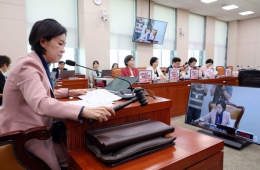
On the 9th, the loan counter at Hana Bank in Euljiro, Seoul. Photo by Mun Ho-nam munonam@
View original image[Asia Economy Reporter Ryu Tae-min] The Democratic Party's Special Committee on Real Estate has decided to ease housing loan regulations by raising the loan-to-value ratio (LTV) for mortgage loans for non-homeowners up to a maximum of 70% in regulated areas, which is expected to reduce the burden on genuine buyers trying to purchase a home. However, since the maximum loan limit is set at 400 million KRW even with the increased LTV, the actual increase in loan amount is only a few tens of millions of KRW, leading to criticism that the real effect will be minimal.
According to political circles on the 30th, on the 27th, the Democratic Party's Special Committee on Real Estate announced financial, tax, and supply improvement measures to stabilize the housing market. The improvement plan also included easing loan regulations for non-homeowners. The preferential LTV rate for genuine buyers will be expanded from the current 10 percentage points to up to 20 percentage points.
The housing price criteria were also raised from 600 million KRW to 900 million KRW for speculative and overheated districts, and from 500 million KRW to 800 million KRW for regulated areas. The income criteria were increased from a combined 80 million KRW for couples to 90 million KRW, and for first-time buyers from 90 million KRW to 100 million KRW, allowing more non-homeowners to benefit.
Applying the improvement plan, when taking out a loan to buy an apartment in speculative and overheated districts such as Seoul, the LTV limit will increase from 40% to 60% (with a 20 percentage point preferential application), and in regulated areas from 50% to 70%. For example, when purchasing a 900 million KRW apartment in Seoul, applying an LTV of 60% to 600 million KRW (540 million KRW) and 50% to the excess 300 million KRW (150 million KRW) results in a total LTV limit of 690 million KRW.
The problem is the difference between the LTV limit and the actual loan amount that can be received. This is because the maximum loan amount is restricted to within 400 million KRW, which is the borrower-level total debt service ratio (DSR) limit. This means the loan limit only increases by 40 million KRW compared to the current 360 million KRW loan limit for a 900 million KRW apartment applying the current 40% LTV. Online real estate communities criticize this as mere window dressing and call it a ‘Josam-mosa’ (a Korean idiom meaning a change in appearance but no real difference).
Hot Picks Today
 "Now Our Salaries Are 10 Million Won a Month" Record High... Semiconductor Boom Drives Performance Bonuses at Major Electronic Component Firms
- Experts Already Watching Closely..."Target Price Set at 970,000 Won" Only Upward Momentum Remains [Weekend Money]
- "Heading for 2 Million Won": The Company the Securities Industry Says Not to Doubt [Weekend Money]
- Did Samsung and SK hynix Rise Too Much?... Foreign Assets Grow Despite Selling [Weekend Money]
- "Chanel Open Run? I Get a Free Pass"... The World of the Top 0.1% That Money Alone Can't Enter [Luxury World]
Professor Seo Jin-hyung of Gyeongin Women's University (President of the Korean Real Estate Society) said, “The policy intention to lower the threshold for non-homeowners to purchase a home is good, but it is questionable how effective it will be,” adding, “Other regulations such as the maximum loan limit also need to be revised together for the actual effect to be greater.”
© The Asia Business Daily(www.asiae.co.kr). All rights reserved.