US Decides First Overseas Supply of Pfizer, Moderna, and J&J Vaccines (Comprehensive)
Provision of 20 Million Doses by the End of June
"Vaccines Will Not Be Used for US Interests"
![[Image source=Reuters Yonhap News]](http://www.asiae.co.kr/news/img_view.htm?img=2021051810214640091_1621300905.jpg)
[Asia Economy New York=Correspondent Baek Jong-min, Reporter Cho Hyun-ui] President Joe Biden announced that he will provide 20 million doses of Pfizer, Moderna, and Johnson & Johnson (J&J) COVID-19 vaccines overseas by the end of June. This is the first time the United States has shared vaccines produced domestically with other countries.
With a vaccine swap being promoted ahead of the South Korea-U.S. summit with President Moon Jae-in, attention is focused on whether these vaccines will also be allocated to South Korea.
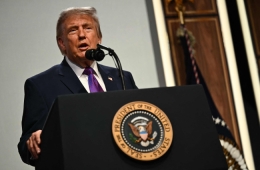
On the 17th (local time), President Biden said in a White House speech, "The United States will share 20 million doses of vaccines approved for use within the country with overseas nations within the next six weeks."
He emphasized the significance of this decision by stating, "We know that the United States will never be completely safe until the pandemic raging worldwide is brought under control."
The vaccines the U.S. has committed to support are three types approved for emergency use by the U.S. Food and Drug Administration (FDA): Pfizer, Moderna, and J&J's Janssen. This is the first time the U.S. has shared COVID-19 vaccines it has approved with other countries.
Including the previously promised 60 million doses of AstraZeneca (AZ) vaccines, a total of 80 million doses will be sent overseas. The AZ vaccine has not received emergency use authorization in the U.S.
President Biden said, "The 80 million doses represent 13% of the vaccine supply the U.S. will produce by the end of June," adding, "We will continue to provide surplus vaccines, but the quantity will not be sufficient."
Bloomberg News reported, "A senior White House official said this decision is 'only the first step in focusing on mitigating the pandemic overseas,' suggesting that further measures may follow."
President Biden stated that the scale of vaccines supplied by the U.S. is larger than that of any other country. He said, "It will be more than the 15 million doses provided by Russia and China," and added, "We want to lead the world with our values. Challenging democracies leading the way out of the COVID-19 crisis is a mistake."
He did not mention the waiver of intellectual property rights for COVID-19 vaccines. However, he emphasized that this decision is not to protect U.S. interests. President Biden said, "China and Russia are trying to use their domestically produced vaccines as leverage to expand their influence," and "We will not use vaccines to gain benefits from other countries."
He also stressed the importance of cooperation with pharmaceutical companies and other countries to increase vaccine supply. He said, "If we work like this to end the pandemic, we can create jobs in the U.S. and save lives overseas."
The World Health Organization (WHO) welcomed the U.S. government's decision. WHO Director-General Tedros Adhanom Ghebreyesus tweeted on the same day, "I welcome President Biden's plan to provide 80 million doses to countries in need," and expressed gratitude for "the commitment to global health."
He added, "COVAX (the international vaccine support project) will also fairly distribute vaccines," and said, "Only solidarity among countries worldwide is the only way to save lives."
Meanwhile, due to the impact of COVID-19, this year's World Economic Forum (WEF) annual meeting, the Davos Forum, was canceled. Originally postponed once from January to August, the situation did not improve as confirmed cases surged in the host city, Singapore.
Hot Picks Today
!["Rather Than Endure a 1.5 Million KRW Stipend, I'd Rather Earn 500 Million in the U.S." Top Talent from SNU and KAIST Are Leaving [Scientists Are Disappearing] ①](https://cwcontent.asiae.co.kr/asiaresize/93/2026051414165763158_1778735817.jpg) "Rather Than Endure a 1.5 Million KRW Stipend, I'd Rather Earn 500 Million in the U.S." Top Talent from SNU and KAIST Are Leaving [Scientists Are Disappearing] ①
"Rather Than Endure a 1.5 Million KRW Stipend, I'd Rather Earn 500 Million in the U.S." Top Talent from SNU and KAIST Are Leaving [Scientists Are Disappearing] ①
- "No Treatments Available as Outbreak Accelerates... '105 Dead' and Fear Grows as American Infected"
- "Most Americans Didn't Want This"... Americans Lose 60 Trillion Won to Soaring Fuel Costs
- Mother of Three Gang-Raped on Bus in India... Outrage as Bus Driver Implicated
- "It's Only May, but Convenience Stores Know... Iced Americano at 24°C, Tube Ice Cream at 31°C: The Thermometer of the Summer Sales Boom"
WEF cited regional situations, uncertain travel prospects, differing vaccination speeds, and uncertainties about new variants as reasons, and announced, "The next meeting is scheduled to be held in the first half of next year."
© The Asia Business Daily(www.asiae.co.kr). All rights reserved.