Another Delay in Enacting the Conflict of Interest Prevention Act
High Public Demand to Eradicate Moral Hazard Among Officials in the 'LH Incident'
Political Circles Stalled... No Legislative Outcome, Only Political Attacks
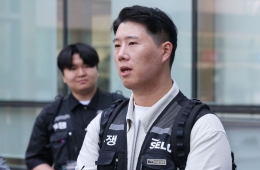
![[Image source=Yonhap News]](http://www.asiae.co.kr/news/img_view.htm?img=2021032311311744747_1616466676.jpg)
[Sejong=Asia Economy Reporter Moon Chaeseok] The enactment of the Conflict of Interest Prevention Act, which has been stalled for nine years since its submission to the National Assembly in 2013, is unlikely to be realized even in the March extraordinary session of the National Assembly. Although it may be postponed to the next month’s session, there is a growing voice of self-deprecation that it has effectively lost momentum as the political scene shifts to the next presidential election after the April 7 by-election.
According to the government and political circles on the 27th, the Conflict of Interest Prevention Act was not discussed and was postponed at the subcommittee of the National Assembly’s Political Affairs Committee on the 24th. In this process, the Anti-Corruption and Civil Rights Commission, the competent authority, held a press conference by its chairman and exerted strong pressure on the political circles by disclosing the results of the 국민생각함 (People’s Thought Box) survey. Notably, it was the first time that the results showing 85% of the public responded that the law should be enacted promptly were disclosed midway.
Within the government, skepticism is growing that the law will be difficult to enact during this administration. This is because a social consensus has been formed that the moral hazard of public officials must be eradicated following the Korea Land and Housing Corporation (LH) land speculation scandal. From the tenure of the 4th chairman, former chairman Lee Seong-bo, to the current 7th chairman Jeon Hyun-hee, it was judged that public interest in the law was the highest this time, but since the enactment failed, many believe it will be even more difficult after the election.
Hot Picks Today
!["Heading for 2 Million Won": The Company the Securities Industry Says Not to Doubt [Weekend Money]](https://cwcontent.asiae.co.kr/asiaresize/93/2025050713592847164_1746593968.jpg) "Heading for 2 Million Won": The Company the Securities Industry Says Not to Doubt [Weekend Money]
"Heading for 2 Million Won": The Company the Securities Industry Says Not to Doubt [Weekend Money]
- School Sports Days Shrinking Due to Noise Complaints: National Police Agency Directs Officers to Refrain from Dispatch
- "Drink Three Cups of Coffee and Stay Up All Night Before the Test"... Manual of Insurance Planner Who Collected 1 Billion Won in Payouts
- "Anyone Who Visited the Room Salon, Come Forward"… Gangnam Police Station Launches Full Staff Investigation After New Scandal
- "Envious of Korean Daily Life"...Foreign Tourists Line Up in Central Myeongdong from Early Morning [Reportage]
Contrary to government pressure and public opinion, the ruling and opposition parties are repeatedly engaging in political posturing over the delay in the law’s enactment. When the ruling party held a press conference on the 25th at the National Assembly urging the passage of the law, the opposition party immediately held a press conference on the 26th criticizing that "the ruling party is rather passive in reviewing the law." Lee Jae-myung, governor of Gyeonggi Province and a potential next presidential candidate, argued through social media (SNS) that the law should be passed even excluding the People Power Party.
© The Asia Business Daily(www.asiae.co.kr). All rights reserved.