'Mandatory Closure of Complex Shopping Malls' Sparks Ruling and Opposition Party Dispute... Industry Complains, "Better to Have It on Weekdays"
Review of Distribution Industry Development Act Begins
Government and Ruling Party Strengthen Regulations on Large Corporations
Opposition Party Opposes... Industry Says "Severe Weekend Damage"
![[Image source=Yonhap News]](http://www.asiae.co.kr/news/img_view.htm?img=2021031210023628163_1615510955.jpg)
[Asia Economy Reporter Lim Chun-han] The ruling and opposition parties have resumed discussions on distribution regulations that would mandate mandatory closures for complex shopping malls. While the Democratic Party insists that mandatory closures for complex shopping malls are essential, the People Power Party argues that this is excessive. The distribution industry is even pleading that if regulation of complex shopping malls is inevitable, the mandatory closure should be fixed on weekdays rather than weekends.
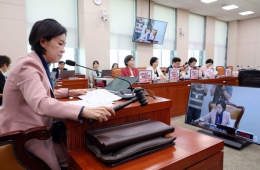
◆ Government and ruling party: "Regulations on large corporations must be strengthened" = The National Assembly's Industry, Trade, Energy, Small and Medium Venture Business Committee's Industry, Trade, Energy, and Patent Subcommittee began reviewing the bill on the afternoon of the 11th but failed to reach a conclusion due to differences between the ruling and opposition parties. The ruling party is focusing on regulating complex shopping malls based on the proposal by Hong Ik-pyo, the Democratic Party's Policy Committee Chair. Hong proposed that local government heads restrict operating hours and enforce mandatory closures for complex shopping malls such as Starfield and Lotte Mall. This expands the current law's restrictions on late-night operations and mandatory closures twice a month, which apply to large marts and corporate supermarkets (SSM), to include complex shopping malls.
The government also supported Hong's proposal. Park Jin-gyu, Vice Minister of the Ministry of Trade, Industry and Energy, stated, "Since Hong's proposal has undergone extensive discussions as an integrated amendment, I basically agree with it." He also suggested exceptions for complex shopping malls that meet conditions such as being small to medium-sized not operated by large corporations, designated as complex stores by local government ordinances, or located in tourism special zones or passenger terminals.
A Democratic Party official explained, "It is appropriate that all complex shopping malls operated by large corporations are included in the regulations," adding, "(The government's proposal) aims to ensure that regulations on small to medium-sized complex shopping malls are not excessively strict based on their sales."
◆ Opposition party opposes, industry voices complaints = The opposition party has expressed opposition. Lee Cheol-gyu, the subcommittee chair and a member of the People Power Party, told Asia Economy in a phone interview, "We need to carefully examine whether this benefits self-employed and small business owners. Previous research results show that when large marts closed, the surrounding commercial districts all suffered," adding, "We will do what can be done within the Democratic Party Policy Committee Chair's proposal and not do what cannot be done." In fact, there are evaluations that major shopping centers like The Hyundai Seoul and Starfield have played central roles in commercial districts, leading to co-growth effects in surrounding areas.
Hot Picks Today
 "Now Our Salaries Are 10 Million Won a Month" Record High... Semiconductor Boom Drives Performance Bonuses at Major Electronic Component Firms
- Experts Already Watching Closely..."Target Price Set at 970,000 Won" Only Upward Momentum Remains [Weekend Money]
- "Heading for 2 Million Won": The Company the Securities Industry Says Not to Doubt [Weekend Money]
- Did Samsung and SK hynix Rise Too Much?... Foreign Assets Grow Despite Selling [Weekend Money]
- "Chanel Open Run? I Get a Free Pass"... The World of the Top 0.1% That Money Alone Can't Enter [Luxury World]
As the political sphere officially begins reviewing the bill, complaints are pouring out from the industry. An industry official said in a phone interview, "Weekend visitors are more than twice the number of weekday visitors. If mandatory closure is designated on Sundays and the malls close, the damage would be too great," adding, "If regulation of complex shopping malls is inevitable, the law should specify mandatory closures on weekdays."
© The Asia Business Daily(www.asiae.co.kr). All rights reserved.