Semiconductor Industry: Three Keys to Future Competitiveness... Digital Transformation, Carbon Neutrality, and Regulatory Reform
KCCI, 1st Meeting of the Future Industry Forum

[Asia Economy Reporter Dongwoo Lee] It has been pointed out that carbon neutrality, digital transformation, and regulatory reform are necessary to secure the competitiveness of the domestic semiconductor industry.
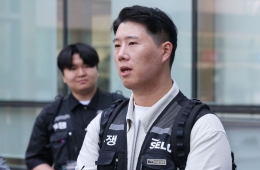
The Korea Chamber of Commerce and Industry held the first meeting of the Future Industry Forum on the 5th at the Chamber of Commerce building in Jung-gu, Seoul, to discuss future strategies for the country's key industries and explore the development potential of the semiconductor industry.
Lee Chang-han, Executive Vice President of the Semiconductor Industry Association, said, “There is high expectation for the semiconductor supercycle, but at the same time, the global market is undergoing a great transformation,” adding, “To secure future competitiveness of the domestic semiconductor industry, responding to the three major issues of digital transformation, carbon neutrality, and regulatory reform is more important than ever.”
Vice President Lee emphasized that establishing a government-level digital transformation strategy, promoting research and development (R&D) of eco-friendly process gases, and easing the Serious Accident Punishment Act are prerequisite tasks that must be resolved to gain market dominance.
Jung Eun-mi, Head of the Korea Institute for Industrial Economics and Trade, analyzed the semiconductor industry's efforts to reduce greenhouse gases, stating, “Both the industry's reduction potential and greenhouse gas emission intensity show superior levels compared to other industries.”
She added, “To achieve the global paradigm of carbon neutrality while maintaining industrial competitiveness, expanding renewable energy infrastructure and developing eco-friendly process gases must be prioritized.” She further noted, “Especially, since the development of process gases is difficult to solve by a single company alone, it is important to establish a cooperative system among the government, semiconductor and process gas manufacturers, universities, and research institutes.”
Kang Kyung-sung, Director of Industrial Policy at the Ministry of Trade, Industry and Energy, stated, “The semiconductor industry is a core component of promising industries such as future vehicles, 5th generation mobile communication (5G), and artificial intelligence (AI), as well as a strategic component for military security, so we will secure future competitiveness through active and bold support.”
Woo Tae-hee, Executive Vice President of the Korea Chamber of Commerce and Industry, said, “With the accelerated pace of change due to COVID-19, issues of digital transformation and carbon neutrality are approaching not as the future but as reality,” adding, “Since rapid response is required in domestic industrial sites as well, I hope the Korea Chamber of Commerce and Industry’s Future Industry Forum will serve as momentum for our companies' driving force.”
The forum was attended by Executive Vice President Woo Tae-hee as the chair, Kang Kyung-sung, Director of Industrial Policy at the Ministry of Trade, Industry and Energy, Lee Chang-han, Executive Vice President of the Semiconductor Industry Association, Um Jae-hoon, Executive Director of Samsung Electronics, Park Yong-geun, Vice President of SK Hynix, Kwon Jong-hyuk, Managing Director of DB HiTek, and Kim Dong-cheon, Vice President of Silicon Mites.
Hot Picks Today
!["Heading for 2 Million Won": The Company the Securities Industry Says Not to Doubt [Weekend Money]](https://cwcontent.asiae.co.kr/asiaresize/93/2025061015355092669_1749537351.jpg) "Heading for 2 Million Won": The Company the Securities Industry Says Not to Doubt [Weekend Money]
"Heading for 2 Million Won": The Company the Securities Industry Says Not to Doubt [Weekend Money]
- "Anyone Who Visited the Room Salon, Come Forward"… Gangnam Police Station Launches Full Staff Investigation After New Scandal
- "If You Use This Name for Your Grandchild, We'll Give You a 1 Billion Won Apartment"...A Couple Faces Conflict
- "Drink Three Cups of Coffee and Stay Up All Night Before the Test"... Manual of Insurance Planner Who Collected 1 Billion Won in Payouts
- Did Samsung and SK hynix Rise Too Much?... Foreign Assets Grow Despite Selling [Weekend Money]
The Korea Chamber of Commerce and Industry plans to hold seven meetings by major industries, including automobiles, secondary batteries, and displays, starting with the semiconductor sector.
© The Asia Business Daily(www.asiae.co.kr). All rights reserved.