[Global Column] Economic Insecurity and the Reason for the Existence of the State
![[Global Column] Economic Insecurity and the Reason for the Existence of the State](http://www.asiae.co.kr/news/img_view.htm?img=2021020909232769009_1612830207.jpg)
The primary role of the state is, above all, to protect the safety of its citizens. For a long time, protecting citizens from internal and external threats has been considered the raison d'?tre of the state. The reason the state can control individual freedoms to some extent during widespread epidemics like the current one is because the state's existence is fundamentally about safeguarding the safety of its people.
Traditionally, safety meant freedom from physical violence. However, as the concept of human security shows, the meaning of safety has been continuously expanding. As seen in the COVID-19 crisis, health is an important area of human security. Moreover, economic stability, which ensures the stable provision of goods and services necessary for daily life, is also a core area of human security.
While the market economy is a highly efficient system for producing goods and services, it also continuously generates economic instability due to fluctuations in supply and demand. Since economic instability is an inherent characteristic of the market economy, measures to offset this instability are necessary to maintain the efficiency of the market economy.
The welfare state, developed in Western Europe, is the result of political demands to offset the economic instability inherent in the market economy. In contrast, South Korea has focused on economic growth based on the efficiency of the market economy and has not formed a welfare state of adequate scale. The relatively small scale of the welfare state compared to the size of the economy is one of the important features of South Korea's political economy.
COVID-19 poses not only a threat to health security but also to economic security. The reduction of international and economic exchanges and social controls due to COVID-19 have caused significant economic damage in many sectors. Although it is difficult to predict how much economic damage will expand in the future, the economic stability of many citizens is already seriously threatened.
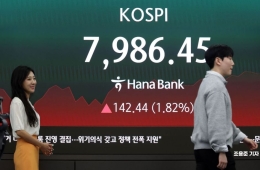
In South Korean society, where the welfare state is underdeveloped, an unexpected external shock like COVID-19 causes a sharp increase in economic instability, leading even those not currently threatened in terms of economic security to experience serious anxiety about their future economic stability. This anxiety is currently manifesting in investments in real estate and stocks made by borrowing to the limit, or what is called ‘Yeongkkeul’ and ‘Bittou’.
Although the real economy is in recession, the asset market is expanding, and this phenomenon is not simply due to increased liquidity. The anxiety that economic stability cannot be maintained is turning many citizens into risky investors in the asset market. Household debt caused by so-called ‘Yeongkkeul’ (borrowing to the limit) and ‘Bittou’ (debt investment) is increasing dramatically. Growth in the asset market fueled by debt also carries the risk of another economic disaster: a bubble burst.
If the raison d'?tre of the state is to protect the safety of its citizens, then protecting their economic stability is also a primary duty of the state. Of course, as debates over disaster relief funds show, reaching a social consensus on the scope and methods of the state's role in protecting economic stability in a short time is very difficult. Nevertheless, it is necessary to start a fundamental discussion on how to offset economic instability in the future. This is a matter closely linked to the raison d'?tre of the state.
Hot Picks Today
 No Bacteria Detected in Arisu After 24 Hours of Repeated Drinking from a Tumbler
- "Available Only in Korea": Pokémon Card Prices Surge 2,532% Due to Rarity, Becoming Investment Assets
- Despite Posting Surprise Earnings of 23 Trillion Won, Cisco Tells 4,000 Employees to Leave... What Happened?
- "Can't a Young Person Stand?"... Middle-Aged Woman with Standing Ticket Occupies KTX First Class Seat
- "Egg Prices Are Strange" Proven True... Collusive Margin Hike of 46% Without Basis Leads to 594 Million Won Fine
Jae-Hwan Jeong, Professor, Department of International Relations, University of Ulsan
© The Asia Business Daily(www.asiae.co.kr). All rights reserved.