Gwangju Chamber of Commerce: Slight Improvement in Manufacturing Business Sentiment in Gwangju Region

[Asia Economy Honam Reporting Headquarters Reporter Lee Kwan-woo] The business sentiment outlook of manufacturing companies in the Gwangju region is gradually improving.
According to a survey conducted by the Gwangju Chamber of Commerce and Industry on 131 local manufacturing companies regarding the ‘2021 Q1 Business Sentiment Index (BSI)’, the BSI outlook rose by 5 points from 66 in the previous quarter to 71.
Although this figure still falls short of the baseline (100) due to ongoing real economy recession and export decline, it is interpreted that the worsening business sentiment among local manufacturers is slowly easing, thanks to expectations of COVID-19 containment following vaccine development.
Q4 performance also remained below the baseline (100) due to sluggish domestic demand and exports/imports amid the continued spread of COVID-19, but it rose by 18 points from 62 in the previous quarter, recovering to the level of Q4 last year (78) before the COVID-19 outbreak.
Manufacturing performance recorded its lowest point since the financial crisis in Q1 this year (49) due to the impact of COVID-19, but has since shown signs of gradual recovery.
Regarding the overall economic outlook for next year, 33.6% (44 companies) responded that it would be ‘similar to this year’, which was the highest proportion, followed by ‘somewhat worse than this year (31.3%, 41 companies)’, ‘somewhat better (30.5%, 40 companies)’, ‘much worse (3.8%, 5 companies)’, and ‘much better (0.8%, 1 company)’.
By industry, no sector exceeded the baseline (100), but some sectors such as ‘Steel & Metal Processing (44→85)’ and ‘Machinery & Mold (61→86)’ showed improved outlooks compared to the previous quarter due to expectations of economic recovery in Q1 next year.
‘Auto Parts (65→81)’ saw improved business sentiment despite concerns over production delays caused by parent company strikes and new COVID-19 cases, thanks to the extension of the excise tax reduction and strong overseas sales of SUV models. Similarly, ‘Machinery & Mold (61→86)’ and ‘Steel & Metal Processing (44→85)’ did not reach the baseline (100) due to ongoing construction downturn and reduced orders from primary contractors, but their outlooks improved significantly due to expectations of global economic recovery.
‘Food & Beverage (42→50)’ showed continued weak business sentiment due to consumption contraction from increased remote work and online education, as well as cost burdens from rising raw material prices, but its outlook improved somewhat due to increased online sales driven by the spread of non-face-to-face trends.
‘IT & Home Appliances (84→79)’ forecasted a somewhat sluggish economy due to decreased demand from the off-season of seasonal appliances such as air conditioners and kimchi refrigerators, as well as export slumps. ‘Chemicals, Rubber & Plastics (73→56)’ continued to face domestic demand contraction and export declines despite strong sales of quarantine and hygiene products.
‘Glass, Cement & Concrete (100→33)’ anticipated economic deterioration due to the construction off-season (winter), delays in construction starts caused by COVID-19, and reduced order volumes.
By company size, large enterprises (33→86) did not exceed the baseline (100) due to the resurgence of COVID-19 and ongoing domestic and international economic downturns, but rose 53 points from the previous quarter, expecting global economic recovery centered on major countries.
Small and medium enterprises (70→69) forecast continued weak business sentiment due to ongoing economic sluggishness and export volume declines, as well as the implementation of the 52-hour workweek system from next year for companies with 50 to 299 employees.
By export scale, domestic companies (63→70) remained below the baseline (100) due to sluggish domestic demand caused by ongoing local infection spread and rising raw material costs, but rose 7 points with expectations of consumer sentiment recovery following vaccine development. Export companies (79→76) experienced somewhat worsened business sentiment due to reduced delivery volumes, reduced overseas sales activities, and deteriorated logistics and customs conditions.
Regarding next year’s export outlook, the most common response was ‘similar to this year (34.5%, 10 companies)’, followed by ‘somewhat better than this year (31.0%, 9 companies)’, ‘somewhat worse than this year (31.0%, 9 companies)’, and ‘much worse than this year (3.4%, 1 company)’.
The main reason cited for expecting export deterioration was ‘global demand contraction due to prolonged COVID-19 (83.9%)’, followed by ‘increased exchange rate volatility (19.4%)’, ‘rising production costs due to increases in oil and raw material prices (12.9%)’, ‘strengthening protectionism such as trade disputes (6.5%)’, and ‘intensified technological catch-up by emerging countries like China (6.5%)’.
Regarding the establishment of next year’s business plans, 88.5% of respondents said they had ‘not yet established plans’, with the main reason for not establishing plans being ‘uncertainty in market outlook causing difficulties in setting sales targets and business strategies (56.0%)’.
Hot Picks Today
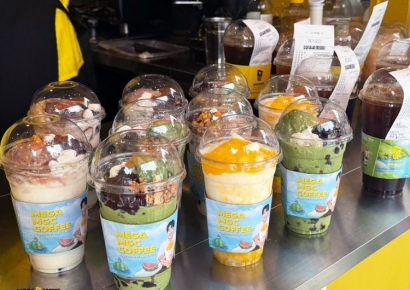 "Let's Buy Before It Sells Out Again": 'Cup Bingsu' Sells 1 Million Cups in Just 2 Weeks
- "Invested 95% in Hynix and Reached 10 Billion Won"... Japanese Investor's Proof Post Goes Viral
- High-Net-Worth Investors Increase Stock Holdings: "Samsung and SK hynix Are Basic, Now Searching for the Next Opportunity" [Investment Strategies of the Wealthy] ⑧
- "You Don't Need to Go to the Gym": The Best Exercises for Lowering Hypertension
- "My Wife Is Missing"... Woman in Her 50s Still Unaccounted for Nearly a Month After Climbing Bukhansan Mountain
A Gwangju Chamber of Commerce official said, “Due to ongoing domestic and international economic downturns causing manufacturing sector deterioration and export declines expected to continue into next year, local companies are facing significant difficulties even in establishing next year’s management policies,” adding, “It is urgent to prepare measures such as trade and investment support to overcome COVID-19 damages, improve business environments, and respond to economic uncertainties.”
© The Asia Business Daily(www.asiae.co.kr). All rights reserved.