- Seonginmo Executive Director, Korea Financial Investment Association
Every year-end, the phrase 'Dasadanan (多事多難)' inevitably appears. Has there ever been a year when this phrase resonated so deeply with the stock market as this year? 2020 was a year in which we could feel in many ways that South Korea's capital market stood at a turning point of great transformation.

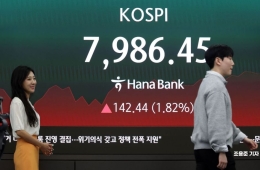
The stock market in the first half of the year continued to be unpredictable like a roller coaster. The COVID-19 outbreak, which hit Korea hard starting in February, dealt a huge shock to the domestic stock market as the number of confirmed cases surged, causing the stock index to plunge sharply. However, after hitting the lowest point in mid-March, the KOSPI index quickly rebounded, breaking through the 2700 mark for the first time ever and setting new daily highs. There are even rosy forecasts that it will surpass 3000 next year. Despite an unprecedented global crisis, the Korean stock market showed strong resilience. How did it recover so quickly?
Above all, the expansion of individual investors' participation in the stock market stands out the most. The President even mentioned that "the Donghak Ant Movement of individual investors protected the stock market," highlighting the intense enthusiasm for stock investment among individual investors. While institutions and foreigners were selling off, individual investors became a solid pillar supporting the market and even drove the upward trend, demonstrating the true power of the 'ants' this year.
The active participation of individual investors shifted the center of the investment landscape to them, changing the market paradigm. As individual investors became more active in the public offering market, which had been institution-centered, this led to institutional improvements such as expanding the allocation ratio for individual investors in public offerings. Additionally, the increase in individual investors triggered competition among securities firms to provide better services to attract customers, resulting in various positive effects.
The role of policy authorities cannot be overlooked either. In March, when the COVID-19 crisis peaked, timely implementation of necessary policies such as stabilizing the short-term money market and proactively supporting corporate funding helped prevent panic in the stock market. Furthermore, measures like reducing securities transaction tax and postponing the expansion of the major shareholder scope contributed to market stability. Above all, the willingness of policy authorities to actively review and accept suggestions from market participants, including our association, shone brightly this year.
So, what caused the increase in individual participation? There are several reasons, including the learning effects of individual investors who experienced the IMF economic crisis and the global financial crisis, the expansion of liquidity in the market, and the lack of alternative investment methods. However, in a low-interest-rate era, investing in the stock market has become an essential element for asset growth. All market participants, including industry workers, must not neglect efforts to maintain the steady interest and participation of these individual investors.
The capital market must develop on a stable foundation. Next year is the Year of the Ox (辛丑年). There is a saying, Ubo Cheonri (牛步千里), meaning "an ox’s pace covers a thousand miles." I hope that in 2021, all market participants will steadily advance step by step, like the ox’s slow but steady walk, upholding the right path (正道) to achieve the advancement of the stock market and the establishment of a sound investment culture.
Hot Picks Today
 No Bacteria Detected in Arisu After 24 Hours of Repeated Drinking from a Tumbler
- "Available Only in Korea": Pokémon Card Prices Surge 2,532% Due to Rarity, Becoming Investment Assets
- Despite Posting Surprise Earnings of 23 Trillion Won, Cisco Tells 4,000 Employees to Leave... What Happened?
- "Can't a Young Person Stand?"... Middle-Aged Woman with Standing Ticket Occupies KTX First Class Seat
- "Egg Prices Are Strange" Proven True... Collusive Margin Hike of 46% Without Basis Leads to 594 Million Won Fine
Sung In-mo, Executive Director, Korea Financial Investment Association
© The Asia Business Daily(www.asiae.co.kr). All rights reserved.