[Statement] Hong Nam-gi "Next Year Korea's Economy Expected to Improve by 3.2%"

Hong Nam-ki, Deputy Prime Minister for Economy and Minister of Economy and Finance (Photo by Yonhap News)
View original image[Asia Economy Reporter Kwangho Lee] Hong Nam-ki, Deputy Prime Minister and Minister of Economy and Finance, stated on the 17th, "Next year, our economy is expected to improve to 3.2%, considering domestic and international conditions, real economic flows, and policy effects comprehensively."
At a joint briefing with related ministries on the '2020 Economic Policy Direction' held at the Government Seoul Office on the same day, Deputy Prime Minister Hong said, "Although the global economy next year carries various uncertainties, we generally expect an improving trend in the global economy and trade."
He emphasized, "To achieve this goal, we must fully overcome the crisis in a short time and strengthen the momentum for economic recovery. If this year we initiated the Korean New Deal to start structural transformation, next year we must step on the accelerator and produce tangible results."
He continued, "Based on this understanding, the economic policy direction for next year sets two goals: rapid and strong economic recovery and restoration, and a great transition to a leading economy. Under these, the 3+3 policy directions, i.e., six categories, include the major policies for next year."
The following is the content of the announcement.
Dear citizens,
Today, the economic team stands here to explain the 2021 Economic Policy Direction, established to fully overcome the COVID-19 crisis and to make a great transition to a leading economy in the post-COVID era.
1. Evaluation of 2020 Economic Management and Future Conditions
This year,
we had to fight an all-out battle on both quarantine and economic fronts
against the unprecedented shock of the COVID-19 pandemic.
In the process, we ask for your understanding and thank the citizens who actively participated in quarantine measures such as social distancing, enduring daily inconveniences and economic damages.
The government, based on K-quarantine,
has been fully committed to economic quarantine, i.e., damage recovery and economic recovery, through bold policy responses amounting to 310 trillion won, including four supplementary budgets.
However, due to the direct impact of COVID-19 and repeated quarantine controls such as social distancing,
this year’s economic contraction and employment decline were unavoidable.
Especially, after the third quarter, both economic sentiment and real economic flows showed signs of recovery,
but the recent sharp increase in confirmed cases has caused difficulties again,
which is regrettable and saddening.
All countries faced difficulties this year, but amidst that,
we were able to achieve relatively better results and hold hope.
This year’s growth rate and GDP show that we defended against a contraction in the minus 1% range,
and among OECD countries, we are recognized as the country closest to pre-COVID crisis levels,
with employment shocks relatively smaller compared to major countries.
* Employment growth rate (year-on-year, %, January to October basis): (KOR) -0.6 (JPN) -0.7 (GER) -0.8 (CAN) -5.7 (USA) -6.3
As a result, our economy is expected to rise two ranks to 10th largest globally this year.
National credit ratings, CDS premiums, and external soundness are also evaluated as solid.
Dear citizens,
Next year, although the global economy carries various uncertainties,
we expect an overall improving trend in the global economy and trade.
Post-COVID structural changes are also expected to accelerate.
Our economy next year is forecasted to improve to 3.2%,
considering domestic and international conditions, real economic flows, and policy effects comprehensively.
To achieve this goal,
we must fully overcome the crisis quickly and strengthen the momentum for economic recovery.
Having started structural transformation through the Korean New Deal this year,
next year we must step on the accelerator and produce tangible results.
2. Key Points and Basic Framework of the 2021 Economic Policy Direction
Based on this understanding, next year’s economic policy direction sets two goals:
① rapid and strong economic recovery and restoration, and ② a great transition to a leading economy,
under which the 3+3 policy directions, i.e., six categories, include the major policies for next year.
Under the first goal, “rapid and strong economic recovery and restoration,”
there are three categories: ① active economic management, ② rebound and vitality enhancement, and ③ support for improving people’s livelihoods.
Under the second goal, “great transition to a leading economy,”
there are also three categories: ① securing next-generation growth engines, ② preparing for the future, and ③ strengthening inclusion and fairness.
Overall, the aim is to recover to pre-COVID crisis levels by the first half of next year,
and to break the vicious cycle of repeated potential growth rate slowdown after economic crises this time without fail.
Now, I will briefly explain the core contents of next year’s economic policy direction.
3. Rapid and Strong Economic Recovery and Vitality Restoration
First, the policy tasks to achieve “rapid and strong economic recovery and vitality restoration.”
First, we will continue active economic management in response to COVID-19 uncertainties.
Above all, the top prerequisite for economic recovery remains quarantine.
In the recent steep spread of COVID-19, K-quarantine stands at a crossroads of success or failure.
Strict compliance with quarantine and control of spread are urgently needed once again.
The government will maximize and operate quarantine capabilities, including vaccine procurement, treatment development, and medical infrastructure reinforcement,
while continuing economic quarantine simultaneously.
In other words, we will prioritize securing a definite economic rebound momentum
and maintain an expansionary macroeconomic policy stance.
The expansionary fiscal stance will see early execution of 63% of the highest-ever budget in the first half of the year,
and 495 trillion won in policy finance will be supplied under a loose financial stance.
This year’s temporary crisis response measures will be extended as much as possible,
and gradual normalization will proceed while monitoring COVID-19 trends and economic flows.
Alongside, domestic and external risks such as household debt, real estate, external creditworthiness, and trade issues will be meticulously managed
to prevent them from becoming constraints on economic recovery.
Second, under thorough quarantine, we will actively support economic rebound through boosting domestic demand and exports.
[Consumption] First, although consumption faces constraints due to quarantine situations,
we will focus on consumption stimulation measures that fully consider these.
Next year, we will promote the so-called “3 major consumption promotion packages,” including additional special income deductions for additional consumption,
30% reduction of individual consumption tax on passenger cars (January to June 2021), and high-efficiency home appliance purchase rebates (50 billion won, March to December 2021).
In particular, the additional special income deduction for credit cards will be implemented by adding, for example, an additional 10% deduction rate on top of the existing credit card income deduction (deduction rate 15-40%, limit 2-3 million won),
with specific plans to be prepared and announced in January.
Also, local love and Onnuri gift certificates, increased significantly from 12 trillion to 18 trillion won,
and eight major consumption vouchers/coupons supporting consumption worth 20 trillion won will be deployed,
making all-out efforts for consumption rebound.
[Investment] Investment has recently shown a recovery trend, so we will actively support public and private investment to solidify this trend.
Public, private-public partnership, and private investment projects will be discovered and promoted at 110 trillion won next year, following 100 trillion won this year,
and especially, 23 trillion won in policy finance will be supplied for facility investment,
with temporary allowance of accelerated depreciation up to 75% to reduce corporate burdens as much as possible.
Furthermore, to enhance domestic job creation capacity, support for returning companies will be expanded, focusing on advanced industries and cooperative return between demand and parts supply companies,
to create successful cases.
To this end, the criteria for recognizing return companies, such as the current 25% overseas production reduction standard, will be relaxed,
and subsidy support rates will be increased by 2-5 percentage points (current: 21-44%).
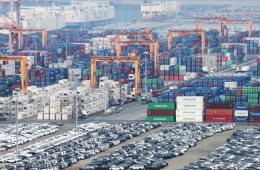
[Exports] Exports are expected to increase by about 8% next year.
To support this export capacity, export financing worth 256 trillion won will be provided,
and to ease inconveniences caused by restrictions on businesspeople’s international movement,
the Immigration Comprehensive Support Center will provide one-stop services including quarantine exemption certificate reception.
Also, to support small and medium-sized enterprises and mid-sized companies facing difficulties securing shipping space during export recovery,
dedicated shipping space will be separately secured up to about 50% on routes with urgent cargo demand.
To expand economic territory, early enforcement of RCEP and consideration of CPTPP membership will be pursued,
and overseas orders will be actively promoted to exceed 30 billion USD for two consecutive years.
Third, to improve people’s livelihoods, we will protect jobs and actively support small business owners and companies to overcome the crisis.
Especially, considering that employment recovery has lagged behind the economy during the crisis,
we have tried to include as many employment support measures as possible this time.
Above all, companies that inevitably reduced employment due to the COVID-19 shock this year will not suffer tax disadvantages due to the existing employment increase tax credit system,
as the 2020 employment decrease will be recognized as an exception,
allowing tax credit benefits up to about 36 million won per worker to continue.
To prevent hysteresis of youth who lost even the opportunity to work due to the COVID-19 crisis,
the ‘100,000 Youth Work Experience Project’ will be promoted in both private and public sectors.
Regarding direct hiring, to minimize employment shrinkage in winter,
about half of the 1.04 million direct job projects, i.e., 500,000 people, will be hired in January, and new hires in public institutions will be further expanded.
In the private sector, efforts to activate youth employment will be reflected in the social responsibility disclosure system (ESG guidance).
For small business owners who have endured the long hardship valley,
customized damage support measures due to the recent resurgence will be established as soon as possible,
and preparations will be made to start payments in January.
Efforts for business restructuring due to structural transformation after COVID-19 will also be actively supported.
Especially, when demand and supply companies (original contractors and subcontractors) jointly restructure the industrial ecosystem,
the so-called “three-incentive package” of tax, fiscal, and policy finance support will be provided.
* ?Tax deferral condition relaxation, ?Priority support for business restructuring dedicated funds, ?Policy finance support linked to 1,000 innovative companies, etc.
4. Great Transition to a Leading Economy
Next, we will proactively respond to structural changes in our economy
and raise the potential growth path through the full-scale “great transition to a leading economy.”
First, we will focus on securing next-generation growth engines through innovation.
We plan to focus support on four major areas: digital innovation, venture startup activation, leap to a manufacturing powerhouse, and service industry innovation.
We will invest a total of 12.7 trillion won centered on Data, Network, and AI in the Digital New Deal,
and expand tax benefits (2 percentage points preferential) for new technology investments such as 5G and advanced semiconductors.
To ensure sufficient funding for New Deal projects,
we will establish a 4 trillion won policy-type New Deal fund in the first year next year,
and supply 17.5 trillion won plus α in policy finance.
Active nurturing of the venture industry, which has suffered from the COVID-19 crisis, is also an important task.
* Venture investment status (year-on-year, %, Ministry of SMEs and Startups): (Q1 2020) -0.9 (Q2) -27.2 (Q3) +6.0 [Q1-Q3: -8.7%]
Especially, to provide demonstration opportunities for new technology-based products, public institutions will lead in providing K-Testbeds for ventures and startups,
and a conditional investment loan system modeled after Silicon Valley Bank will be newly established to help scale-up companies leap to unicorn status.
We will also achieve a leap to a world-class manufacturing powerhouse.
In the materials, parts, and equipment sectors, the foundation of manufacturing,
we will complete supply stabilization of 20 priority items next year,
and focus support on global expansion of 20 top materials, parts, and equipment companies.
New industries such as future cars, bio, and system semiconductors (BIG3) will be managed intensively like materials, parts, and equipment,
and actively nurtured as representatives of innovative growth through support measures, regulatory reforms, and infrastructure building.
Additionally, the service industry, a reservoir of jobs, will respond to mega-trend transitions by preparing a mid- to long-term service industry strategy in the first quarter,
and actively promote new Korean Wave through content diversification and related industry growth for cultural powerhouse leap and economic ripple effects.
Second, we will steadily prepare from now on for future readiness to achieve stable and sustainable growth.
The key keywords that will determine the future of our economy are
“transition to a green, low-carbon economy” and “response to population decline and low birthrate.”
To achieve the future goal of carbon neutrality by 2050, spanning a generation,
we will ensure that the ‘green and low-carbon’ stance is fully embodied across the economy and society, including infrastructure, energy, and industry.
To fully implement the carbon neutrality 3+1 strategy from next year,
we will prepare a carbon neutrality scenario by June and specify implementation tasks.
To accelerate the Green New Deal,
we will invest a total of 13.2 trillion won in green infrastructure, green energy, and green industries, and proceed with speed.
Ultimately, people lead the transition and leap of digitalization and greening.
Of the 300,000 leading talents to lead the digital and green New Deal over five years,
we will steadily nurture 36,000 next year,
and strengthen and expand an industry-centered vocational training system linking training and employment.
In response to demographic changes, the third population policy task force will be launched to sequentially prepare sectoral measures such as expanding economic participation of women and the elderly, enhancing university competitiveness amid declining school-age population, and responding to regional extinction.
Finally, we will accelerate strengthening inclusion and fairness in our economic society.
During the COVID-19 crisis, vulnerable groups suffered greater shocks and difficulties,
highlighting the importance of strong protection, i.e., strengthening inclusion.
Especially, next year is the first year of implementing the ‘National Employment Support System’ and the ‘Roadmap to Eliminate Blind Spots in Employment Insurance,’
so we will steadily prepare foundational work such as improving income verification systems and smoothly implement new systems.
Also, to ease financial access difficulties for vulnerable groups,
we will expand microfinance and Sunshine Loans support for special types of workers and freelancers,
link policy finance for low-income groups with welfare and employment services, and
establish a so-called “three-piece financial safety net” for vulnerable groups, including lowering the maximum interest rate and strengthening protection for marginal borrowers.
Meanwhile, as the Fair Economy 3 Acts have recently been legislated,
we will promptly prepare subordinate legislation plans,
and make special efforts to ensure stable institutional establishment through continuous communication with the business community.
5. Conclusion
Dear citizens!
We have overcome difficulties exemplarily at every crisis,
earning the reputation of a “Korea economy strong in crisis.”
It is time to prove this once again to the world.
The government will quickly calm the spread of COVID-19 and, based on this,
achieve recovery, rebound, and leap of our economy without fail.
Your active support and participation are also crucial.
Until COVID-19 quarantine is fully controlled by vaccines,
quarantine is the vaccine and the prerequisite for recovery in the economy.
We earnestly ask citizens to strictly comply with quarantine guidelines,
and to unite efforts for economic recovery and rebound.
The government pledges to work tirelessly forward without hesitation
to ensure that the “2021 Economic Policy Direction” operates as planned,
that our economy achieves recovery and rebound next year,
and that we build a warm, inclusive nation where all can prosper together.
Hot Picks Today
 No Bacteria Detected in Arisu After 24 Hours of Repeated Drinking from a Tumbler
- "Available Only in Korea": Pokémon Card Prices Surge 2,532% Due to Rarity, Becoming Investment Assets
- American Woman Who Poisoned Husband for $2 Million Insurance and Published Memorial Children's Book Sentenced to Life in Prison
- [Breaking] Trump: "Xi Jinping and His Wife Invited to the White House on September 24"
- Pulling Out His Phone for a '360-Degree Selfie' and Giving a Thumbs Up at the Ceiling... "China Is Fascinating" [US-China Summit]
Thank you.
© The Asia Business Daily(www.asiae.co.kr). All rights reserved.