[Takryucheongron] Traditional Key Industries Lead When Securing Carbon Competitiveness

It is not climate change, but a climate crisis. Of course, it is humanity, not the climate, that is in danger. Industrialization has greatly improved our living standards, but the climate surrounding us has changed to the extent that it threatens our survival. With the current lifestyle and level of response, the crisis will only deepen.
Scientists warn that if the Earth's temperature rises by more than 3 degrees Celsius, climate disasters such as typhoons, floods, and droughts will increase to an unbearable level. The maximum level of warming that humanity can handle is 1.5 degrees, and to achieve this, carbon neutrality?reducing greenhouse gas emissions to zero by 2050?must be accomplished, which is the unanimous conclusion of scientists worldwide. If we do not move toward carbon neutrality now, it would be extremely irresponsible to the descendants who will suffer the damage firsthand.
Governments around the world are also moving quickly toward carbon neutrality. Since the 2018 Intergovernmental Panel on Climate Change (IPCC) plenary session's release of the "1.5℃ Special Report" and the UN Climate Summit last September, the number of countries setting 2050 as the target year for carbon neutrality has been increasing.
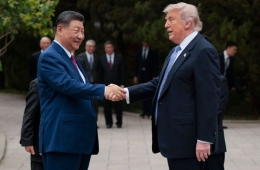
The European Union (EU) has officially declared carbon neutrality by 2050, and U.S. President-elect Joe Biden has announced plans to achieve carbon neutrality before 2050. Chinese President Xi Jinping declared carbon neutrality by 2060 at the UN General Assembly last September, a target considered more ambitious than the 2050 goals of developed countries. Japan has also declared its intention to bring forward its carbon neutrality target to 2050.
Companies are moving even faster. Global corporations such as Apple, Google, and BMW have declared their commitment to using only renewable energy electricity through the RE100 initiative and set carbon neutrality goals, making greenhouse gas reduction and climate change response their top management priorities. These changes by leading economic powers and global companies signal a shift of the global economy toward a carbon-neutral economy.
The EU and the U.S. President-elect have already announced border adjustment measures on high-carbon imported products to protect their domestic companies while achieving carbon neutrality. This means either banning imports altogether or imposing high tariffs. Apple has gone a step further by pledging to make its supply chain carbon neutral by 2030. If Samsung Electronics or LG Chem cannot produce semiconductors or batteries without greenhouse gas emissions at their factories in Korea, products made domestically will no longer be supplied to Apple. Sony warned the Japanese government that if renewable energy supply is not expanded, it may have to relocate its factories overseas?this is not someone else’s problem.
Korea has recently announced a concrete strategy for carbon neutrality, not postponing it as a future task but pushing forward with specific tasks within the current government term. It has decisively overcome passivity and pessimism such as "It is difficult because Korea has a high manufacturing ratio" and "It is impossible because steel and petrochemical industries, which emit a lot of greenhouse gases, have a high share."
Carbon neutrality is both a crisis and an opportunity for Korea’s economy, which is highly dependent on external factors. If traditional key industries such as steel, chemicals, and shipbuilding secure carbon competitiveness through proactive technology development, they will be able to maintain market leadership in the future. Furthermore, new markets are opening for Korean green companies through the carbon neutrality policies and massive investments of various countries. The International Renewable Energy Agency estimates that 130 trillion won in global investment is needed to achieve carbon neutrality by 2050. The EU Commission has announced plans to invest 1 trillion euros over the next decade, and the U.S. President-elect has announced a $2 trillion investment plan during his four-year term.
Carbon neutrality is a climate policy that protects humanity from climate disasters and an economic policy for Korea’s sustainable development. Carbon neutrality is the path we must take for the sake of our descendants. It is the only way for our economy to survive, but if we lead the way, it will also be an opportunity for our society and economy to take a leap forward.
Hot Picks Today
 "Do We Need to Panic Buy Again?" War Drives 30% Price Surge... Even the Bedroom Feels the Impact
- "Is a 10,000 KOSPI Breakthrough Possible?" Target Index Raised by 40%... Securities Firms Release Outlook [Weekend Money]
- "Contact Me First If Houses Are Built": Wealthy Clients Eyeing... Will Ultra-High-End Residences Worth 20 Billion Won Be Developed? [Real Estate AtoZ]
- "Anyone Who Visited the Room Salon, Come Forward"… Gangnam Police Station Launches Full Staff Investigation After New Scandal
- Trump's Remark on "Detailed Talks with Xi Jinping on Taiwan Arms Sales" Sparks Controversy... Taiwan Moves to Defuse Tensions (Comprehensive)
Chang-Hoon Lee, Senior Research Fellow, Korea Environment Institute
© The Asia Business Daily(www.asiae.co.kr). All rights reserved.