[Weekly Market Outlook] KOSPI: Is There Still Room to Rise... Forecast of a 'Pause' Market Phase
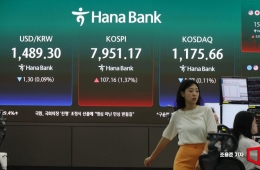
[Asia Economy Reporter Oh Ju-yeon] The KOSPI, which seemed to be taking a breather, is once again breaking all-time highs day after day and charging ahead. In the securities industry, there is mixed attention as analyses suggest that the domestic stock market is likely to enter a consolidation phase in the third week of December (14th-18th), while forecasts also predict the upward trend will continue.
![[Image source=Yonhap News]](http://www.asiae.co.kr/news/img_view.htm?img=2020121213113761906_1607746297.jpg)
On the 13th, NH Investment & Securities predicted that the KOSPI would move between 2700 and 2800 in the third week of December. The start of COVID-19 vaccination and expectations for U.S. economic stimulus measures are cited as factors driving the rise, but concerns over stricter U.S. corporate regulations and noise related to vaccine side effects are seen as downward pressures.
Kim Young-hwan, a researcher at NH Investment & Securities, said, "Discussions on stimulus measures are ongoing in the U.S. political arena. Although the agreement on stimulus is delayed, the fact that daily new COVID-19 cases in the U.S. exceed 200,000 and the U.S. economy’s growth is slowing puts pressure on reaching a stimulus deal. Investors maintain expectations that the stimulus will eventually be implemented, even if the timing is delayed."
He also explained that the vaccination issue will provide momentum for the stock market’s rise.
Researcher Kim added, "As vaccine expectations rise, investment sentiment will improve not only in sectors related to manufacturing production (semiconductors, chemicals, transportation) but also in contact-related sectors (duty-free shops, clothing, cosmetics, etc.)."
However, he diagnosed that news flow related to vaccine side effects could cause occasional fluctuations in the stock market.
Kim said, "Generally, it takes one to two months to confirm whether severe side effects occur after vaccination, so there will be more news flow regarding the safety of COVID-19 vaccines in the future. In the UK, side effects of the COVID-19 vaccine have been reported, but so far, no serious side effects that would require halting vaccine use have been reported." He added, "Since the stock market currently holds high expectations for the COVID-19 vaccine, future vaccine news flow could be a factor increasing market volatility."
Hana Financial Investment presented the expected KOSPI band for next week as 2700 to 2770. They analyzed that the absence of policy momentum to narrow the gap between the real economy and financial markets remains.
Lee Jae-sun, a researcher at Hana Financial Investment, explained, "While vaccine distribution expectations have been priced in, whether the U.S. fiscal stimulus policy passes is expected to influence the market until the end of the year." He added, "The White House proposed a new stimulus package worth $916 billion, including direct payments of $600 per person, but the direct payment amount is half of what the Democrats originally proposed, and the $300 per week federal unemployment benefit is excluded, so differences with the Democrats remain. The next U.S. federal government budget execution deadline is the 18th, when the one-week temporary budget expires, and the market is expected to react sensitively to related news flow until then."
Daishin Securities viewed that foreign investors’ trading patterns have shown a selling bias since December, suggesting it is time to maintain and strengthen caution toward the market.
Lee Kyung-min, a researcher at Daishin Securities, analyzed, "Although the stock market, which had stalled, is showing an upward trend again and the KOSPI 2800 level is within sight, the rise is driven by rotation based on expectations rather than fundamental momentum, and foreign investors are also strengthening their rotation response."
Hot Picks Today
 "After Vowing to Become No. 1 Globally, Sudden Policy Brake Puts Companies’ Massive Investments at Risk"
- [Breaking] KOSPI Surpasses 8,000 Points Intraday... Reaches 8,002.66P
- Even the Wealthy Ask, "Is It Okay to Enter Now?"... Flocking In With Cash Bundles [Wealth Investment Strategies] ⑨
- Tenant Steals 80 Million Won from Landlord's Bedroom... "Used for Debt Repayment, Burned 70 Million?"
- "He's Handsome, It's Such a Pity?"... Lawyer Responds to Bizarre 'Appearance Evaluation' of High School Girl Murder Suspect
He continued, "Foreign investors have been net sellers in the KOSPI market for two consecutive trading days by heavily selling IT stocks, which had recently shown relative strength, while they are net buying relatively underperforming sectors such as finance, chemicals, telecommunications, and food and beverages. The market rise is being maintained by expectations in a situation where sensitivity to fundamental improvements is decreasing."
© The Asia Business Daily(www.asiae.co.kr). All rights reserved.