'Regulation 3 Laws' with Almost No Reflection of Business Community Demands... Urging Preparation of Supplementary Measures and One-Year Postponement of Implementation
3% Rule for Separate Appointment of Audit Committee Members Raises Possibility of Speculative Forces Interfering in Management
Burden of Multiple Derivative Lawsuits... Samsung Electronics' Litigation Risk Increases Eightfold
Expansion of Self-Dealing Regulation Scope
![(Photo) [Image source=Yonhap News]](http://www.asiae.co.kr/news/img_view.htm?img=2020120916180056603_1607498280.jpg)
[Sejong=Asia Economy Reporter Joo Sang-don] With the passage of the three corporate regulation laws?Commercial Act, Fair Trade Act, and Financial Group Supervision Act?referred to as the "3 Corporate Regulation Laws," listed companies will now be required to elect at least one audit committee member separately from the directors. In this process, the voting rights of the largest shareholder will be limited to 3%. As the largest shareholder's voting rights are curtailed, the possibility increases that speculative capital could take control of the board of directors or interfere with corporate management activities. Additionally, regardless of whether a company is listed or unlisted, if the controlling family holds 20% or more of shares, it will be subject to self-dealing regulations.
On the 9th, the National Assembly passed the three corporate regulation laws during the final plenary session of the regular session. On that day, the Commercial Act was passed with a relaxation of the '3% rule' limiting the largest shareholder's voting rights when electing audit committee members. The original government proposal stipulated that the combined voting rights of the largest shareholder and related parties could only be exercised up to 3%, but due to opposition from the business community, it was amended to recognize a separate 3% voting right individually for the largest shareholder and related parties only for audit committee members, without combining their shares. The Fair Trade Act also maintained the exclusive prosecution rights of the Fair Trade Commission.
However, the business community argues that "almost none of the persistent requests jointly made by the management sector were reflected" and is demanding prompt supplementary measures and a one-year grace period before the law takes effect. The business sector has opposed both the separate election of audit committee members and the 3% voting rights limitation. Regarding separate election, they argue that requiring at least one audit committee member to be elected separately during the appointment process, in addition to the 3% voting rights limitation on major shareholders, contradicts the principle of capital majority rule and results in overlapping infringement on major shareholders' property rights. If audit committee members are separately elected, there is a high possibility of abuse and misuse as a means to control the board and interfere with corporate management through tactics such as splitting shares to circumvent the 3% rule, mandatory separate election of audit committee directors, and active use of voting rights trading systems.
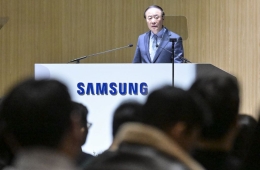
The amendment to the Commercial Act also introduces a 'multiple derivative lawsuit system' allowing parent company shareholders to file derivative lawsuits against subsidiary directors. This enables threatening lawsuits against unlisted subsidiaries by leveraging minority shareholder rights of the 'listed' parent company, raising the risk of abuse and misuse as a tool for hostile takeovers or speculative capital seeking short-term profits. The business community points out that the threshold amount for filing multiple derivative lawsuits against Samsung Electronics, the largest company by market capitalization in Korea, is 31.11 billion KRW, and seven other subsidiaries of Samsung Electronics are also included in the scope of lawsuits, increasing the litigation risk Samsung Electronics must manage by eight times.
Hot Picks Today
 Cerebras Soars 70% on IPO Debut: Is Nvidia's Reign Ending as a New AI Semiconductor Power Emerges?
- Is It the “8,000-Point Curse”? KOSPI Drops to 7,400 After Brief Surge; KOSDAQ Falls 5%
- "Multi-Million Won Bonuses, Life Is Sweet"—Even Employee Reactions... SK hynix Overtakes Samsung to Claim No. 1 Spot
- "Gave in to the Momentary Temptation": Japanese Police Official Dismissed After Stealing 100 Million Won Next to Body
- "After Vowing to Become No. 1 Globally, Sudden Policy Brake Puts Companies’ Massive Investments at Risk"
Concerns remain regarding the amendments to the Fair Trade Act. Although the amendment excluded the abolition of the Fair Trade Commission's exclusive prosecution rights over 'serious collusion (hard-core cartel)' due to business sector concerns about increased frivolous lawsuits, the scope of self-dealing regulation has been expanded. Currently, the Fair Trade Act prohibits unfair benefits provided by companies belonging to publicly disclosed business groups to listed affiliates with a controlling family shareholding of 30% or more (or 20% or more if unlisted). However, under the amendment, the regulation scope expands to affiliates with a controlling family shareholding of 20% or more regardless of listing status, as well as subsidiaries in which these affiliates hold more than 50% of shares. Consequently, the number of regulated companies will increase from the current 210 to 598 (as of May 1, 2020), an increase of 388 companies. The mandatory shareholding requirements for holding companies' subsidiaries and sub-subsidiaries will also be raised by 10 percentage points each. Therefore, newly established or converted holding companies, or existing holding companies incorporating new subsidiaries or sub-subsidiaries, must secure 30% of shares for listed companies and 50% for unlisted companies. This may undermine job creation momentum due to increased costs of transitioning to a holding company system and diminish the advantages of holding companies due to increased costs of incorporating affiliates.
© The Asia Business Daily(www.asiae.co.kr). All rights reserved.