NKMAX Completes Meeting with US FDA on 'Targeted NK Immuno-Oncology Drug'
[Asia Economy Reporter Hyunseok Yoo] NKMax announced on the 8th that it has successfully completed the Pre-IND meeting for the US Phase 1/2a clinical trial of the ‘targeted NK immuno-oncology drug’ co-developed with Affimed NV.
NKMax plans to apply for clinical IND in February next year and intends to start the trial immediately upon approval. The clinical trial will target EGFR-positive solid tumors and will be conducted under the joint development agreement between the two companies for the ‘targeted NK immuno-oncology drug,’ combining the immuno-oncology drug ‘SNK01’ with the EGFR-targeting bispecific antibody ‘AFM24.’
‘AFM24’ is a bispecific antibody that acts as a bridge between the ‘EGFR receptor,’ expressed on multiple cancer cells, and NK cells, inducing a direct cancer-killing effect by immune cells. This bispecific antibody technology was recognized as innovative in the market at the time and was licensed in to Genentech, a subsidiary of Roche, for approximately 5.5 trillion KRW.
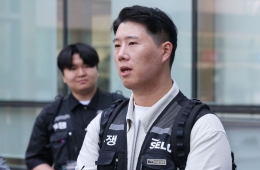
Paul Y. Song, Vice President of NKMax America, stated, “NK cells in cancer patients have low binding affinity and cancer-killing effects with bispecific antibodies, so AFM24 monotherapy has not shown significant therapeutic effects. To solve this problem, Genentech sought highly active NK cells and requested collaboration with NKMax.”
He added, “After signing a Material Transfer Agreement (MTA) last June and conducting in-vitro tests of the SuperNK+AFM24 combination therapy, we confirmed that SuperNK showed excellent binding affinity with AFM24 and significantly increased cancer cell recognition and killing effects. In particular, the greatly enhanced cancer-killing ability of allogeneic SuperNK is very encouraging.”
Hot Picks Today
!["Heading for 2 Million Won": The Company the Securities Industry Says Not to Doubt [Weekend Money]](https://cwcontent.asiae.co.kr/asiaresize/93/2025050713592847164_1746593968.jpg) "Heading for 2 Million Won": The Company the Securities Industry Says Not to Doubt [Weekend Money]
"Heading for 2 Million Won": The Company the Securities Industry Says Not to Doubt [Weekend Money]
- School Sports Days Shrinking Due to Noise Complaints: National Police Agency Directs Officers to Refrain from Dispatch
- "Drink Three Cups of Coffee and Stay Up All Night Before the Test"... Manual of Insurance Planner Who Collected 1 Billion Won in Payouts
- "Anyone Who Visited the Room Salon, Come Forward"… Gangnam Police Station Launches Full Staff Investigation After New Scandal
- "Envious of Korean Daily Life"...Foreign Tourists Line Up in Central Myeongdong from Early Morning [Reportage]
He continued, “The key in the current immuno-oncology drug development market is the ability to track and kill cancer cells. If a ‘targeted NK immuno-oncology drug’ that tracks and kills the ‘EGFR receptor’ expressed in various cancer types such as non-small cell lung cancer, colorectal cancer, pancreatic cancer, and breast cancer is developed, it will become a new paradigm in anticancer drugs replacing CAR-NK,” expressing his expectations.
© The Asia Business Daily(www.asiae.co.kr). All rights reserved.