5·18 Truth Investigation Committee, Full Effort to Confirm Identities of 5·18 Victims
Exhumation and Genetic Material Collection... Utilizing Crime Investigation Techniques Such as STR and SNP

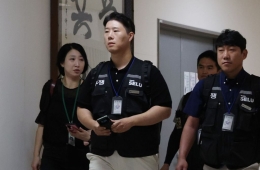
Song Seontae, Chairperson of the 5·18 Truth Investigation Committee, is holding a press conference at the 5·18 Democratic Movement Truth Investigation Committee's main conference room in the Narakeum Building, Jung-gu, Seoul, announcing the start of the investigation. Following the investigation commencement order passed at the plenary committee meeting held the previous day, the committee will investigate incidents defined within the scope of truth verification under the 5·18 Democratic Movement Truth Verification Special Act. Photo by Kim Hyunmin kimhyun81@
View original image[Asia Economy Honam Reporting Headquarters Reporter Yoon Jamin] The 5·18 Democratization Movement Truth Commission is making every effort to identify the deceased by utilizing genetic investigation techniques used in criminal investigations.
The 5·18 Democratization Movement Truth Commission (Chairman Song Seontae) announced on the 18th that on the 19th, it will conduct exhumation and genetic sample collection to identify the victims who died during May 1980 at the National 5·18 Democratic Cemetery.
The event will be held with the attendance of key figures including Vice Chairman Ahn Jongcheol of the Commission and Kim Younghoon, President of the 5·18 Democratic Merit Association.
Additional exhumations will be conducted for three of the five victims' bone fragments stored at the Department of Forensic Medicine at Chonnam National University, which had been exhausted through previous DNA testing.
The test results will undergo verification processes at the Department of Forensic Medicine at Seoul National University and Chonnam National University to ensure validity and suitability.
In particular, genetic testing will employ both the widely used criminal investigation technique ‘STR’ (Short Tandem Repeat) and the ‘SNP’ technique, which analyzes more genotypes than STR, expecting a high confirmation rate through mutual complementation.
‘STR’ is an analysis method comparing repeated sequences of DNA bases to determine matches or mismatches, while ‘SNP’ is known to be more useful than STR testing in analyzing highly degraded human samples.
The Commission is currently conducting an investigation into the ‘scale and whereabouts of missing persons’ under its own authority.
They plan to identify the victims by comparing the genetic data from five unidentified victims and blood samples from 75 families of missing persons recognized by Gwangju Metropolitan City.
Meanwhile, from 2002 to 2006, under the supervision of Gwangju Metropolitan City, the Department of Forensic Medicine at Chonnam National University conducted tests on 11 unidentified victims from the initial burial, confirming the identities of six unknown martyrs.
Hot Picks Today
 "Samsung and Hynix Were Once for the Underachievers"... Hyundai Motor Employee's Lament
- Samsung Enterprise Labor Union: "We Respect Court’s Injunction Decision... General Strike to Proceed on the 21st as Planned"
- "Was This Delicious Treat Enjoyed Only by Koreans?"... The K-Dessert Captivating Japan
- U.S. Treasury Yields Surge Amid Iran War Uncertainty... Warning Signs for AI Tech Stock Rally
- "That? It's Already Stashed" Nightlife Scene Crosses the Line [ChwiYak Nation] ③
Vice Chairman Ahn Jongcheol of the Commission stated, “We will systematically proceed with genetic testing not only for the unidentified 5·18 unknown martyrs but also for secretly buried bodies in the future,” adding, “Returning them to their families who have waited for 40 years is the minimum courtesy and responsibility the Commission must uphold.”
© The Asia Business Daily(www.asiae.co.kr). All rights reserved.