US Major Corporations Urge Biden to Withdraw China Tariffs... 'Using Tariff Normalization as Leverage to Correct China's Unfair Practices'
Biden Faces Dilemma Over China Tariffs
Labor Groups Support High Tariffs Against China
Businesses and Economy Worry About Tariff Damage
[Asia Economy Reporter Naju-seok] The Business Roundtable (BRT), a gathering of executives from major U.S. corporations, has urged the incoming Biden administration in January next year to withdraw tariffs imposed on China. Although they did not make a direct request to the Biden administration, the fact that former President Donald Trump's policy of increasing tariffs on China has burdened business leaders suggests that the Biden transition team will face difficult considerations. The BRT also proposed using the withdrawal of tariff hikes as leverage to address unfair Chinese practices such as improper subsidies.
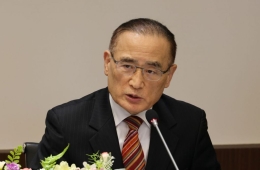
![Josh Bolton, Chairman of the Business Roundtable <br>[Photo by EPA]](http://www.asiae.co.kr/news/img_view.htm?img=2020111811323517434_1605666755.jpg)
According to the Wall Street Journal (WSJ) on the 17th (local time), BRT Chairman Josh Bolten held a press conference that day and explained that the request was made "considering a new U.S.-China trade negotiation."
However, Chairman Bolten said, "The withdrawal of tariff increases targeting China should not be an independent action," adding, "It should mark the beginning of negotiations to resolve the difficulties caused by the Trump administration's overly aggressive measures." He further stated, "The withdrawal of tariff hikes should occur in the context of establishing a serious relationship with China on various issues." He explained that if the U.S. imposes retaliatory tariffs, China should also take corresponding measures. This is interpreted as meaning that China's unfair practices also need to be addressed.
Former U.S. Treasury Secretary Hank Paulson made similar remarks at the event. Paulson said, "The U.S. must achieve visible and significant results from China before it can lift tariff increases, and these issues were addressed in the Phase One trade deal." Myron Brilliant, acting chairman of the U.S. Chamber of Commerce, also said, "We hope China agrees to structural reforms not covered in the Phase One trade deal," adding, "This would create political space for both governments to withdraw the tariffs currently imposed."
The Trump administration raised tariffs on $370 billion (409.22 trillion KRW) worth of Chinese products over the past two years during the trade war with China. China also imposed retaliatory tariffs on $110 billion worth of U.S. products. WSJ introduced that whether the Biden administration will maintain or ease the tariffs imposed by the Trump administration on China is an issue that must be decided immediately after the new administration begins.
So far, the Biden transition team has not expressed a clear position on the high tariffs imposed on China. However, they have only presented a general stance of reviewing issues such as damage to allies and U.S. consumers.
Among economists, there are concerns about the damage to companies importing Chinese components and consumers due to retaliatory tariffs, but the prevailing view is that it will be difficult for the Biden administration to actually reduce or abolish them.
Hot Picks Today
 "Now Our Salaries Are 10 Million Won a Month" Record High... Semiconductor Boom Drives Performance Bonuses at Major Electronic Component Firms
- Experts Already Watching Closely..."Target Price Set at 970,000 Won" Only Upward Momentum Remains [Weekend Money]
- "Heading for 2 Million Won": The Company the Securities Industry Says Not to Doubt [Weekend Money]
- Living the Homebody Dream? "I Was Shocked by My Spending" How to Cut Costs to 5,000 Won for Essentials [The Principles of Benefits]
- "Chanel Open Run? I Get a Free Pass"... The World of the Top 0.1% That Money Alone Can't Enter [Luxury World]
Strong voices calling for a tough stance on China exist not only within the Republican Party but also within the Democratic Party. Moreover, labor unions, which form the support base of President-elect Biden, are also demanding a strong approach toward China. A staff member of a Democratic senator predicted, "If the Biden administration decides to maintain high tariffs on China, Congress will support it."
© The Asia Business Daily(www.asiae.co.kr). All rights reserved.