Difficulty in Selecting Final Candidate for Head of Public Corruption Investigation Office... 3rd Meeting Today

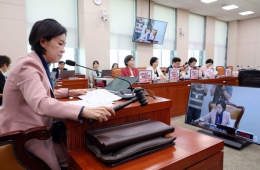
On the 13th, the 2nd meeting of the Committee for the Recommendation of the Chief of the Corruption Investigation Office for High-ranking Officials was held at the National Assembly, chaired by Chairman Jo Jae-yeon.
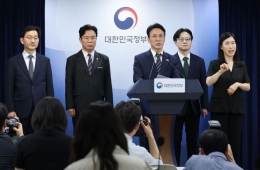
View original image[Asia Economy Reporter Choi Seok-jin] The Public Office Crime Investigation Agency Chief Candidate Recommendation Committee (Recommendation Committee) will hold its third meeting on the 18th to narrow down two candidates for the inaugural head of the High-ranking Officials' Crime Investigation Agency (Gongsu-cheo).
Despite strong pressure from ruling party members of the committee to reach a conclusion on the day in order to launch Gongsu-cheo within this month, difficulties are expected as opposition party members with veto power emphasize "careful verification."
The Recommendation Committee will hold its third meeting at 2 p.m. at the National Assembly to discuss the final candidate selection. The second meeting held on the 13th lasted over eight hours but ended without excluding a single candidate out of the ten.
Therefore, in the third meeting, the plan is to narrow down the candidate pool by sequentially excluding unqualified candidates from all ten candidates.
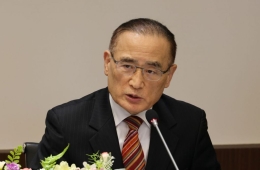
Lee Heon, a lawyer and opposition party recommendation committee member, emphasized, "The most important qualifications for the head of Gongsu-cheo are investigative ability and investigative experience," adding, "That is the foundation of political neutrality and independence in duty."
He further added, "Even if the candidate is not a former prosecutor, at least the ability or experience to operate an administrative agency is necessary."
For this reason, opposition party recommendation committee members requested non-prosecutor candidates at the previous meeting to submit service plans explaining their motivation for applying to head an investigative agency.
However, Lawyer Lee stated, "Although we received considerable answers and materials, we need to obtain more information regarding certain candidates' assets and controversies over former official privileges to conduct proper verification," indicating that it is unlikely that a decision will be reached in the third meeting as well.
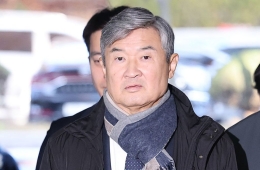
On the other hand, Park Kyung-jun, a lawyer and ruling party recommendation committee member, said, "In fact, we were in a position to narrow down candidates during the last meeting," adding, "But suddenly, the opposition side, which had not asked many questions, said, 'We cannot decide now. Let's hold another meeting to discuss,' which caused friction with the chairman."
Lawyer Park said, "From the public's perspective, candidates who appear to have a particular political bias or who have earned significant profits through former official privileges should be excluded," adding, "If we proceed this way, the candidate pool will be roughly narrowed down."
According to the Gongsu-cheo Act, the Recommendation Committee selects two candidates and recommends them to the president, who then nominates one of them. After a confirmation hearing, the nominee is appointed as the head of Gongsu-cheo.
The ruling party has stated that if the final candidate is not decided on the day, they will push for legal amendments to change the Recommendation Committee's approval condition, currently requiring six votes, to nullify the opposition's veto power.
Hot Picks Today
 "Now Our Salaries Are 10 Million Won a Month" Record High... Semiconductor Boom Drives Performance Bonuses at Major Electronic Component Firms
- Is It Really Like an Illness? "I Can't Wait to Go Again"—Over 1 Million Visited in Q1, Now 'Busanbyeong' Takes Hold [K-Holic]
- "Realizing How Fast Money Disappears: Should You Try Only the Essentials for 5,000 Won? [The Basics of Benefits]"
- "Heading for 2 Million Won": The Company the Securities Industry Says Not to Doubt [Weekend Money]
- Experts Already Watching Closely..."Target Price Set at 970,000 Won" Only Upward Momentum Remains [Weekend Money]
Regarding this, opposition party lawyer Lee said, "Saying that they will not tolerate deliberate stalling or that they will legislate is a threat and obstruction," suggesting that the final procedure for launching Gongsu-cheo will not proceed smoothly according to the ruling party's intentions.
© The Asia Business Daily(www.asiae.co.kr). All rights reserved.