[Deputy Director's Column] Real Estate Legislation Turning Citizens into Lawbreakers
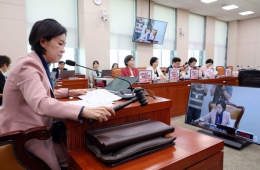
[Asia Economy Reporter Yoo In-ho] On the 10th, during the plenary session of the National Assembly's Special Committee on Budget and Accounts, Minister of Land, Infrastructure and Transport Kim Hyun-mi engaged in a heated debate with opposition party lawmakers over the effectiveness of the Housing and Urban Fund's Didimdol (purchase fund) loan.
When Kim Hyung-dong, a member of the People Power Party, pointed out that "the average price of apartments in Seoul is about 1 billion KRW, but the Didimdol loan limit is too low," Minister Kim countered, "There are apartments priced below 1 billion KRW."
When Kim again criticized, "(Didimdol loans) are available when purchasing homes priced below 500 million KRW. It is too low to buy a 1 billion KRW apartment," Minister Kim responded once more, "There are apartments priced below 1 billion KRW." When Kim asked, "Are there apartments priced at 500 million KRW?" Minister Kim replied, "Yes. There are some in the metropolitan area... I can buy a place like my own home with a Didimdol loan."
The Didimdol loan is a Housing and Urban Fund that supports homeownership for low-income, non-homeowners. It allows loans up to 260 million KRW when purchasing homes priced below 500 million KRW. Ultimately, Minister Kim emphasized that the apartment she lives in, located in Ilsan, Gyeonggi Province, is priced in the 500 million KRW range and can be purchased through the Didimdol loan.
However, Minister Kim's statement was incorrect. She understated the actual market price of the apartment where she resides by about 100 million KRW. The same apartment unit she mentioned as "500 million KRW" was sold for 600 million KRW and 570 million KRW earlier this month. Following her remarks, residents of the same apartment protested, saying, "She is quoting the apartment price too low."
Minister Kim's statement is not illegal under current standards. However, according to the "Real Estate Transaction and Real Estate Service Industry Act," which is being legislated through a representative bill proposed by Democratic Party lawmaker Jin Sung-jun after consultation with the government, it could be problematic. Article 75 (Prohibition of Market Manipulation) Paragraph 1 of the Act states, "No one shall engage in acts that unfairly influence or are likely to influence real estate prices by manipulating the market through the following methods with the intent to manipulate real estate prices."
Minister Kim did not engage in actions such as directly posting unlikely asking prices on information and communication networks (Article 75 Paragraph 1 Item 1). However, since she mentioned "unlikely asking prices" in an official setting, it could fall under "other acts that may disrupt real estate transaction order" (Article 75 Paragraph 1 Item 1).
In the proposed legislation, the standard for unfairly influencing asking prices is "unlikely asking prices," not "high prices." Even prices lower than the market price can be subject to market manipulation liability.
As the ruling party and government push forward with this legislation, concerns are growing in the market. This is because they plan to establish a Real Estate Transaction Analysis Institute to control not only citizens' loans and taxes but also personal opinions.
In fact, controversy is rising mainly in online communities regarding Article 75 on market manipulation. According to the bill, if real estate agents or individuals in online cafes, small groups, or social network services (SNS) collude to raise prices by saying, "Let's not list properties below a certain price," it will be considered collusion.
Offline postings are also subject to regulation. If judged as collusion, offenders face imprisonment of up to two years or fines up to 20 million KRW.
The market fears that even casual conversations about housing prices among individuals could become subject to reporting. It implies that people should refrain from casually discussing real estate or posting related content.
Hot Picks Today
 "Now Our Salaries Are 10 Million Won a Month" Record High... Semiconductor Boom Drives Performance Bonuses at Major Electronic Component Firms
- Wallets Open Wide on Big News...300 Trillion Won Heads to the U.S., "Tax Breaks" Fail to Keep Funds at Home
- "Hope You Enjoy the 'Welfare' for Bereavement of Children"... Ridicule of Strike Non-Participants Intensifies Union Conflict at Samsung Electronics
- "Realizing How Fast Money Disappears: Should You Try Only the Essentials for 5,000 Won? [The Basics of Benefits]"
- Experts Already Watching Closely..."Target Price Set at 970,000 Won" Only Upward Momentum Remains [Weekend Money]
There is still time. Since such controversy and confusion are arising even before the legislation is enacted, it is hoped that the government and the National Assembly will work together to finalize the bill.
© The Asia Business Daily(www.asiae.co.kr). All rights reserved.