[Square] Excessive Environmental Regulations Only Widen the Gap Between Large Corporations and SMEs

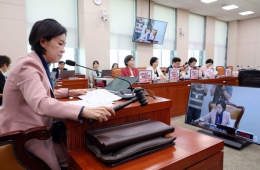
At the 'Small and Medium Enterprise Environmental Policy Council' held on September 25 by the Korea Federation of Small and Medium Business in collaboration with the Ministry of Environment, a somber atmosphere was created due to the industry's desperate and urgent appeals. The issue at hand was the call for slowing down the pace of environmental regulations that the SME sector has been continuously demanding. Many industry representatives attending the meeting agreed with the government's intent to protect the environment but unanimously called for a reconsideration of the implementation methods and timing.
Moreover, the tsunami-like impact of the novel coronavirus disease (COVID-19) that struck earlier this year has dealt a blow to the real economy overall, inflicting irreparable damage especially on SMEs, which operate under relatively poor business conditions. Amid this situation, various environmental regulations, represented by the Act on the Registration and Evaluation of Chemicals (AREC) and the Chemical Control Act (CCA), inevitably impose an additional burden on the SME sector.
According to the AREC, revised and enforced since 2019, the previous system, which selected and announced only some existing chemicals for registration, has been strengthened so that anyone manufacturing or importing 1 ton or more of existing chemicals or 0.1 ton or more of new chemicals must report and register the chemicals. When comparing the new chemical registration standards, it is clear that Korea's regulatory level is excessive compared to Japan, China, and the European Union (EU), which require registration for 1 ton or more annually, and the United States, which requires 10 tons or more annually.
Furthermore, regarding the standards for hazardous chemical handling facilities set by the CCA, there are more than seven related notifications, each containing 413 different detailed standards. This reality makes it very difficult for SMEs, which lack environmental experts, to understand and apply these regulations. According to the industry, the total number of high-risk substances that must be registered by 2021 is 1,973, with up to 20,000 required test data items, and the additional costs the industry must bear are estimated to be up to 1 trillion won. It is obvious that as the registration deadline approaches, factory relocations overseas or closures will increase.
Such excessive environmental regulatory systems not only weaken the competitiveness of SMEs but also have a high possibility of deepening the polarization between large corporations and SMEs. SMEs, which have weaker profit structures compared to large companies, will try to reflect the costs related to chemical registration in product prices, leading to a decline in price competitiveness. As a result, SMEs with excellent technology but insufficient financial capacity may collapse, while the market dominance of large corporations may be further strengthened, causing unintended side effects.
It is worth noting that in the EU, which Korea models itself after, only 17.1% of chemicals subject to registration were registered by the deadline (August 2019), and such environmental regulations have been pointed out as a cause of the decline of the European chemical industry.
Of course, the SME sector does not oppose thorough chemical management and environmental protection. Incidents such as the 'humidifier disinfectant damage' in 2011 and 2012 and the hydrofluoric acid leak accident at the Gumi 4th Industrial Complex must never recur, and it is a natural obligation to prepare institutionally to prevent such accidents.
However, as experienced in several cases, no matter how well-intentioned a law or system is, if it is pushed forward recklessly without careful assessment, review, and acceptance at the field level, it will cause tremendous confusion and directly harm the relevant economic sector, making it unlikely to achieve the intended positive outcomes.
Hot Picks Today
 "Now Our Salaries Are 10 Million Won a Month" Record High... Semiconductor Boom Drives Performance Bonuses at Major Electronic Component Firms
- Is It Really Like an Illness? "I Can't Wait to Go Again"—Over 1 Million Visited in Q1, Now 'Busanbyeong' Takes Hold [K-Holic]
- "Realizing How Fast Money Disappears: Should You Try Only the Essentials for 5,000 Won? [The Basics of Benefits]"
- "Heading for 2 Million Won": The Company the Securities Industry Says Not to Doubt [Weekend Money]
- Experts Already Watching Closely..."Target Price Set at 970,000 Won" Only Upward Momentum Remains [Weekend Money]
The government needs to seek ways to minimize the economic shocks that hasty environmental regulations may cause and pursue gradual implementation through sufficient review and phased policy enforcement. Additionally, the industry must once again recognize the necessity and importance of environmental protection and strive to secure self-sustainability and voluntary participation to prepare for various environmental regulations.
© The Asia Business Daily(www.asiae.co.kr). All rights reserved.