Biden's Stimulus Plan Boosts Korean Economy... Green Policy Is a Double-Edged Sword
Expansion of Stimulus Measures Positive for Exports
Uncertainty Likely to Persist for Now
Need to Monitor Acceleration of Eco-Friendly Initiatives
Environmental Regulations a Double-Edged Sword for Korean Companies

[Asia Economy Reporters Moon Chaeseok and Jang Sehee] What impact would the election of Democratic candidate Joe Biden as U.S. president have on South Korea's economy? Academics and experts generally predict that the continuation of expansionary fiscal policies will accelerate the pace of economic recovery in South Korea. However, they unanimously agree that the acceleration of eco-friendly policies, such as the U.S. rejoining the Paris Climate Agreement, could pose risks to South Korea, necessitating preparedness.
◆ Expansionary 'Big Government' Stimulus Policies... Initially Positive for South Korea's Economy = If elected, Biden plans to expand stimulus measures through expansive fiscal and monetary policies. He has previously promised a fifth stimulus package worth $2.2 trillion (approximately 2,500 trillion KRW), which is $400 billion more than that proposed by incumbent President Donald Trump (Republican candidate). The improvement in the U.S. economy is expected to positively affect South Korea’s exports and economy. Professor Kim Soyoung of Seoul National University’s Department of Economics analyzed, "If the U.S. economy improves, exports generally revive, which will positively impact our economy." She added, "Companies investing in the U.S. will also benefit, and the preference for safe assets in international financial markets will decrease, reducing uncertainty to some extent." Indeed, on the 5th, the Woori Financial Management Research Institute forecasted in a report that effectively leveraging the Biden administration’s policy direction could raise South Korea’s potential growth rate by about 0.2 percentage points in the medium to long term. The Hyundai Research Institute also projected, "Compared to a Trump re-election, if Biden wins, South Korea’s total export growth rate momentum could increase by 0.6 to 2.2 percentage points annually, and economic growth pressure could rise by 0.1 to 0.4 percentage points." However, concerns remain that uncertainty may persist for some time. Professor Lee Inho of Seoul National University’s Department of Economics said, "The Democratic Party, which united against Trump, may have internal competition over economic policy lines, so uncertainty in our economy is likely to continue until detailed directions emerge."
◆ Attention on U.S. Rejoining CPTPP = If Biden wins, it is expected that while maintaining protectionism to counter China, the U.S. will pressure China more through multilateral trade alliances rather than direct measures like tariffs. The possibility of rejoining the Comprehensive and Progressive Agreement for Trans-Pacific Partnership (CPTPP) is also increasing. Professor Kang Insu of Sookmyung Women’s University’s Department of Economics said, "Biden’s 'multilateral system' will focus on multilateral trade agreements like CPTPP," adding, "He will gather like-minded countries to counter China and the European Union (EU)." Jung Min, a research fellow at Hyundai Research Institute’s Industrial Analysis Team, predicted, "If Biden pursues rejoining CPTPP, South Korea will have export opportunities not only to the U.S. but also to other countries within the allied community."
Hot Picks Today
![Even With a 900 Million Won Deposit and 2.5 Million Won Monthly Living Expenses, Residents Say "It's Good to Be Taken Care Of"... Inside a Luxury Silver Town [Opening Silver Housing]](https://cwcontent.asiae.co.kr/asiaresize/93/2026042010015932171_1776646918.gif) Even With a 900 Million Won Deposit and 2.5 Mil...
Even With a 900 Million Won Deposit and 2.5 Mil...
- "When the Middle East War Ends, This Stock Will Lead"... Target Price Raised 71%...
- Apple's Foldable Phones, Production Expansion, and Robotics... All Signs Point t...
- "Please Launch It in Korea!" After All the Hype... This Coffee Finally Arrives i...
- Controversy Over Chinese Character Name Resembling "Ching Chong"... "The Devil W...
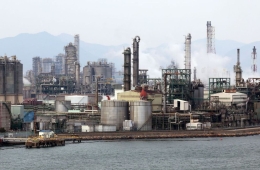
◆ Environmental Regulations: Boon or Bane for South Korean Companies? = Biden’s top environmental pledge is to rejoin the Paris Agreement. While the U.S.’s strengthened carbon neutrality policies may negatively impact certain industries such as steel, petrochemicals, and shipbuilding, experts expect sectors like semiconductors and biohealth to be less affected by environmental regulations. The increasing number of companies joining RE100 (a commitment to source 100% renewable energy by 2050) is also raising the private sector’s adaptability to carbon neutrality, which is a positive factor. Professor Kang predicted, "If the U.S. strengthens carbon neutrality policies, it could positively affect South Korea’s electric vehicle, hydrogen vehicle, and battery industries." Senior Research Fellow Seo Jingyo of the Korea Institute for International Economic Policy said, "If Biden’s large-scale investment policies in eco-friendly and hydrogen vehicles materialize, cooperation with South Korea’s renewable energy sector will be possible, and depending on circumstances, South Korea might invest in the U.S." Meanwhile, the government believes that Biden’s election would clearly increase predictability. It also views that predicted variables have less disruptive power, thereby reducing external risks originating from the U.S.
© The Asia Business Daily(www.asiae.co.kr). All rights reserved.