Small and Medium Enterprises in Meal Services and Vending Machines Left in Employment Retention Subsidy Blind Spot 'Crying Out'

On May 26, one day before in-person classes for 11th graders, 9th graders, and 1st and 2nd graders in elementary school, an official disinfects tables and partitions in the cafeteria of Sindong Elementary School in Seocho-gu, Seoul. Photo by Hyunmin Kim kimhyun81@
View original image[Asia Economy Reporter Moon Hyewon] "I have been in business for over 40 years, but this is the first time I have experienced such a situation. This March, the start of the school term was postponed by one week, then postponed again by two more weeks. Thinking 'it can't be that bad,' we kept our staff as they were, but already eight months have passed with us helplessly stuck. Now, I feel that we have reached the limit and can no longer endure. The biggest problem is that no one can predict when COVID-19 will end." (Kim Ho-gyun, Chairman of the Korea Foodservice Cooperative)
The prolonged COVID-19 pandemic has increased the employment burden and anxiety for small and medium-sized enterprises (SMEs). Although they are struggling to maintain employment through temporary leave or furlough instead of layoffs by utilizing the Employment Retention Subsidy, the number of industries that either cannot receive this subsidy or have reached the limit is growing, pushing the management status of SMEs to the worst level.
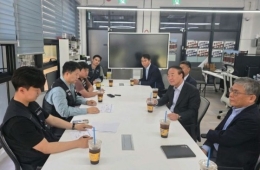
On the 3rd, the Korea Federation of SMEs, together with the Ministry of Employment and Labor, formed the "Employment Retention Subsidy Field Difficulty Resolution Council" and decided to propose extending the subsidy period and adding more industries.
The Employment Retention Subsidy is a system that supports companies facing difficult business conditions when they choose temporary leave or furlough instead of employment adjustment. To prevent replacement hiring after temporary leave or furlough, new hires during the employment retention period are excluded from subsidy eligibility; however, exceptions are made when new hiring is unavoidable. The amount of Employment Retention Subsidy paid, which was only 66.9 billion KRW last year, increased to a total of 2.647 trillion KRW this year due to the spread of COVID-19. As of the 29th of last month, 82,123 workplaces had submitted employment retention plans and applied for the subsidy to the Ministry of Employment and Labor.
Earlier, on the 20th of last month, the government extended the Employment Retention Subsidy support period from 180 days to 240 days for all industries. This measure was taken considering that companies receiving the subsidy since March this year are still struggling with management difficulties due to the prolonged COVID-19 pandemic.
The problem is that some industries such as foodservice and vending machine sales are excluded from the special damage industries because they are not considered high-risk facilities like restaurants, karaoke rooms, PC rooms, and pubs, placing them in a blind spot where they cannot receive the Employment Retention Subsidy.
According to statistics from the Ministry of the Interior and Safety, since the first COVID-19 case occurred in Korea in January, more than 700 entrusted foodservice businesses nationwide have closed. This is the largest scale since statistical surveys began.
Typically, foodservice companies sign contracts with schools through competitive bidding for a semester or a year. They deploy staff and pre-purchase ingredients simultaneously with the delivery contract, and settlements are processed afterward after the school confirms the number of meals served each month. Therefore, when school attendance is delayed and meals are suspended or reduced, the additional labor costs and leftover ingredients burdens fall entirely on the foodservice companies.
Kim Ho-gyun, Chairman of the Korea Foodservice Cooperative, said, "The Ministry of Education unilaterally breached contracts with foodservice companies by postponing the school term, causing us damage. We have been waiting for compensation because we thought we could not even sue the government, but there has been no news. We applied for special industry designation for foodservice companies to the Ministry of Labor last August, but there has been no response. We have received neither support nor even attention from any government department," he lamented.
Meanwhile, SMEs that have maintained employment by receiving the Employment Retention Subsidy are now facing mass layoffs as government support decreases due to the prolonged COVID-19 pandemic. Yoon Young-bal, Chairman of the Korea Vending Machine Operators Cooperative, said, "This year, universities did not open, and exhibitions and events were canceled, causing vending machine clients to close and sales to be cut in half. We barely survived by receiving the Employment Retention Subsidy for about six months, but now that support has stopped, more companies are forced to lay off employees."
Hot Picks Today
 There Is a Distinct Age When Physical Abilities Decline Rapidly... From What Age Do Strength and Endurance Drop?
- "After Vowing to Become No. 1 Globally, Sudden Policy Brake Puts Companies’ Massive Investments at Risk"
- Court Halts Kim Bomseok's Designation as Coupang Owner...Suspends Fair Trade Commission's Order
- Cerebras Soars 70% on IPO Debut: Is Nvidia's Reign Ending as a New AI Semiconductor Power Emerges?
- On Teacher's Day, a Student's Gifted Cake Had to Be Cut into 32 Pieces... Why?
Kim Ki-moon, Chairman of the Korea Federation of SMEs, said, "Many companies are barely covering labor costs with the current level of Employment Retention Subsidy, so active cooperation among related ministries such as the Ministry of Strategy and Finance is needed to secure the budget for extending the special support period."
© The Asia Business Daily(www.asiae.co.kr). All rights reserved.