Is Gyeonggi-do Too Large?... Debate Ignites Over 'Bundo (分道)·Special City'

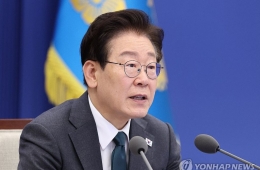
Gyeonggi Province Governor Lee Jae-myung is responding to questions from committee members during the National Assembly's Public Administration and Security Committee's audit of Gyeonggi Province held on the 19th.
View original image[Asia Economy (Suwon) = Reporter Lee Young-gyu] Gyeonggi Province is on the verge of being 'fragmented.' Among the 31 cities and counties in the province, 10 cities and counties with populations exceeding 500,000 are pushing for the introduction of 'Special Cities' (Teukrye-si).
If Special Cities are introduced, the respective local governments will gain expanded discretion in areas such as finance, effectively placing them outside the influence of Gyeonggi Province. Additionally, with 10 cities and counties in the northern Gyeonggi region pushing for separation from southern Gyeonggi, the possibility of Gyeonggi Province being divided into northern and southern provinces is increasing.
■ 10 Major Cities in Gyeonggi Province Pursuing 'Special City' Status
The National Assembly's Administrative and Security Committee's Bill Review Subcommittee is currently reviewing a full revision of the Local Autonomy Act. The main focus of this revision is the designation of 'Special Cities.'
The current law (Article 175) includes a provision recognizing special cases for large cities with populations over 500,000, allowing for special administrative and financial operations and national supervision.
The large cities with populations over 500,000 that fall under this category are Suwon, Yongin, Goyang, Seongnam, Bucheon, Hwaseong, Ansan, Namyangju, Anyang, and Pyeongtaek?10 in total. Among these, Suwon, Yongin, and Goyang have populations exceeding 1 million, while Seongnam, Bucheon, Hwaseong, Ansan, Namyangju, Anyang, and Pyeongtaek have populations between 500,000 and 1 million.
If these areas become Special Cities, significant changes are expected in the financial sector, as designation as a Special City secures financial special rights.
Mayors of large cities with populations over 1 million, such as Goyang, Suwon, and Yongin, urged the National Assembly in July to swiftly pass the full revision of the Local Autonomy Act that grants administrative and financial authority to Special Cities for this reason.
On the other hand, the financial adjustment function of metropolitan local governments will weaken, and financial disparities between cities and counties will inevitably deepen.
According to the Gyeonggi Research Institute, if the provincial tax of acquisition tax is converted to a Special City tax, the 10 Special Cities in the province will see an increase in tax revenue of 3.1512 trillion KRW, while the other 21 cities and counties will experience a decrease of 704 billion KRW, and the province itself will see a decrease of 2.4472 trillion KRW in tax revenue.
Gyeonggi Governor Lee Jae-myung stated at the National Assembly's audit of Gyeonggi Province on the 19th, "The biggest problem with pursuing Special City status is granting financial special benefits," adding, "While administrative special cases are acceptable, we should not assign the rank of Special City." Governor Lee believes that introducing Special Cities, which aims at financial adjustments that make poor local governments poorer and rich local governments richer, should not be allowed.
■ 'Division Theory' Splitting Gyeonggi Province North and South Rekindled
The theory of dividing Gyeonggi Province into southern and northern parts has recently been rekindled.
Democratic Party lawmaker Kim Min-chul (Uijeongbu Eul) and People Power Party lawmaker Kim Seong-won (Dongducheon-Yeoncheon) submitted a bill to establish Gyeonggi Buk-do (Northern Gyeonggi Province) to the National Assembly's Administrative and Security Committee plenary session on the 10th of last month. Subsequently, the committee's bill review subcommittee approved holding a legislative public hearing on the establishment of Gyeonggi Buk-do on the 21st of last month.
Although there are still many hurdles to overcome, the fact that a public hearing will be held is significant as it marks the beginning of serious discussions on the establishment of Gyeonggi Buk-do.
The issue of dividing Gyeonggi Province or establishing Gyeonggi Buk-do has been raised since the 1987 presidential election, and similar bills such as the establishment of a 'Special Province for Peaceful Unification' (tentative name) have been proposed multiple times, but this is the first time a legislative public hearing has been held.
In August, the Gyeonggi Provincial Council passed a resolution urging the prompt implementation of division for the northern Gyeonggi region, and the Uijeongbu City Council also passed an ordinance supporting the establishment of a Gyeonggi Buk-do Promotion Committee on the 3rd of last month, reflecting strong voices for division centered on northern Gyeonggi.
Governor Lee Jae-myung is fundamentally in favor of the legislative movement related to the division of Gyeonggi Buk-do but believes preparation is necessary.
At the audit on the 19th, he said, "Division should be done in the long term, but preparation must be made in advance," adding, "It is appropriate to promote division after aligning financial investment, industrial attraction, and income levels to some extent with the southern region."
He also added, "Currently, residents in southern Gyeonggi pay 950,000 KRW in provincial taxes, of which 870,000 KRW is spent there, and the remaining 120,000 KRW is used to support the relatively underdeveloped northern region. If division occurs, support will decrease, inevitably causing setbacks in social overhead capital (SOC) investments."
At a press conference marking his first anniversary in office last June, Governor Lee emphasized, "If division occurs without balanced development measures, the northern region may gain more freedom in decision-making but will have a much worse quality of life," adding, "We must first secure infrastructure to establish a foundation for independence. Therefore, a phased division is necessary."
Hot Picks Today
!["Buy Before June" - Securities Firms Recommend Stocks Expected to Rise Until 2028 [Weekend Money]](https://cwcontent.asiae.co.kr/asiaresize/93/2026050909404555844_1778287245.jpg) "Buy Before June" - Securities Firms Recommend Stocks Expected to Rise Until 2028 [Weekend Money]
"Buy Before June" - Securities Firms Recommend Stocks Expected to Rise Until 2028 [Weekend Money]
- From Next Year, "Name Your Price": Tokyo Real Estate Soars to 33-Year High [Mwonilissyu]
- "If It Has Hangul, It Sells Well": Booming Sales Despite Triple the Price... 'Hangul Marketing' Expands Overseas
- "Will It Climb Even Higher?" Target Price Raised to 1.03 Million Won for This Stock [Weekend Money]
- "President Yoon, I Love You"... The Beautiful Woman in Her 20s Who Shouted 'Yoon Again' Was Actually
© The Asia Business Daily(www.asiae.co.kr). All rights reserved.