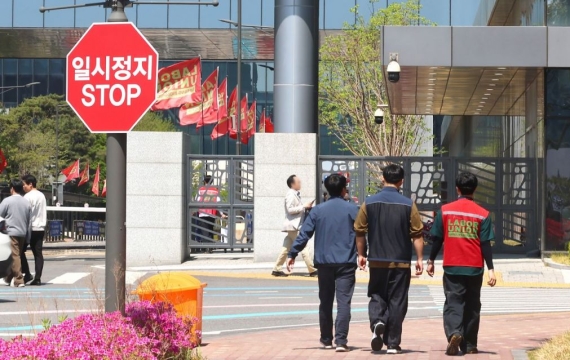
On the afternoon of May 6, at Guryong Village in Gaepo-dong, Gangnam-gu, Seoul, banners bearing messages such as "Sell the land first" and "Recognize residency" fluttered at the entrance of the village, where traces from the fire that swept through the area in January this year still remain. The residents, who lost their homes in the fire, returned here after a short period staying in temporary accommodations at hotels. What awaited them was a complaint for an "eviction lawsuit" sent by Seoul Housing & Communities Corporation (SH).
According to SH on May 8, out of the 1,107 households in Guryong Village, 178 households remain. Nearly 20% of residents have still not left. In March, SH filed eviction lawsuits against these remaining households. An SH official explained, "Eviction lawsuits are a standard part of the compensation process during redevelopment," adding, "Residents have until mid-June to relocate voluntarily, and for those who do not move, forced eviction may proceed."
Seoul’s Most Notorious Shantytown... Redevelopment Plan Thwarted Repeatedly by Compensation Disputes
Guryong Village is a densely populated area of unauthorized housing formed in the late 1980s. It is considered one of Seoul's most representative shantytowns. In 2012, following an urban renewal plan in 2011, the Seoul Metropolitan Government designated the area as an urban development zone and pushed for redevelopment. However, conflicts over compensation measures arose among the local government, residents, and landowners.

On the afternoon of the 6th, a steel watchtower with a banner was erected at the entrance of Guryong Village in Gangnam-gu, Seoul. Photo by Jaehyun Park
원본보기 아이콘Recently, as SH finalized a plan to build a residential complex with 3,739 households, the village stands at a crossroads of change. The new plan includes 1,107 integrated public rental units for existing residents to resettle, 941 units for sale, and 1,691 long-term lease apartments for newlyweds. The Seoul Metropolitan Government is pushing to begin construction next year.
Since 2017, SH has supported temporary relocation for Guryong Village residents, but the residents remain dissatisfied. When the project is completed, eligibility for moving in will be determined by reviewing income and assets to set differentiated rents. Residents are concerned that, if security deposits and monthly rents are set according to income levels and nearby apartment prices in the future, the amounts will be unaffordable. Kangil Lee, head of the Guryong Land Residents' Council, said, "Even if we accept the temporary relocation support and move out, the real problem begins after completion," adding, "If eligibility is reviewed at the time of completion, the security deposits and rents could be unreasonably high depending on market prices and income brackets, and in the end, those who cannot afford it will have no choice but to leave."
After Returning from Temporary Shelters Following January Fire, Residents Now Face Eviction Lawsuits
A significant number of Guryong Village residents are seniors in their 60s or older. After retirement, they survive by collecting recyclable materials or doing simple manual labor. Yang (aged 68), whom we met in the village, said, "I pick up cigarette butts and clean bathhouses, but there is nowhere willing to hire me, so even if I look for senior jobs, I only get about 300,000 won," adding, "Even if I move into a rental apartment, the high rent will force me onto the street."
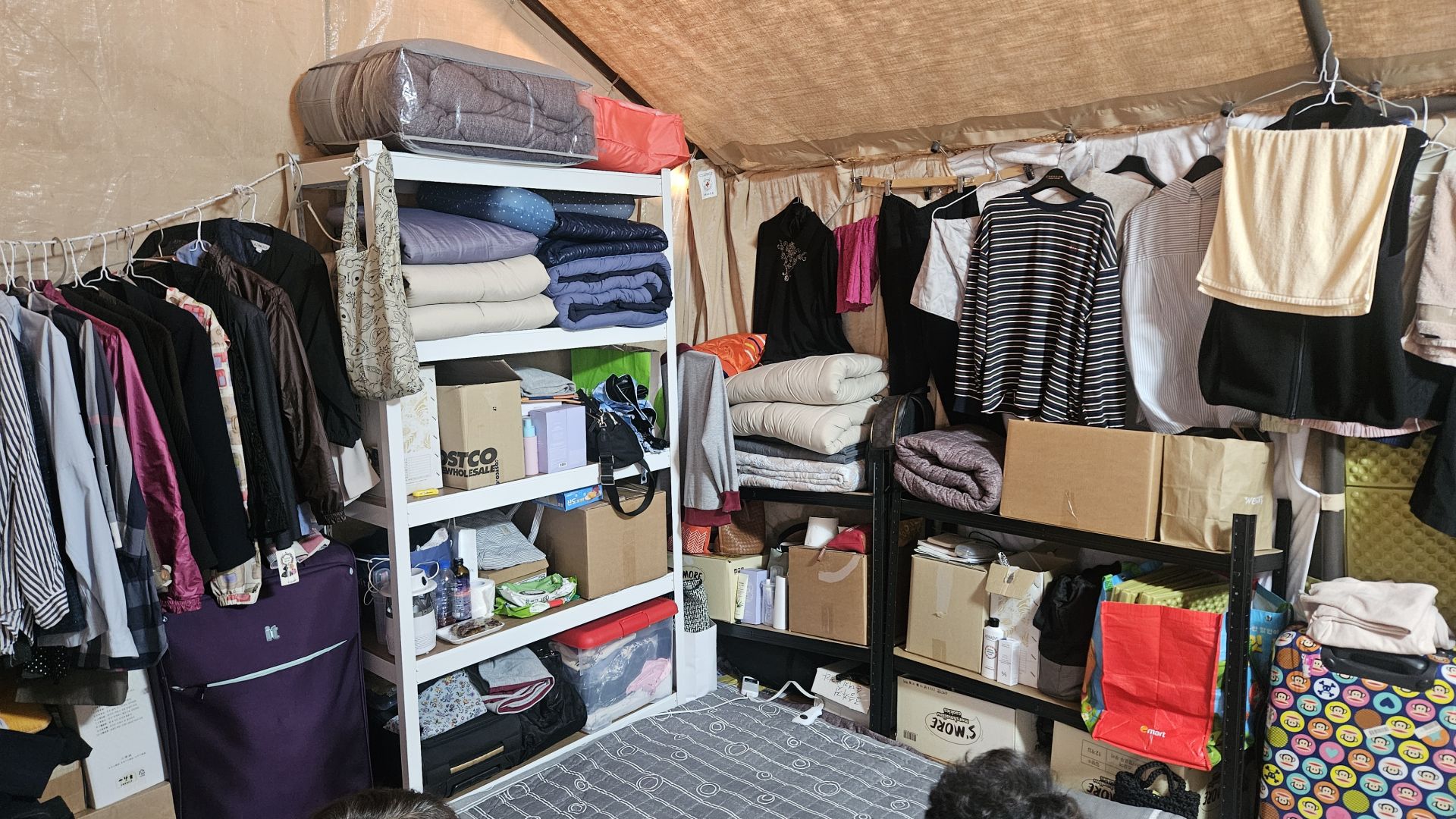
The situation is even harsher for residents whose homes were lost in the fire. They are living communally in tents beside their former home sites, assigning meal duties and making their own rules. Choi (aged 68), who has lived in Guryong Village for nearly 40 years, said, "I can't even tell my daughter I'm living in a tent because she would worry," adding, "All my property burned down, and now they tell us to leave empty-handed. If I don't at least get a pre-sale right, those who can't afford the rent are basically being kicked out." Jo (aged 78) said, "Even the wedding gifts I prepared for my son were reduced to ashes," adding, "It may be bearable for now, but when summer comes with the rain and heat, I don't know how we'll manage."

A resident of Guryong Village in Gangnam-gu, Seoul, who lost their home in a fire this January, is living in a temporary shelter made from a tent. Photo by Jaehyun Park
원본보기 아이콘Some residents are demanding rental housing with an option to purchase, but there is no clear legal basis for this. Most live in unauthorized housing and do not own land, so they are excluded from being supplied with pre-sale housing under the Land Compensation Act. SH also maintains that it cannot meet these demands for the same reasons. Establishing a local housing cooperative is also fundamentally impossible, as urban development law requires that land use planning be completed first.
Excluded from Pre-sale Housing Supply... Experts Call for Political Solutions
Experts point out that policy measures are needed to resolve the housing rights issues that have persisted for over 40 years. Hwangsoo Choi, an adjunct professor of real estate at Konkuk University, said, "After completion, rents should be adjusted to levels residents can afford, or they should be helped to move to less expensive rental housing in other areas," adding, "However, SH and the local government must consider this carefully to avoid issues of fairness."
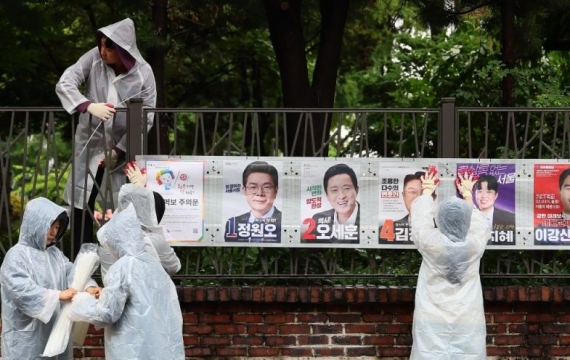
Meanwhile, on this Parents' Day, a small senior citizen celebration is being held in Guryong Village. Hyunggon Kim, the Democratic Party candidate for Gangnam-gu mayor, and Hyunki Kim, the People Power Party candidate, are visiting to listen to residents' opinions. Jo (aged 78) said, "Politicians only show up for elections, and nothing ever changes," shaking his head.
-

Reporter Park Jaehyun now@asiae.co.kr
-
Edit Lee Kijae happylee17@asiae.co.kr
© The Asia Business Daily(www.asiae.co.kr). All rights reserved.
!["Please Help Us": How Much Do Those Bowing Deeply for Your Vote Really Earn? [Data Pick]](https://cwcontent.asiae.co.kr/asiaresize/323/2026052010120870131_1779239528.png)