[Decision of the Head] 'M&A Gamblers' ... Will They Take 'Corona19' as an Opportunity?
![[Decision of the Head] 'M&A Gamblers' ... Will They Take 'Corona19' as an Opportunity?](http://www.asiae.co.kr/news/img_view.htm?img=2020093022565921297_1601474218.jpg)
[Asia Economy Reporter Park So-yeon] In the era of the 4th Industrial Revolution, industry maps are fundamentally changing as barriers between sectors become meaningless. Amid the newly drawn industry maps and the rapid alliances and mergers of global companies, where are the eyes of Korea's group conglomerate heads focused? It is precisely on securing future markets through mergers and acquisitions (M&A). The heads of these groups are determined not to miss 'smart' M&A opportunities. While global companies are facing crises due to the novel coronavirus infection (COVID-19), this situation actually presents an opportunity for Korean companies. Their strategy is to prepare in advance for crises and actively pursue M&A when good companies come onto the market due to COVID-19.
'M&A Players' ... Will They Seize the 'COVID-19' Golden Opportunity?
Each affiliate of SK Group is fervently securing cash. They are employing all possible methods to raise funds, including corporate bond issuance, equity sales, and initial public offerings (IPO). SK Energy issued corporate bonds worth 550 billion KRW in April, and SK Lubricants, responsible for the lubricant business, issued 300 billion KRW in corporate bonds in May to secure cash. Earlier, SK Hynix issued corporate bonds worth 1.06 trillion KRW in February. Equity sales are also active. In April, SK E&S sold all its shares (10.25%) in the Chinese private gas company China Gas Holdings, securing cash amounting to 1.8 trillion KRW. SKC also sold all its shares in SK BioLand. While listing SK BioPharm, SK Innovation is preparing to list its battery materials subsidiary SKIET. As SK affiliates actively secure funds, some speculate that SK Group is preparing for a large-scale M&A. Chairman Chey Tae-won is known as an 'M&A player' because M&A has played a significant role in forming SK Group's current future-oriented business portfolio. At the time of acquiring SK Hynix, semiconductors were not an attractive business. Building a semiconductor factory required a risky investment of 3 to 4 trillion KRW. Many within SK Group were negative about the acquisition, citing no relevance to the existing group portfolio. However, Chairman Chey's deep research into semiconductors led to a different view. Confident in the future, he led SK Telecom, the group's flagship company, to acquire Hynix in 2011. Starting as an underdog, Hynix has now become a core affiliate of SK Group. In 2016, Chairman Chey acquired OCI Materials (now SK Materials), a manufacturer of special gases for semiconductors, and SK Airgas, an industrial gas manufacturer. In 2017, SK acquired LG Siltron (now SK Siltron), a semiconductor wafer specialist, which then acquired the semiconductor silicon wafer division of the American chemical company DuPont. SK has also distinguished itself in bio-sector M&A, creating new growth engines. In 2018, SK acquired Ampac, a U.S. pharmaceutical contract development and manufacturing organization. In October last year, SK Pharmteco was established by integrating three pharmaceutical production entities?SK Biotech, SK Biotech Ireland, and Ampac?spread across various regions. This entity was recently selected as a key supplier for a 1 trillion KRW epidemic response project promoted by the U.S. government. This explains the high expectations for Chairman Chey's 'NEXT' big deals that turn everything he touches into 'gold.'
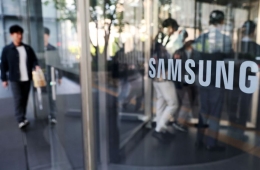
Since acquiring Harman in the U.S. for $8 billion (about 9.8 trillion KRW) in November 2016 to fully enter the automotive electronics business, Samsung Electronics has not engaged in any big deals but is currently evaluated as having ample funds for future growth engines. Although COVID-19 is spreading worldwide, the ongoing M&A activities of other global semiconductor competitors are fueling such expectations. Intel, which has been competing with Samsung for the top spot in semiconductor sales for years, acquired programmable semiconductor company Altera for $16 billion in 2015 and advanced driver-assistance system developer Mobileye for $15.3 billion in 2017. In May this year, Intel acquired mobility-as-a-service company Moovit for $900 million, securing strong competitiveness in the rapidly growing automotive semiconductor market. Nvidia, which has emerged as the absolute leader in the AI market with its graphics processing unit (GPGPU) technology, is also stimulating Samsung Electronics. In March last year, Nvidia acquired data center semiconductor company Mellanox Technologies for $7 billion, strengthening its competitiveness in the server semiconductor market following laptops. Recently, Nvidia delivered a bombshell to the global semiconductor market by acquiring ARM, the world's largest semiconductor design company based in the UK, for $40 billion, becoming a 'giant' in the semiconductor market. One unfortunate aspect is that Samsung has been somewhat hesitant due to the 'judicial risks' surrounding Vice Chairman Lee Jae-yong. For future success, absorbing global semiconductor, battery, and bio-related technologies through M&A is essential. We look forward to Samsung Group's aggressive M&A moves once again.
Hyundai Motor Group has also shown aggressive investment and technology internalization efforts in recent years to secure future vehicle technologies. They mainly focus on startups with technologies applicable to next-generation mobility, with investment scales ranging from tens of millions to several billion KRW, combining equity investments and technology partnerships. Last year, Hyundai Motor, jointly with Kia Motors, invested about $300 million in India's ride-sharing company Ola. This is an essential change in the process of transforming into a mobility company. Most competitors in the global automobile market are proceeding by partnering with external companies for joint research and development of technologies applicable to future vehicles. Since the appointment of Vice Chairman Chung Eui-sun, overseas investments centered on Hyundai Motor and Hyundai Mobis have become more active. Market expectations for Vice Chairman Chung are quite high. At the same time, the role of the Strategic Technology Headquarters led by President Ji Young-jo, a former Samsung Electronics executive, is also growing.
Hot Picks Today
 No Bacteria Detected in Arisu After 24 Hours of Repeated Drinking from a Tumbler
- "Available Only in Korea": Pokémon Card Prices Surge 2,532% Due to Rarity, Becoming Investment Assets
- Despite Posting Surprise Earnings of 23 Trillion Won, Cisco Tells 4,000 Employees to Leave... What Happened?
- [Breaking] White House: US and China Agree on Keeping Hormuz Open, No Tolerance for Iranian Nuclear Weapons
- "Egg Prices Are Strange" Proven True... Collusive Margin Hike of 46% Without Basis Leads to 594 Million Won Fine
LG Group has also significantly increased its cash assets this year. In February, LG Electronics sold its stake in the Beijing Twin Towers in China for about 670 billion KRW. LG Chem signed a conditional contract to sell its LCD polarizer business to Chinese chemical material company Sansan. In February, LG Chem issued corporate bonds worth 900 billion KRW and is preparing to spin off its battery business division. LG Group has shown movements such as holding M&A-related seminars recently, drawing industry attention to whether a large deal will emerge since the acquisition of Austrian automotive headlamp company ZKW (about 1.4 trillion KRW) in 2018. Since Chairman Koo Kwang-mo took over, LG Group has been pursuing business based on pragmatism. They have executed acquisitions such as LG Electronics' purchase of ZKW, industrial robot company Robostar, LG Household & Health Care's acquisition of Physiogel, and LG Chem's acquisition of Unisil. An industry insider said, "It takes more time than money for each group to develop and integrate future technologies directly. Although it may seem quiet due to 'COVID-19,' a fierce underground war is underway among the heads of groups competing to find 'cost-effective' future companies."
© The Asia Business Daily(www.asiae.co.kr). All rights reserved.