Despite COVID-19... 'Regulatory Free Zone' Creates 662 Jobs in One Year
Ministry of SMEs and Startups
Promotion of Special Zone Revitalization

[Asia Economy Reporter Kim Daeseop] It has been revealed that companies within the Regulatory Free Zone created 662 jobs over one year despite the economic downturn caused by the novel coronavirus infection (COVID-19). The activation of the Regulatory Free Zone system, investment attraction within the zones, and the dispersion of companies to local areas influenced job creation.
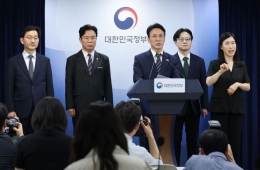
The Ministry of SMEs and Startups announced on the 15th, through a Cabinet meeting held at the Government Seoul Office, that a survey of employment status by workplace of 200 companies within the Regulatory Free Zone showed an increase of 662 employees (15.9%) over one year compared to 4,153 employees before the designation of the zones.
This employment status is based on a survey conducted by the end of July this year of 200 companies located within the zones, excluding 46 companies such as hospitals and public enterprises from the 246 first and second phase zone operators (companies, etc.) designated last year. The average number of newly employed personnel per zone operator was 3.3. They employed 568 regular workers and 94 non-regular workers. The Jeonbuk Eco-friendly Vehicle Zone recorded the highest employment increase with 98 people.

By company size, small businesses and micro-enterprises accounted for 39.6% (262 people), medium-sized enterprises 25.5% (169 people), and mid-sized companies 16.8% (111 people), making up 81.9% (542 people) of the total job increase among zone operators. By business age, companies established less than 3 years ago accounted for 14.2% (94 people), those established between 3 and 7 years ago 14.2% (94 people), and those established over 7 years ago 71.6% (474 people), showing that companies older than 7 years had the largest employment growth among zone operators.
The industries with both high employment scale and growth rate were manufacturing, information and communication, and professional scientific and technical services (481 people), accounting for 72.7% of the total employment increase (662 people). Among these, manufacturing sectors such as mobility (autonomous vehicles, eco-friendly vehicles, etc.), medical devices, and batteries accounted for the highest proportion at 48.3% (320 people).
The effect of job creation due to the dispersion of companies to different regions was also observed. Employment increase from 100 companies relocated from other regions accounted for 39.6% (262 people).

The Regulatory Free Zone system was introduced in April last year to ease bundled regulations related to new businesses faced by regions and companies. Twenty-one zones were designated nationwide in three rounds in July and November last year and July this year, allowing 125 regulatory exemptions. More than 391 companies in 61 new technology fields such as bio, future transportation, information and communication, and resource energy are participating in demonstration projects.
In particular, investments worth 316.9 billion KRW were attracted within the Regulatory Free Zones, including 40.2 billion KRW in venture capital investments, and 100 companies relocated to the zones, showing significant achievements. Zone operators plan to create a total of 981 new jobs by the end of 2021 when the demonstration projects conclude.
The Ministry of SMEs and Startups published the "2020 Regulatory Free Zone White Paper," which summarizes the achievements and progress of the Regulatory Free Zones over the past year in an easy-to-understand manner for the public.
Hot Picks Today
 "Now Our Salaries Are 10 Million Won a Month" Record High... Semiconductor Boom Drives Performance Bonuses at Major Electronic Component Firms
- Living the Homebody Dream? "I Was Shocked by My Spending" How to Cut Costs to 5,000 Won for Essentials [The Principles of Benefits]
- Is It Really Like an Illness? "I Can't Wait to Go Again"—Over 1 Million Visited in Q1, Now 'Busanbyeong' Takes Hold [K-Holic]
- "Heading for 2 Million Won": The Company the Securities Industry Says Not to Doubt [Weekend Money]
- Experts Already Watching Closely..."Target Price Set at 970,000 Won" Only Upward Momentum Remains [Weekend Money]
Minister Park Young-sun of the Ministry of SMEs and Startups emphasized, "We will lead the Regulatory Free Zones to play a pioneering role in future strategic industries and closely support commercialization to activate employment within the zones. We will also conduct thorough follow-up management to ensure that the results of regional innovation growth become visible early."
© The Asia Business Daily(www.asiae.co.kr). All rights reserved.