YS who pitted Sangdodong faction and TK against each other... 'Lee Inje nomination theory' that led to national crisis
[Planning] 1 Year 6 Months Until the 20th Presidential Election, The President and the Second-in-Command...(Part 1) 'Political Master' Former President Kim Young-sam's Leadership, The Era of the '9 Dragons'
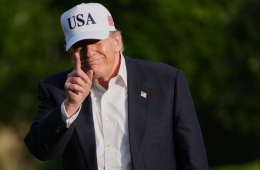
[Asia Economy Reporter Ryu Jeong-min] An indispensable figure when mentioning the president's 'second-in-command management skills' is former President Kim Young-sam (YS) (face). In the process of the three-party merger in March 1990, YS led the democratic faction (Sangdodong faction), centered on Busan and Gyeongnam (PK), and entered the main body of the Minjung faction, which was dominated by Daegu and Gyeongbuk (TK). He is a 'political master' who demonstrated his unique political gambler temperament to become not only a presidential candidate but also the president.
YS, who wielded overwhelming power with a national approval rating of 90% in the early days of his term, also faced concerns about the next presidential election (1997). The so-called 'Era of the Nine Dragons' is related to YS's second-in-command management skills. The competition among nine presidential candidates delayed the concentration on a single second-in-command.
Park Sang-byeong, a visiting professor at Inha University Graduate School of Policy, explained, "The culture of not tolerating a second-in-command is a unique phenomenon in Korean politics. Other countries do not have this. Since the president serves a single five-year term, a centralized political perception has been formed."

At the memorial ceremony for the 3rd anniversary of former President Kim Young-sam's passing, held on the 22nd at the Hyeonchung Hall of the National Seoul National Cemetery, Kim Hyun-chul, the second son of the late president, is offering condolences on behalf of the bereaved family. Photo by Kim Hyun-min kimhyun81@
View original imageThe nine dragons who controlled the presidential election at the time were prominent figures who left their names in Korean political history, including Lee Hoi-chang, Park Chan-jong, Choi Hyung-woo, Kim Deok-ryong, Lee In-je, Kim Yun-hwan, Lee Soo-sung, Lee Hong-gu, and Lee Han-dong. The lineup of the nine dragons was splendid, including former Minister of the Interior Choi Hyung-woo, known as YS's right-hand man; former Minister of Labor Lee In-je, regarded as the next-generation leader; former Prime Minister Lee Hoi-chang, nicknamed 'the Iron Pole'; and lawmakers Kim Yun-hwan and Lee Han-dong, known as the TK strongmen.
YS was able to draw the blueprint of national governance while watching the nine dragons fiercely compete. The focus of interest was on whom the 'YS heart' was directed. Because winning the president's favor meant gaining an advantageous position in the presidential race. The seed of discord was also at that point. As rumors spread that YS favored former Minister Lee In-je, a labor and human rights lawyer from Chungcheong among the nine dragons, the political balance collapsed.
YS's power rapidly weakened as his lifelong comrade, former Minister Choi Hyung-woo, suffered a stroke, and former Prime Minister Lee Hoi-chang, with whom he had a strained relationship, gained political momentum. The turning point came when Heo Ju (虛舟) Kim Yun-hwan, regarded as a 'kingmaker' in Korean political history, withdrew from the presidential race and supported former Prime Minister Lee Hoi-chang.

Politician Lee Hoi-chang changed the power landscape of the ruling party by consecutively holding the positions of party leader, presidential candidate, and party president. Along with the controversy over neglecting the 'YS doll burning ceremony,' the relationship between presidential candidate Lee Hoi-chang and President YS became irreparable.
An interesting point is that Lee In-je, known to have been chosen by YS, blocked politician Lee Hoi-chang's presidential victory by choosing to run independently after leaving the party. Lee In-je, the candidate of the People's New Party, received 4,925,591 votes in the 1997 presidential election.
Hot Picks Today
 "Buy on Black Monday"... Japan's Nomura Forecasts 590,000 for Samsung, 4 Million for SK hynix
- "Plunged During the War, Now Surging Again"... The Real Reason Behind the 6% One-Day Silver Market Rally [Weekend Money]
- The Distributor Asked...How Much Do You Really Know About the Nightlife Scene [ChwiYakGukga]①
- "Samsung and Hynix Were Once for the Underachievers"... Hyundai Motor Employee's Lament
- "That? It's Already Stashed" Nightlife Scene Crosses the Line [ChwiYak Nation] ③
Especially in Busan and Gyeongnam, YS's political strongholds, he obtained 29.78% (623,756 votes) and 31.30% (515,869 votes) of the vote, respectively, which caused the defeat of Lee Hoi-chang, the candidate of the Grand National Party. The difference between Kim Dae-jung, the candidate of the New Politics National Congress, and Lee Hoi-chang was 390,557 votes, and the PK results were one of the main reasons why Lee lost in a close race.
© The Asia Business Daily(www.asiae.co.kr). All rights reserved.