[2021 Budget] Expanding Idolbom Support to 840 Hours Annually... Boosting Employment of Vocational High School Students in SMEs
Government Introduces '60 Unique Projects to Improve Citizens' Lives'
Postpartum Health Care Available Through Health Managers for Up to 150% of Median Income
![[Image source=Yonhap News]](http://www.asiae.co.kr/news/img_view.htm?img=2019062612080911031_1561518488.jpg)
[Sejong=Asia Economy Reporter Kim Hyunjung] As part of its response to low birth rates, the government plans to expand the quantity and support hours of part-time childcare services to reduce the childcare burden on dual-income families, and increase the number of beneficiaries for maternal and newborn health support for families with newborns. In addition, various incentives and subsidies will be provided to support vocational high school students' employment in small and medium-sized enterprises (SMEs), while fostering long-established local stores and startups by region.
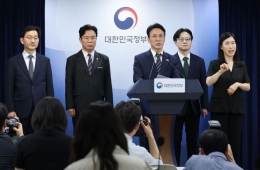
On the 1st, the government announced the 2021 budget plan along with the introduction of "60 distinctive projects to improve the lives of the people," which include these measures.
First, to address low birth rates, the government significantly increased the budget for various projects aimed at reducing the childcare burden on dual-income families and mothers. The budget for the maternal and newborn health management support project for families with newborns will increase by 18.3%, from 95.9 billion KRW this year to 114.3 billion KRW next year. Health managers will be dispatched to each household to assist with postpartum recovery, nutrition management, newborn care, and household chores. The eligibility criteria for beneficiaries have also been expanded from 100% of the median income to 150% of the median income. Accordingly, the number of beneficiaries is expected to increase from 140,384 this year to 163,560 next year. The government plans to expand job opportunities for service providers through this initiative.
Along with this, the quantity, support hours, and support ratio of part-time childcare services will be improved to reduce the childcare burden on dual-income families. The number of supported households will increase from 82,000 this year to 84,300 next year, and the government support time limit will be raised from 720 hours per year to 840 hours per year. The related budget will increase by 10.3%, from 140.9 billion KRW this year to 155.4 billion KRW next year.
Additionally, the scope of medical expense support for diagnosis and surgery of congenital anomalies will be expanded from diagnosis within 84 days after birth and hospitalization/surgery within 6 months after birth to diagnosis, hospitalization, and surgery within 1 year after birth. The budget will double from 1.1 billion KRW to 2.2 billion KRW. Income eligibility is limited to households with less than 180% of the median income, and support is capped at 5 million KRW per person for congenital anomaly cases. New budgets of 3 billion KRW and 5 billion KRW have been allocated for identifying causes of food poisoning in daycare centers and creating forest school routes, respectively.
A large-scale budget will also be used to support employment across various sectors of society. First, 174.9 billion KRW, a 58.0% increase from the previous year, will be allocated to support vocational high school students' employment in SMEs and nurture experts into masters. The employment-linked incentive payment will increase from 4 million KRW to 5 million KRW, and the mandatory employment period will be extended from 6 months to 12 months. Meister universities will also be supported to develop job-centered curricula.
Internship subsidies to expand work experience and continuous employment for women with career interruptions will increase from 3 million KRW this year to 3.8 million KRW, and an employment incentive of 800,000 KRW will be newly introduced for companies that retain employees for more than 6 months after regular hiring. To help youths leaving shelters become independent, 70 individuals will be selected next year to receive a monthly allowance of 300,000 KRW, with a budget of 126 million KRW allocated. The budget for creating youth self-reliance villages, which match young people seeking new opportunities in rural areas with the local cities that need them, has been increased by 750% to 7.65 billion KRW. Twelve additional self-reliance villages will be established by next year, and settlement and education will be supported through youth self-reliance activation programs.

On the 21st, as the novel coronavirus disease (COVID-19) resurges, increasing difficulties for small business owners, a merchant is organizing goods at the Goyang Furniture Complex in Gyeonggi Province. Photo by Mun Ho-nam munonam@
View original imageA new budget has also been allocated to support people with severe disabilities. Despite wage gaps with non-disabled individuals, 6,300 people with severe disabilities who incur additional transportation costs will receive a monthly transportation voucher of 50,000 KRW for 9 months (including a 3-month preparation period). A separate complex healing center (tentative name) for people with developmental and severe disabilities and their families will also be established this year.
To reduce the financial burden on cancer patients, 7.8 billion KRW of new budget will be used to increase day care beds at the National Cancer Center from the current 37 to 124 beds, allowing same-day outpatient treatment. Pneumococcal vaccination for the elderly will be expanded from 256 public health centers to private medical institutions, increasing the related budget from 4.3 billion KRW this year to 9.3 billion KRW. The number of vaccinated individuals is expected to rise from 450,000 to 520,000.
Hot Picks Today
 "Now Our Salaries Are 10 Million Won a Month" Record High... Semiconductor Boom Drives Performance Bonuses at Major Electronic Component Firms
- Is It Really Like an Illness? "I Can't Wait to Go Again"—Over 1 Million Visited in Q1, Now 'Busanbyeong' Takes Hold [K-Holic]
- "Realizing How Fast Money Disappears: Should You Try Only the Essentials for 5,000 Won? [The Basics of Benefits]"
- "Heading for 2 Million Won": The Company the Securities Industry Says Not to Doubt [Weekend Money]
- Experts Already Watching Closely..."Target Price Set at 970,000 Won" Only Upward Momentum Remains [Weekend Money]
Furthermore, new projects to assist small business owners and entrepreneurs have been launched with new budget allocations. Incubating facilities such as production facilities and office spaces will be supported for one-person media creators and startups (5.5 billion KRW), and a customized comprehensive support service (460 million KRW) will be introduced to help small merchants struggling due to the COVID-19 pandemic. This service will provide general business consultations, conflict resolution, cooperation support, and litigation assistance. To turn local long-established stores into nationwide attractions, 200 "Baeknyeon Gage" (century-old stores) and 500 "Baeknyeon Sogongin" (century-old small business owners) will be selected and provided with various consulting, promotion, and sales channel opportunities, with a new budget of 5.85 billion KRW allocated. The number of smart studios for creating online shopping mall product pages will expand from one location (Seoul) this year to three locations (adding Jeonnam and Gyeongbuk) next year. Collaborations with global companies such as Google, Amazon, and NVIDIA will support startups' entry into global markets with a new budget of 30 billion KRW. The scale of support for SMEs hiring highly experienced researchers will increase from 229 to 278 people, providing 50% of annual salary (up to 50 million KRW per year) for up to 3 years per person. A budget of 5.1 billion KRW, a 240% increase from this year, will be used to nurture 30 global tourism companies to revitalize the tourism industry, which has been depressed due to COVID-19.
© The Asia Business Daily(www.asiae.co.kr). All rights reserved.