"Resident Doctors' Refusal to Submit Resignation Letters" Medical Association and Government in Standoff
Second Day of Doctors' General Strike Causes Numerous Patient Harms

[Asia Economy Reporter Seo So-jeong] On the 27th, the second day since the medical community entered the second general doctors' strike, the government and the medical community remain in a standoff, intensifying the medical service gap.
The medical community, opposing the government's four major medical policies including the expansion of medical school quotas, establishment of public medical schools, pilot project for coverage of Korean herbal medicine prescriptions, and promotion of telemedicine, has launched a collective work stoppage led mainly by young doctors, the residents. The government responded firmly by issuing work commencement orders to them the previous day.
The Korean Intern Resident Association (KIRA), which gathers about 16,000 residents, is carrying out the '5th Young Doctors' Collective Action,' allowing only those who wish to submit resignation letters, showing no intention to back down from the strike. COVID-19 treatment, which had been operated by deploying resident personnel, will be converted to a volunteer basis.
Seo Jae-hyun, spokesperson for KIRA, said, "There were no negotiations with the government yesterday (26th) after entering the second general doctors' strike, and there are no scheduled plans today either," adding, "Pressure has started mainly on hospitals where work commencement orders were issued, but residents will not yield and plan to submit resignation letters."
On the second day of the general doctors' strike, patient complaints due to medical service gaps continue at large hospitals in Seoul. Tertiary general hospitals are responding by reducing outpatient care and surgeries as residents and fellows join the strike, but the workforce is severely insufficient.
At Seoul Asan Medical Center, about 500 of the total 1,800 doctors are residents on strike, and about half of the fellows have joined the strike. A representative from Seoul National University Hospital said, "We have scheduled only about half of the usual daily surgeries," expressing concern that "only surgeries for severe and emergency patients are being performed, and if the strike prolongs, the medical service gap will become serious."
Hot Picks Today
 "Now Our Salaries Are 10 Million Won a Month" Record High... Semiconductor Boom Drives Performance Bonuses at Major Electronic Component Firms
- Experts Already Watching Closely..."Target Price Set at 970,000 Won" Only Upward Momentum Remains [Weekend Money]
- "Heading for 2 Million Won": The Company the Securities Industry Says Not to Doubt [Weekend Money]
- Did Samsung and SK hynix Rise Too Much?... Foreign Assets Grow Despite Selling [Weekend Money]
- "Chanel Open Run? I Get a Free Pass"... The World of the Top 0.1% That Money Alone Can't Enter [Luxury World]
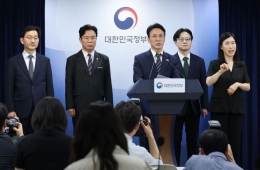
Meanwhile, the government plans to hold an emergency meeting with university hospital directors at 2 p.m. today, led by Park Neung-hoo, Minister of Health and Welfare, to devise countermeasures.
© The Asia Business Daily(www.asiae.co.kr). All rights reserved.