From November, Health Insurance Premiums Will Be Levied on Rental and Financial Income Under 20 Million KRW Per Year
Insurance Premium Assessment System Improvement Committee, Income-Based Health Insurance Premium Reform
"Non-taxable for 1- or 2-Homeowners Without Monthly Rent"

[Asia Economy Reporter Choi Dae-yeol] Starting from November this year, health insurance premiums will be imposed on housing rental income or financial income not exceeding 20 million KRW annually. Previously, premiums were only imposed if the income exceeded 20 million KRW, but this will change to align with the policy direction of imposing premiums based on income.
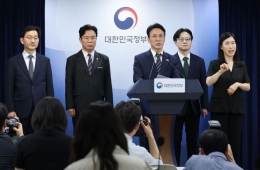
The Ministry of Health and Welfare announced on the 19th that at the first Insurance Premium Imposition System Improvement Committee meeting of the year, a plan to expand the basis for health insurance premium imposition including this content was reviewed and approved. The government has been adjusting the system to impose premiums on income while reducing the basis on property and automobiles. This is aimed at increasing fairness by more transparently identifying business and financial income in addition to earned income.
Not all rental income under 20 million KRW will be subject to health insurance premiums. Depending on the number of rental properties, couples owning one house are not subject to premiums even if they have rental income. For those owning two houses, premiums are not imposed if there is only a deposit without monthly rent income. For rental income earners owning three or more houses, premiums will be imposed on both monthly rent income and deposits.
Even if subject to premiums, premiums are imposed on income after deducting necessary expenses and basic deductions, not on total rental income. If the rental income earner has registered the rental property, premiums will be imposed on income exceeding 10 million KRW annually; if not registered, premiums will be imposed on income exceeding 4 million KRW annually. Rental registration refers to both business registration at the tax office and housing rental business registration with local governments.
According to the rental registration activation plan announced in 2017, the government decided to impose health insurance premium increases differentially for landlords who contribute to market stabilization. If rental registration is not done, the full increase in health insurance premiums due to rental income must be paid, but if registration is completed by the end of the year, benefits are provided. Short-term landlords (4 years) pay 60% of the premium increase, and long-term landlords (8 years) pay 20%. Benefits apply only during the rental registration period.
Due to this measure, some dependents who previously paid no health insurance premiums by relying on family will be converted to regional subscribers. To temporarily ease their burden, the government will collect only 70% of the imposed premiums for one year.
Income from interest and dividends not exceeding 20 million KRW annually will also be subject to health insurance premiums. Currently, workplace subscribers pay premiums based on their 'wages' (monthly salary) received at work, and if 'non-wage income' such as housing rental income exceeds 34 million KRW annually, additional premiums are imposed. Financial income is included in non-wage income, but if it does not reach 20 million KRW, it was treated as '0 KRW' and not aggregated. However, going forward, income under 20 million KRW will also be aggregated and premiums may increase based on the 34 million KRW threshold.
Regional subscribers calculate comprehensive income by aggregating all income and pay premiums according to comprehensive income grades. Like workplace subscribers, financial income under 20 million KRW was not included in comprehensive income, but will be aggregated going forward. To ensure smooth implementation, the government will impose premiums only on financial income exceeding 10 million KRW for the time being. Annual financial income of 10 million KRW corresponds to income from deposits of about 1.2 billion KRW assuming an interest rate of 1%.
Hot Picks Today
 "Now Our Salaries Are 10 Million Won a Month" Record High... Semiconductor Boom Drives Performance Bonuses at Major Electronic Component Firms
- Experts Already Watching Closely..."Target Price Set at 970,000 Won" Only Upward Momentum Remains [Weekend Money]
- "Heading for 2 Million Won": The Company the Securities Industry Says Not to Doubt [Weekend Money]
- Did Samsung and SK hynix Rise Too Much?... Foreign Assets Grow Despite Selling [Weekend Money]
- "Chanel Open Run? I Get a Free Pass"... The World of the Top 0.1% That Money Alone Can't Enter [Luxury World]
© The Asia Business Daily(www.asiae.co.kr). All rights reserved.