Gwanak-gu Launches 'Smart Care' Service to Prevent Solitary Deaths Among Middle-Aged and Elderly Living Alone
Installation of Smart Plugs Using IoT for 210 Single-Person Households Including Mobility-Impaired Middle-Aged and Elderly

[Asia Economy Reporter Jongil Park] According to the ‘2019 Survey on the Living Conditions of Single-Person Households in Housing Poverty’ conducted by Gwanak-gu (District Mayor Park Junhee), 31.5% of respondents living alone answered that it is difficult to cope when they are sick or in an emergency.
In particular, since most care services are provided to seniors aged 65 and over, middle-aged and older single-person households with mobility difficulties fall into a welfare blind spot age group, making them highly vulnerable to solitary death.
Accordingly, the district is implementing a new service called the ‘Check-in Care Service for Middle-aged and Older Single-Person Households’ using the Internet of Things device ‘Smart Plug,’ tailored to the familiarity of middle-aged and older adults with IT smart devices.
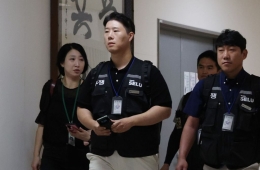
On the 15th, the Dong Community Service Center completed the installation of smart plugs in a total of 210 households of middle-aged and older single-person households with mobility difficulties, who had been classified and managed as high-risk individuals.
The ‘Smart Plug’ monitors electricity usage and sends an alarm to welfare planners via an application if there is no change for a certain period, transmitting data through a web page.
Depending on the user’s condition, it categorizes the status as ▲Abnormal ▲Check ▲Attention ▲Normal, enabling 24-hour check-ins. Welfare planners who receive alarms can immediately confirm the well-being of the subjects via phone or visits to prevent emergencies in advance.
Additionally, each subject is matched one-on-one with local residents such as bankbook holders and the Hope Discovery Group, forming a neighborhood care system to provide seamless care services.
In cases where welfare planners cannot check data for more than three days, such as during the Lunar New Year holiday, the district office’s duty room is linked to conduct check-ins, ensuring thorough accident prevention during administrative gaps in holidays.
Hot Picks Today
 "Samsung and Hynix Were Once for the Underachievers"... Hyundai Motor Employee's Lament
- "Was This Delicious Treat Enjoyed Only by Koreans?"... The K-Dessert Captivating Japan
- Despite Captivating the Nation for Over a Month... "Timmy" the Whale Ultimately Found Dead
- "Record Heat Expected"...Warning of the Strongest 'Super El Nino' Since 1877
- "That? It's Already Stashed" Nightlife Scene Crosses the Line [ChwiYak Nation] ③
District Mayor Park Junhee said, “I hope this ‘Smart Care Project’ will greatly contribute to preventing solitary deaths among middle-aged and older single-person households. We will continue to do our best to create a safer and healthier Gwanak-gu where single-person households can live more securely through various smart care welfare projects.”
© The Asia Business Daily(www.asiae.co.kr). All rights reserved.