BIS Warning... Korean Companies Show Weaker Cost-Cutting Response During Crises
Operating Loss Expected to Reach 40% of Last Year's Sales
Fourth Largest Decline... Russia, with High Energy Company Share, Takes Biggest Hit
Korean Companies Have Low Cost Flexibility to Respond to Sales Decline
Even if Sales Halve, Costs Can Only Be Reduced by 10%

[Asia Economy Reporter Kim Eunbyeol] It has been revealed that Korean companies' crisis response capabilities are lower compared to those of other countries. When unprecedented crises such as the novel coronavirus infection (COVID-19) occur, it is necessary to respond flexibly by rapidly reducing costs. However, due to a structure where it is difficult to lower fixed costs such as wages, it is pointed out that profitability is also adversely affected.
According to the annual economic report "Global Sudden Stop" by the Bank for International Settlements (BIS) on the 6th, BIS estimated under the worst-case scenario assuming no government support or loan easing policies that the expected operating profit margin of Korean companies would reach -40% (median value). This means that the expected operating loss this year accounts for 40% of last year's sales.
The operating profit margin is the ratio of operating profit to sales and is a measure to judge the performance of a company's operating activities. While it is usually calculated as operating profit relative to sales over a certain period, BIS calculated the expected operating loss this year relative to last year's sales, so it is not the operating profit margin generally referred to. Since it was estimated excluding policy support, it is indeed a rather pessimistic scenario. The operating profit margin of externally audited companies estimated by the Bank of Korea last year was 4.7%, which showed a declining trend compared to the previous year but is considered a decent figure at about 5%.
However, it is noteworthy that the negative margin is large when compared with other countries using the same criteria. Korea (-40%) ranked fourth among the countries compiled by BIS in terms of the ratio of operating loss to last year's sales. Russia was first, Germany second, and India and China tied for third. The operating loss ratios of companies in Brazil, Italy, and Spain, where the COVID-19 situation was more severe than in Korea, were in the 30% range, lower than Korea's. BIS stated that it calculated this by analyzing 33,150 public and non-financial large companies in 19 countries.
The reason cited was that Korean companies have a structure that makes it difficult to reduce costs in response to rapidly declining sales. Half of Korean companies are expected to see sales decrease by 25-50% this year compared to last year, while it is estimated that more than half of the companies have a profit elasticity of 20% or less. This means that even if sales drop by half, the costs that companies can reduce are only about 10%. Ultimately, income decreases, but due to a rigid labor structure, it is difficult to reduce wages, which is interpreted as a factor worsening profitability. The United States, with high employment elasticity, was estimated to have the lowest operating loss ratio at 25% of last year's sales this year.
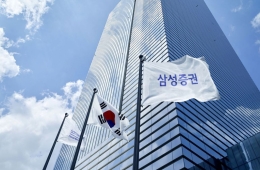
![View of corporate buildings from Namsan, Seoul. [Image source=Yonhap News]](http://www.asiae.co.kr/news/img_view.htm?img=2020070611154044595_1594001740.jpg)
Our companies have already identified cost reduction as a risk factor. According to a survey by the Korea Economic Research Institute of the top 500 domestic companies by sales, 6 out of 10 large companies are pursuing "liquidity securing and cost reduction" as measures to overcome COVID-19. 32.5% of large companies responded that if the business deterioration due to COVID-19 continues for six months, it would be difficult to endure without workforce restructuring.
Fortunately, companies are still holding on thanks to government support. The reason BIS estimated companies' operating profit margins assuming the worst-case scenario in its annual report is interpreted as supporting the need for government assistance. According to BIS, without policy support, it takes on average more than three times longer for sales to recover to pre-COVID-19 levels.
The problem is that such comprehensive corporate support cannot continue forever. Bank of Korea Governor Lee Ju-yeol recently attended a meeting with bank presidents and said, "If the COVID-19 situation prolongs, it is necessary to approach the response with a long-term perspective," and added, "It is time to consider whether the financial sector can continue comprehensive support for companies as it is now or whether to change the approach to support."
Hot Picks Today
!["Stock Set to Double: This Company Smiles Every Time a Data Center Is Built [Click e-Stock]"](https://cwcontent.asiae.co.kr/asiaresize/93/2026050416112750184_1777878687.jpg) "Stock Set to Double: This Company Smiles Every...
"Stock Set to Double: This Company Smiles Every...
- "Is Yours Just Gathering Dust at Home? Millennials & Gen Z Rediscover Digicams O...
- Chicago Fed President: "Rate Hikes Needed If Productivity Expectations Overheat"
- "High-Net-Worth Investors Managing 10 Trillion Won: 'Gangnam Wealthy Also Feel F...
- “She Shouted, ‘The Rope Isn’t Tied!’... Chinese Woman Falls from 168m Cliff ...
In the Financial Stability Report released last month, the Bank of Korea advised, "While supporting the corporate sector to prevent temporary business condition deterioration from permanently damaging the production base, efforts to improve corporate structure and strengthen competitiveness should also be pursued, including restructuring for marginal companies with low long-term viability."
© The Asia Business Daily(www.asiae.co.kr). All rights reserved.